
This is the first installment of PolGeoNow’s On the Ground, a new series of exclusive photo essays on what political geography looks like in the real world. Whether it’s borders, nationalism, or other geopolitical phenomena, we’ll bring the on-the-ground situations to your screen in vivid detail.
Update 2016-06-24: Gibraltar on Thursday voted in favor of the UK staying in the European Union, by an incredible margin of 96% to 4%. However, the UK as a whole voted to leave the EU, meaning that Gibraltar can expect to get pulled out with it, against the wishes of the Gibraltarians.
Subscribers click here to view this article in the ad-free members area. Not a member yet? Learn about PolGeoNow subscriptions!
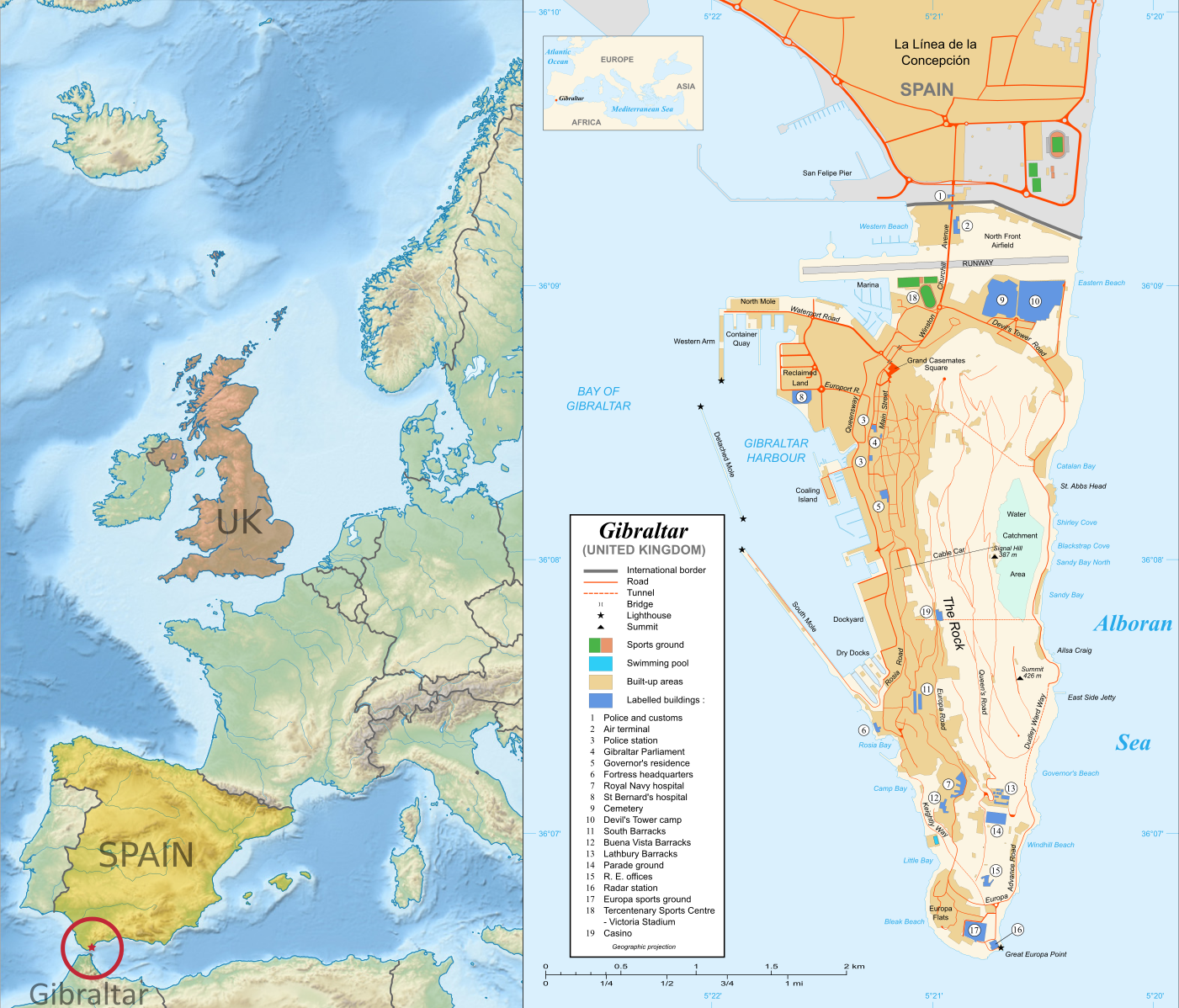 |
| Right: Map of Gibraltar by Eric Gaba (source; CC BY-SA) Left: Gibraltar’s location in Europe (based on this Wikimedia Commons map by TUBS; CC BY-SA) |


Gibraltar prepares to vote on whether UK should leave European Union
Last month, PolGeoNow’s Evan Centanni and Meihsing Kuo visited the small British territory of Gibraltar (pronounced “jih-BRALL-ter”), one month ahead of the UK’s referendum on whether to leave or remain in the European Union (EU).
Gibraltar, a tiny peninsula connected to Spain – and claimed by the Spanish government – is the only British overseas territory that’s part of the EU. It’s also the only external territory whose residents are eligible to vote in the so-called “Brexit” referendum without living in the UK proper. (“Brexit” is an abbreviation for “British exit” from the EU.)
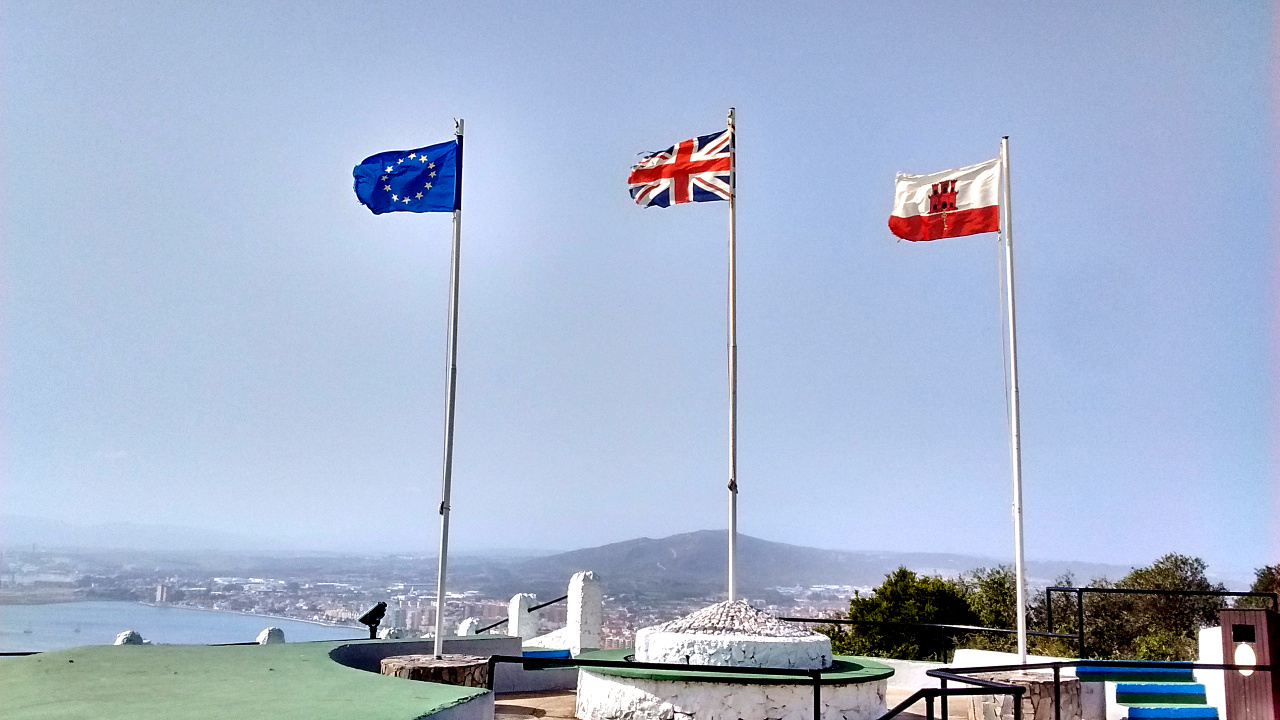 |
| Gibraltar flies the European Union flag (left), the flag of the United Kingdom (middle), and its own flag (right) |
Gibraltar is a short walk from the Spanish town of La Línea, whose name means “the line” in Spanish – a reference to the line of fortifications Spain built along the border in the 18th Century, when it was still trying to capture the peninsula from Britain by force. (The town’s full name is La Línea de la Concepción, a reference the doctrine of the Immaculate Conception, a central tenet of the Spanish forces’ Roman Catholic religion. Incidentally, most Gibraltarians are also Catholic.)
Because Gibraltar and Spain are both part of the EU, residents of both are free to live or work in the other. Thousands of people live in Spain, where food and rent are cheaper, and commute to work in Gibraltar, where wages and employment are higher. Gibraltar residents also rely on the semi-open border for access to affordable goods from Spain. But that could all come grinding to a halt if the UK decides to leave the union.
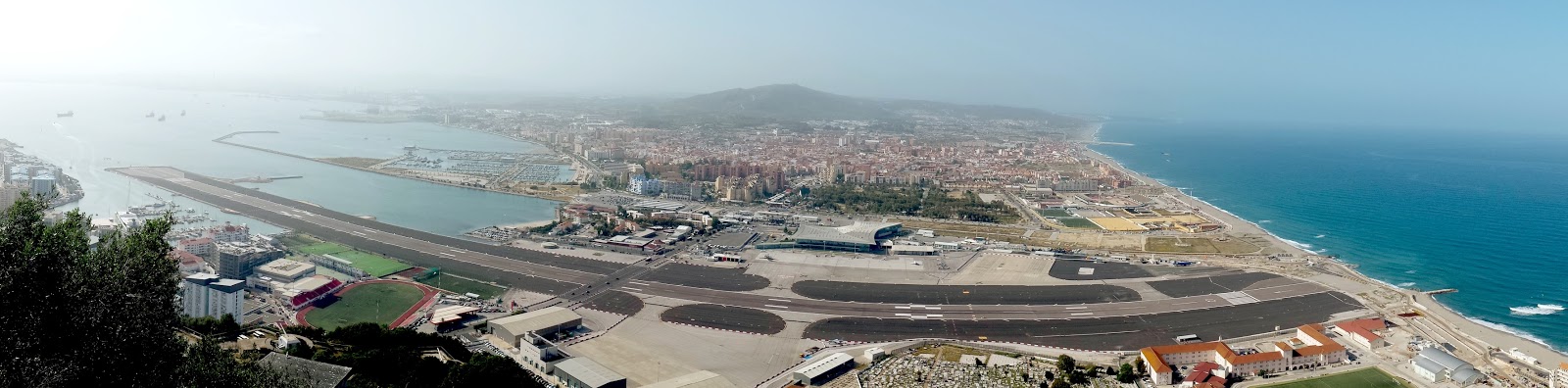 |
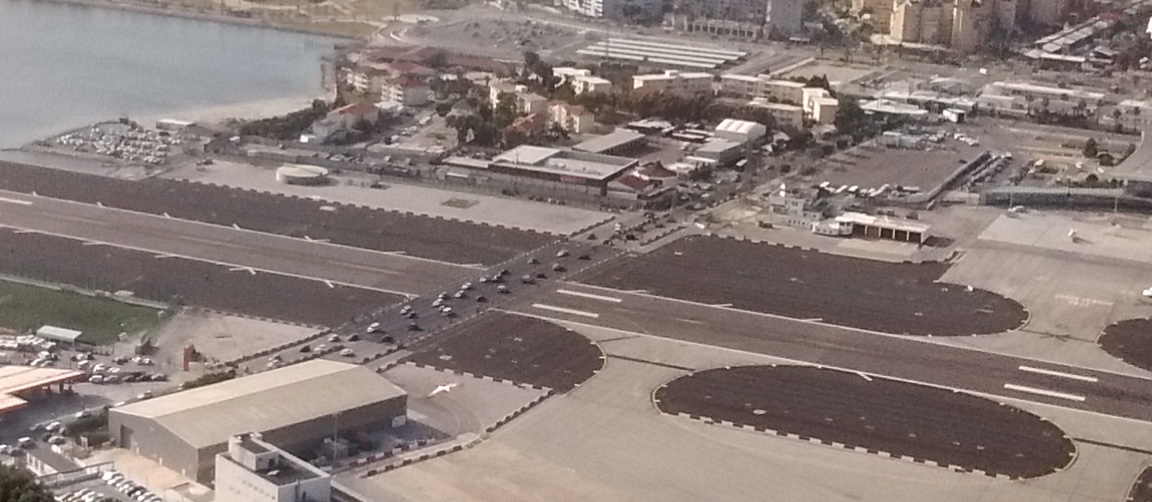
| The entire border of Spain (background) and Gibraltar (foreground), as seen from the Rock of Gibraltar. The border runs approximately along the far edge of the airport facilities. Click to see the picture at full size. (Photo by Meihsing Kuo) |
Gibraltar is a special EU territory that’s outside the Customs Union and the Schengen Area, so there are still passport and customs checks at the border (though they seemed pretty lax to us). But in pre-EU days, Spain closed the border altogether as a way of protesting British control of the peninsula.
 |
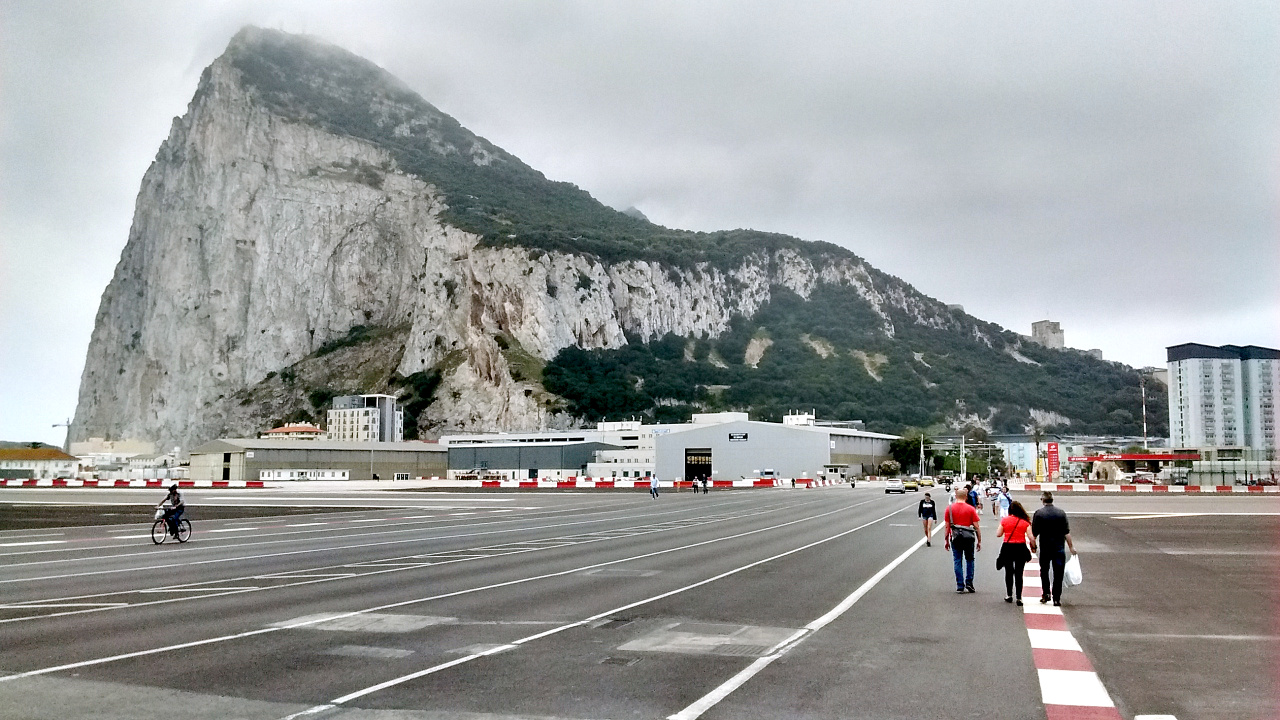
| Crossing the border from Spain into Gibraltar. In the background is the Rock of Gibraltar. |
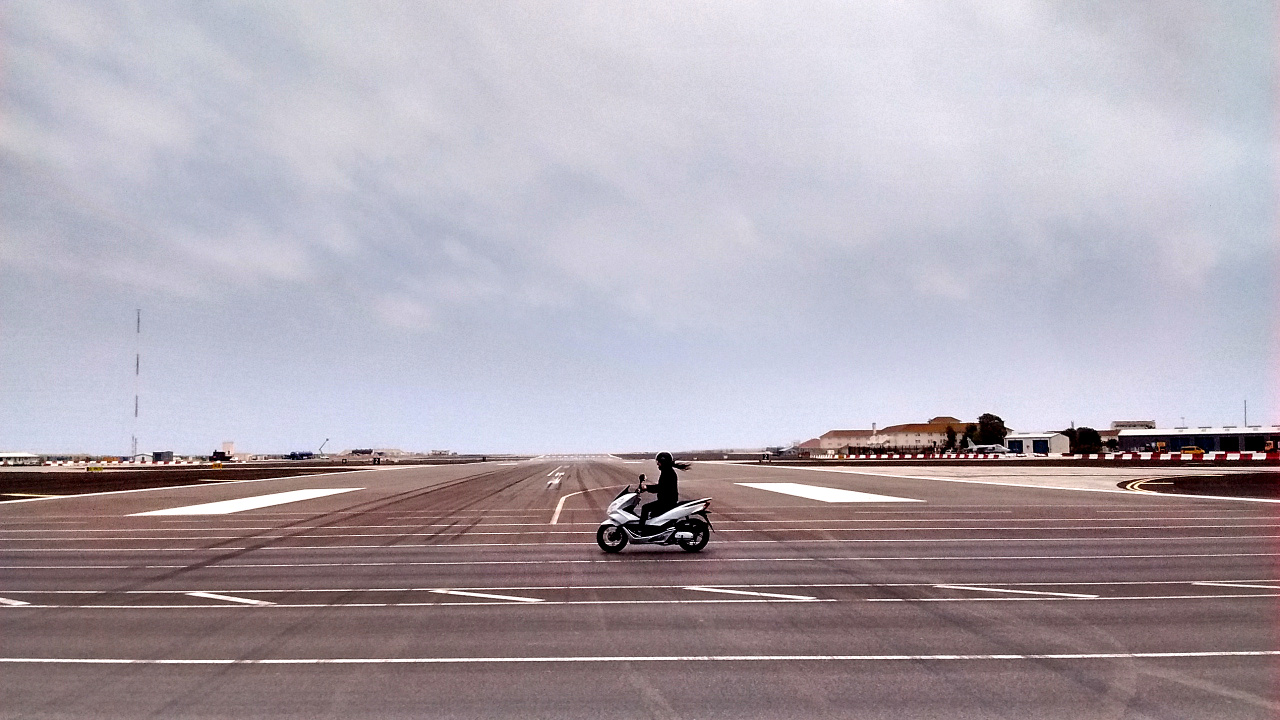
As a funny side-effect of Gibraltar’s position on a tiny peninsula, all traffic across the border has to cross the runway of the Gibraltar airport. There are only five or ten airplane takeoffs and landings each day, but each time there is one, cars and pedestrians have to wait for it to finish before they can go from Spain to Gibraltar or back. A planned traffic bypass is years overdue.

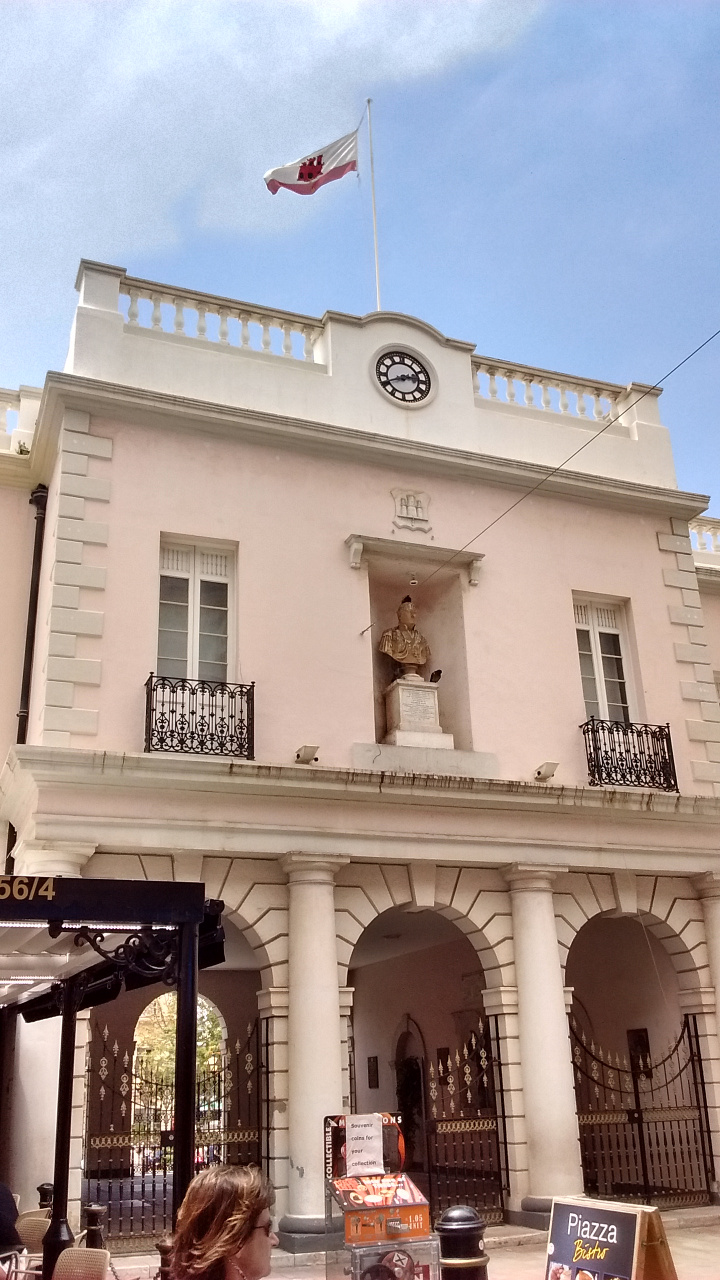 |
| The Gibraltar Parliament building |
Unlike British colonies of the past, Gibraltar is almost completely self-governed by its own elected parliament. For internal matters, the Gibraltar parliament doesn’t even legally answer to the British parliament in Westminster. But although Gibraltar’s not considered part of the UK, its land officially belongs to the UK, and it can’t have its own military or international relations. That means if the UK cuts ties with the EU, Gibraltar is along for the ride.
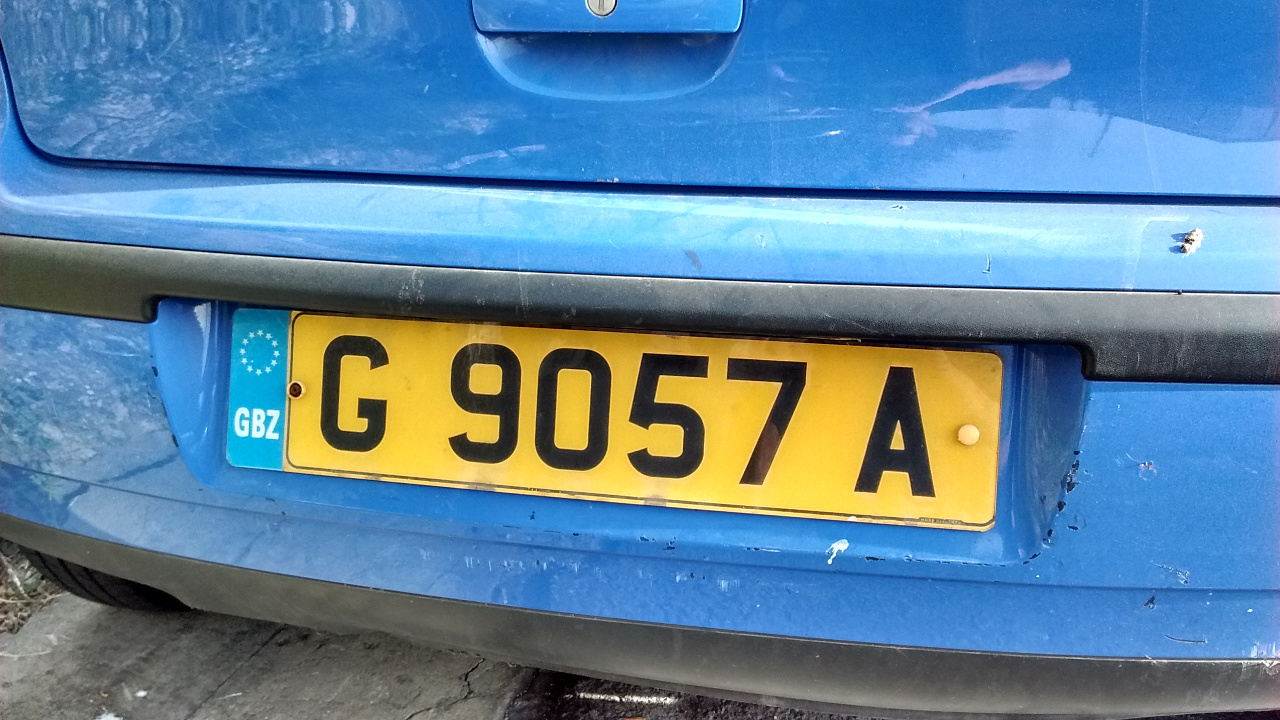 |
| Gibraltar vehicle plates have their own country code – GBZ. |
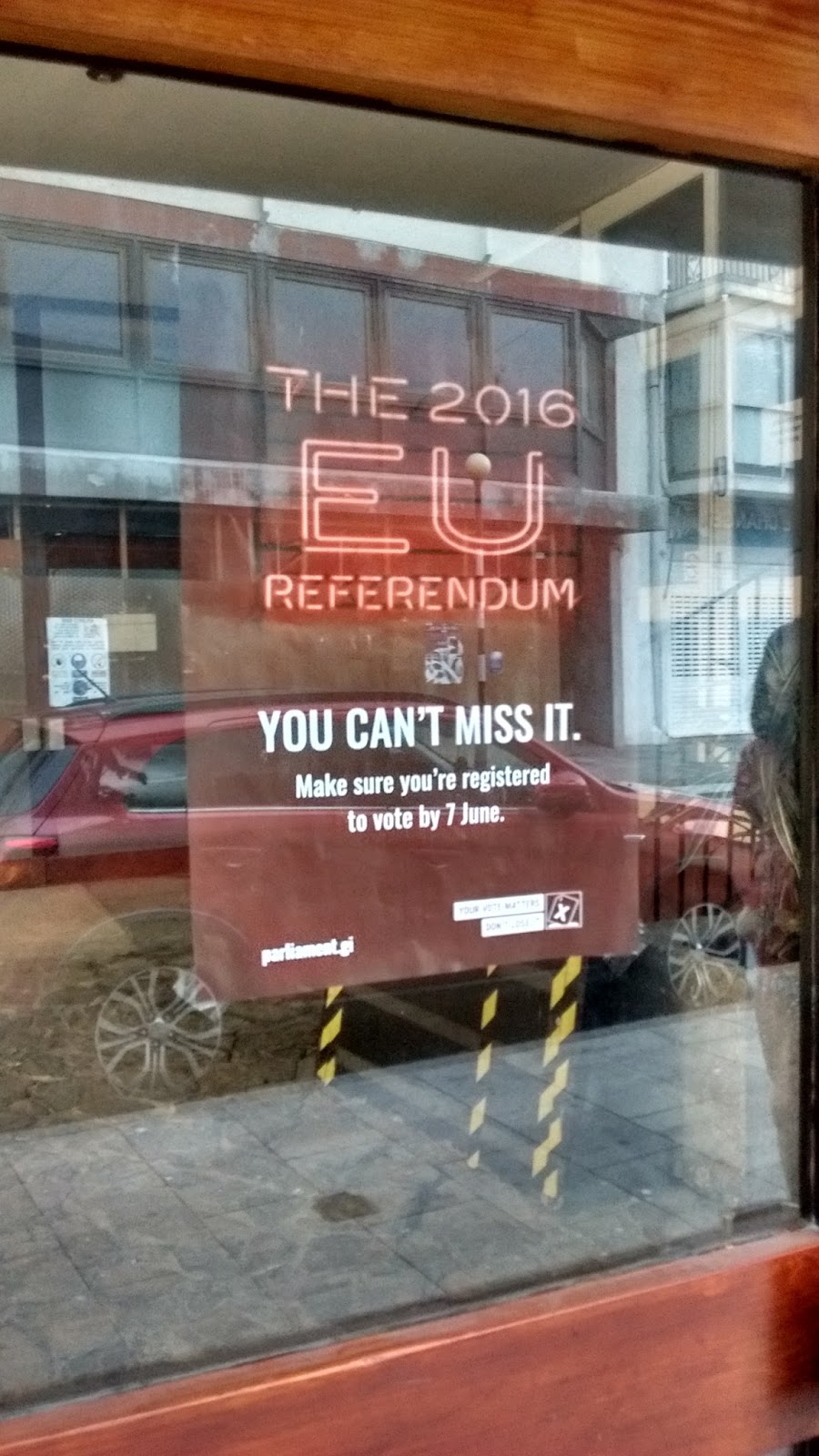 |
| Gibraltar government promoting voter turnout in the “Brexit” referendum |
Gibraltarians are able to vote in EU elections through a special arrangement that treats them as constituents of southwestern England, and the same arrangement will allow them to vote in the “Brexit” referendum. Though the territory’s 23,000 registered voters are just a drop in the bucket compared to the 45 million or so in the UK, this referendum might come right down to the wire, so it’s not out of the question that they could make a difference.
In any case, Gibraltarians want to be heard, even if only as justification to demand help from the UK if they do get pulled out of the EU. Because of the Gibraltar’s heavy dependence on the border, all three of the territory’s political parties are campaigning for the UK to remain in the union. And what about regular voters? A local newspaper poll found that 88% of people who planned to vote supported staying in the EU.
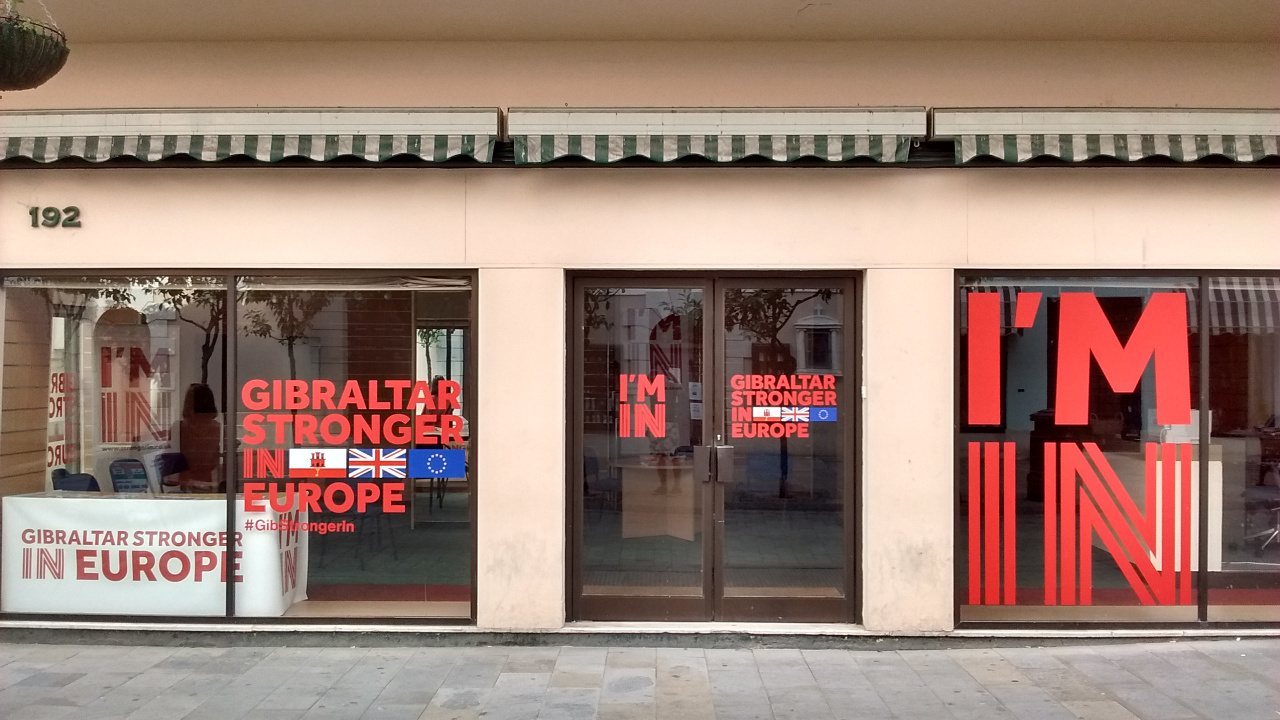 |
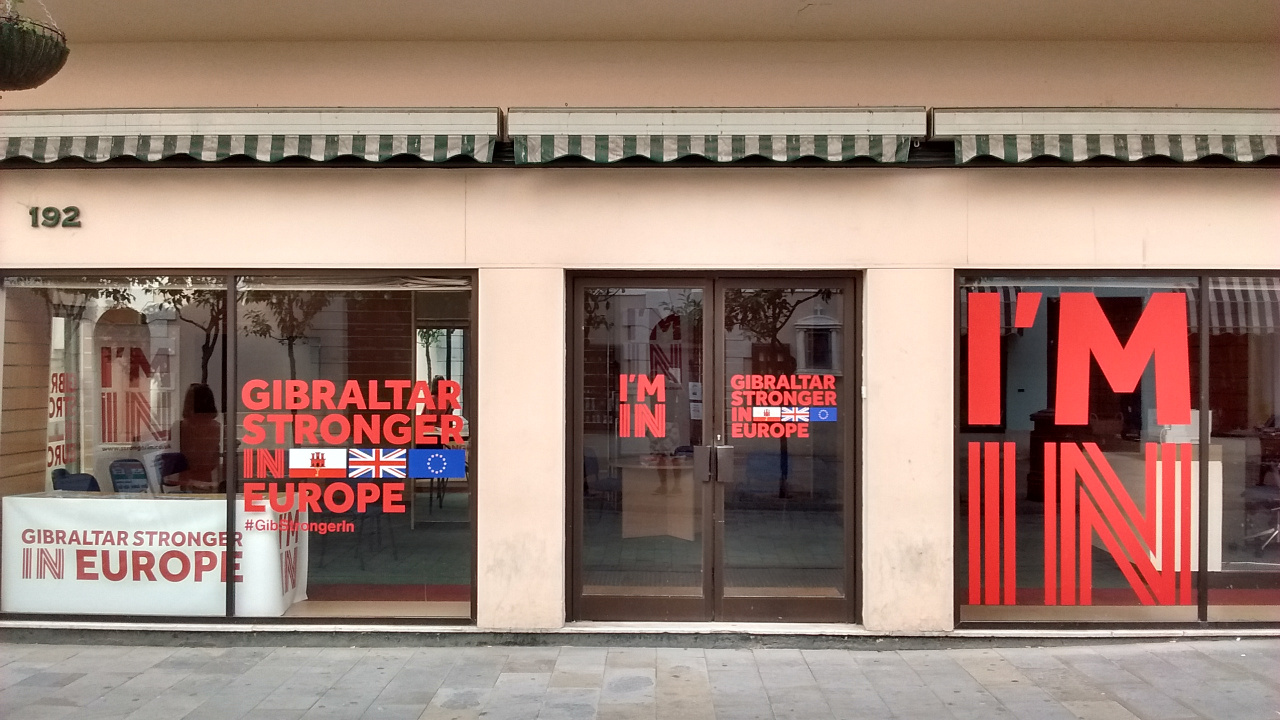
| The Gibraltar chapter of Britain’s anti-Brexit “Stronger In” campaign has a prominent office on the town’s main street. |
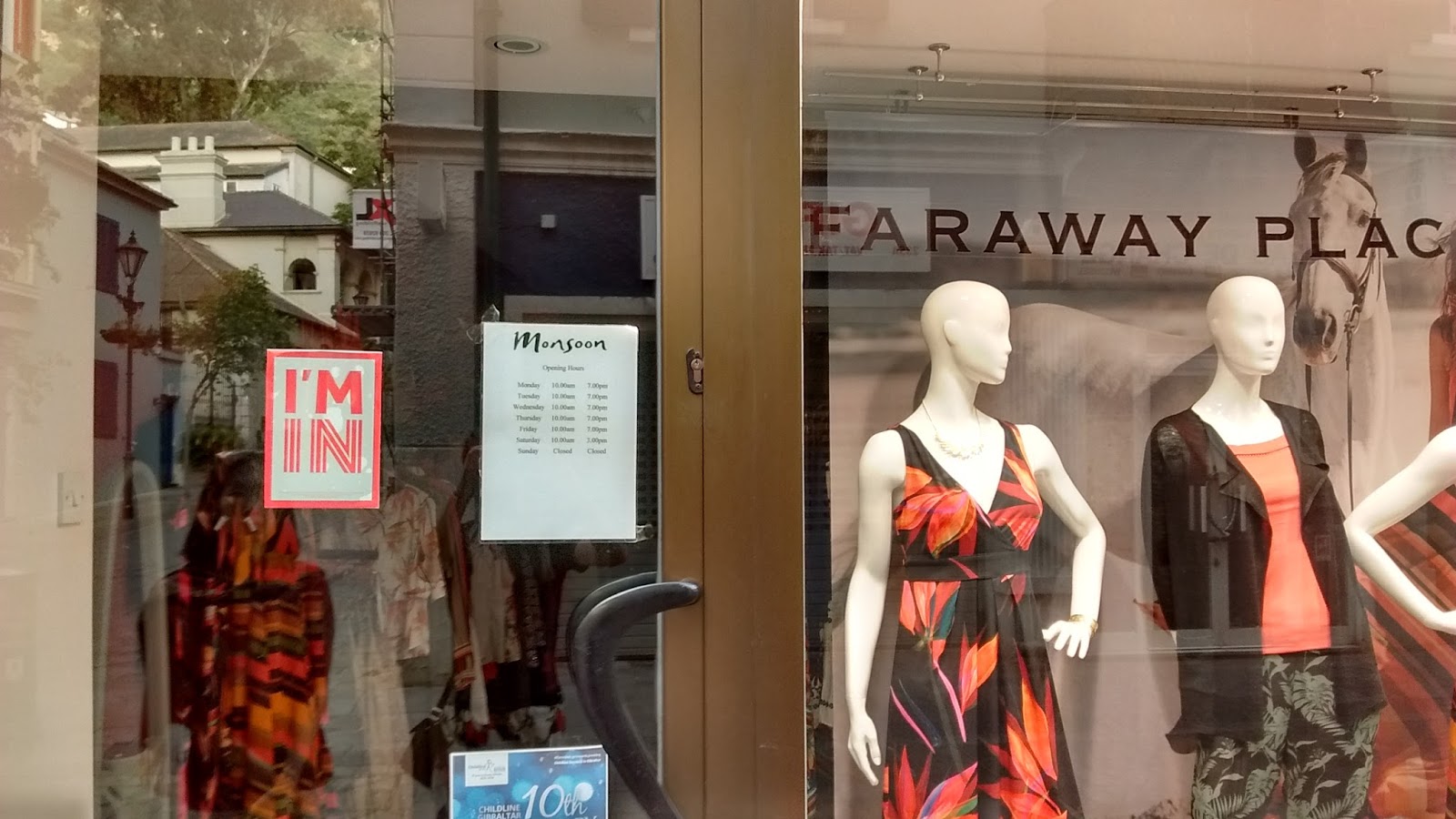 |
| Continued EU membership is uncontroversial in Gibraltar. “I’m In” stickers show many local businesses’ open support of the campaign to vote against leaving the EU. |
It’s hard to say exactly what will happen to Gibraltar if the UK does choose to quit the European Union – and that uncertainty is part of what most Gibraltarians are trying to avoid. For now Gibraltar seems content to be a British territory: residents have already twice voted against joining Spain. But if they feel betrayed and abandoned by a UK that wants no part in the EU, could demands for greater autonomy or even independence be around the corner? Only time will tell.
Photos and text by Evan Centanni, except where specified otherwise. All rights reserved.