How Many Countries Are There in the World in 2018?

This article, originally from 2011, has been revised and updated to January 2018. You can view some older versions of the article in our archives.
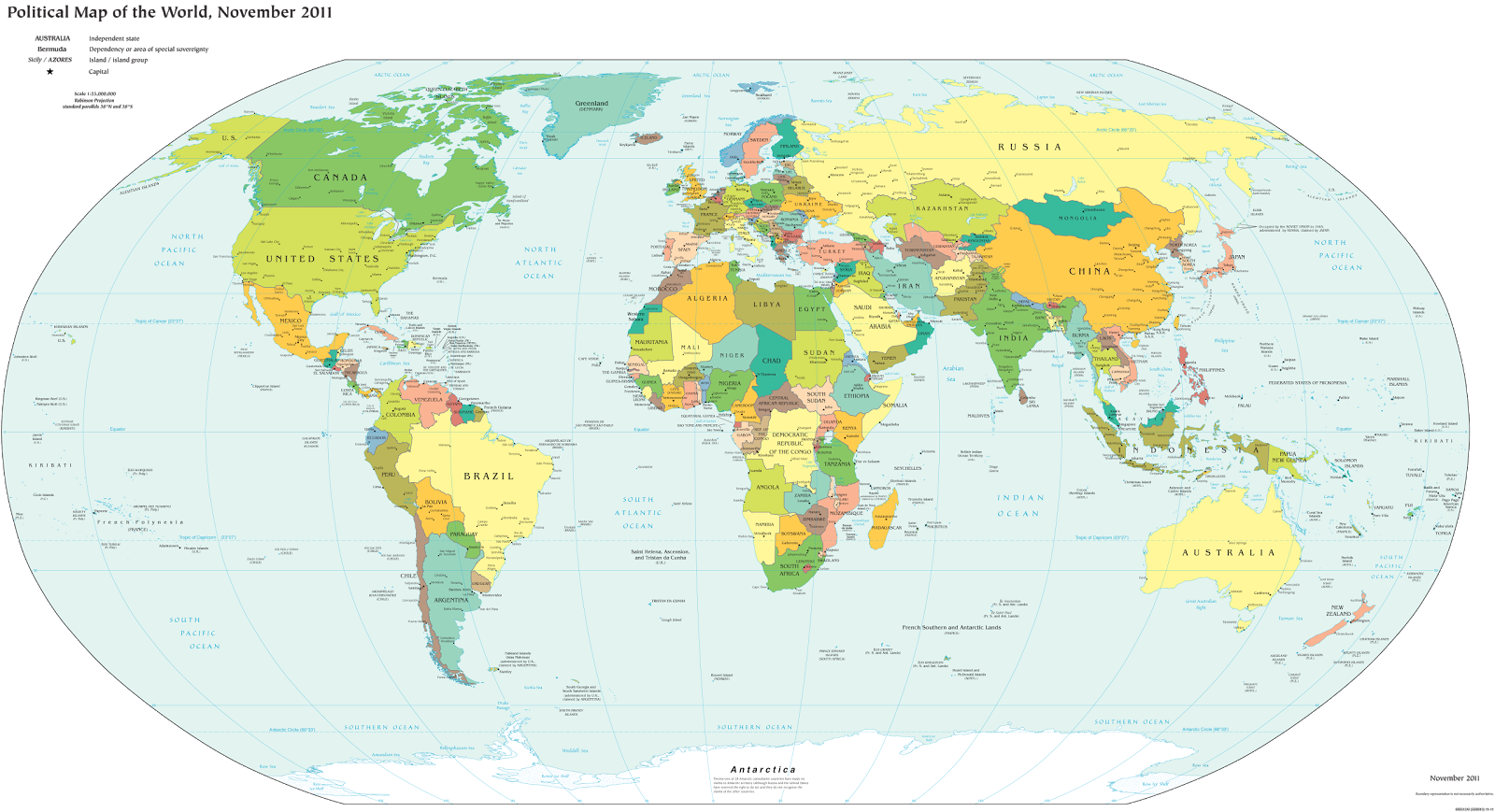
How many countries: map of the world
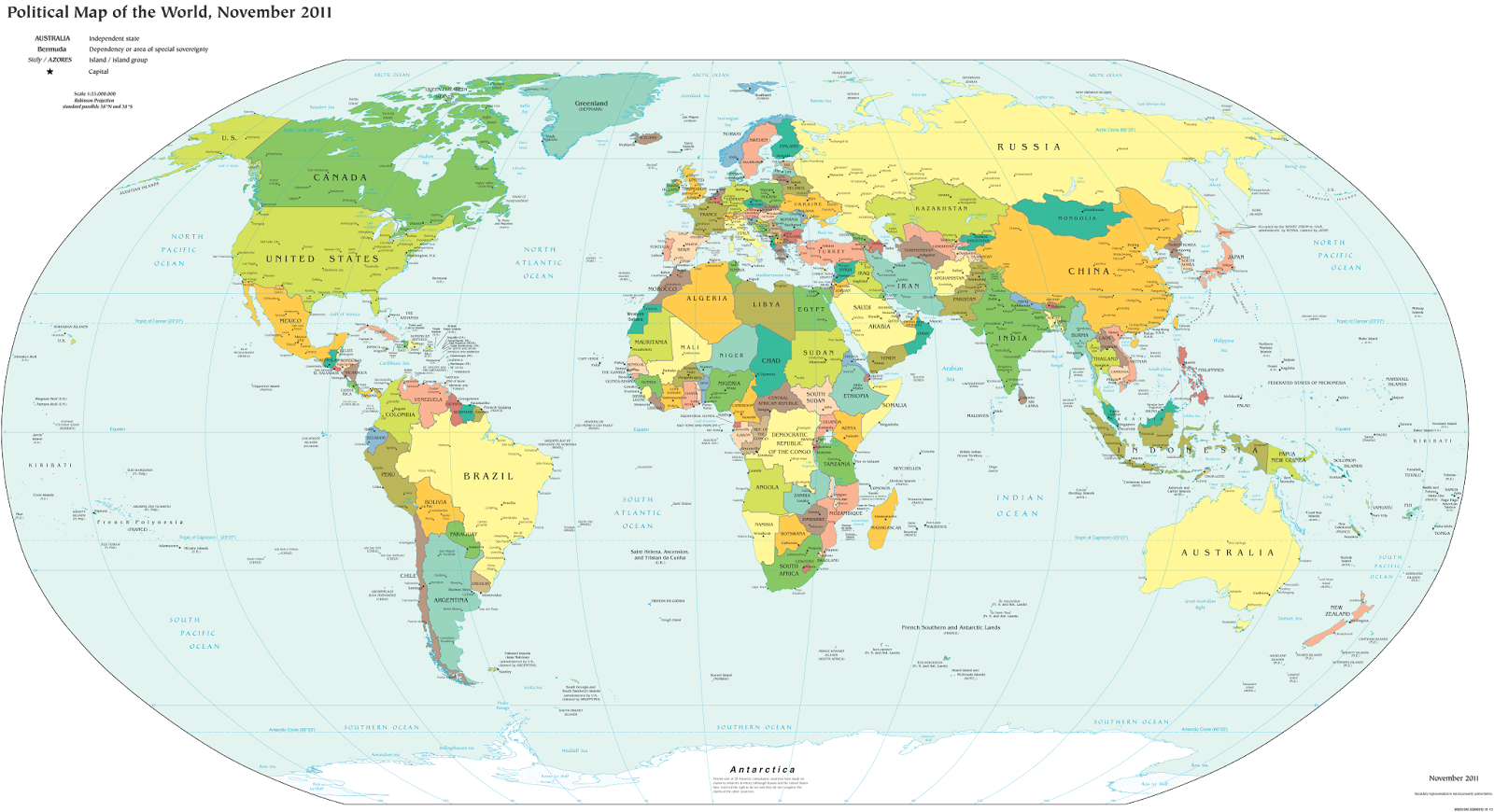
A world political map published by the US government. South Sudan is the most recent addition to the UN-based list of the world’s countries.

One of the most basic questions for map-lovers is, “How many countries are there in the world?” But anyone who just gives you a number isn’t telling the whole truth. It actually depends a lot on how you define a “country”.

Here are six of the most common answers, each correct in its own way:

195 Sovereign States According to the UN
“Country” and “nation” are casual words for what political scientists call a “sovereign state”, meaning a place with its own borders and completely independent government. The question of which places count as sovereign states can be controversial, but for starters we normally count all the member and observer countries of the United Nations (UN):

UN Members: 193
UN Observer States: 2
Total: 195

These countries mostly all accept each other as sovereign states, and they’re the ones you’ll see on most world maps and lists of the world’s countries. Almost every country you’ve ever heard of is probably a member of the UN, and the two UN Observer States are Vatican City (represented by the Holy See) and Palestine. If you want to know the names of all 195, Wikipedia has a complete list.

The last addition to the list was in 2012, when Palestine became a UN Observer State, and the last time the number of full UN members changed was when South Sudan joined in 2011.

Note: Palestine’s approval as a UN Observer State was controversial, so some lists may still only have 194 countries.

201 States With At Least Partial Recognition
Several more country candidates are left out of the UN itself, but are still officially acknowledged by at least one UN member (this kind of official acceptance is called “diplomatic recognition“). These controversial countries are usually labeled on world maps as disputed territories or special cases, if they’re on the map at all.
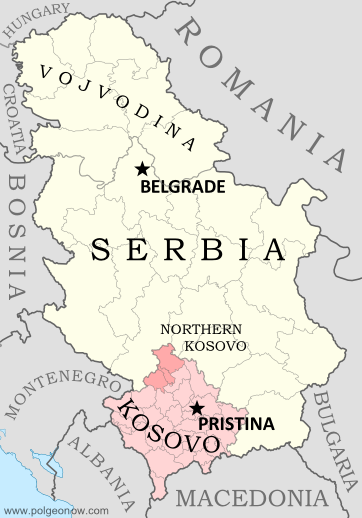
Map of Serbia, Kosovo, and North Kosovo
Kosovo is claimed by Serbia, but recognized as independent by over 100 countries.

UN Members: 193
UN Observer States: 2
States With Partial Recognition:
Total: 201

The six non-UN states with partial recognition are Taiwan, Western Sahara, Kosovo, South Ossetia, Abkhazia, and Northern Cyprus. All of these are claimed as parts of other countries, but aren’t actually controlled by them (at least not completely). The number of UN members recognizing them varies, from just one for Northern Cyprus to over 100 for Kosovo.

A few lists also include the Cook Islands and Niue as partially-recognized states. These two places sometimes act like independent countries, but they’ve never actually declared independence or tried to join the UN. They’re usually considered to be highly self-governing overseas territories of New Zealand.

204-207 De Facto Sovereign States
But wait, there’s more! Those six partially recognized countries aren’t the only breakaway states with full self-governance. There are at least three more self-declared countries that aren’t recognized by any UN members at all, but still operate independently from the countries that claim them. These are often called “de facto” sovereign states, a fancy Latin way of saying they’re independent countries in actual fact, even if not on paper.

UN Members: 193
UN Observer States: 2
States With Partial Recognition:
Unrecognized de facto Sovereign States: 3 to 6 (see below)
Total: 204 to 207

The three places most often considered de facto independent countries are Nagorno-Karabakh, Transnistria, and Somaliland. And since 2014 there have been three more contenders for the list, questionable because they’re located in active war zones and have only limited government structures: The so-called “Islamic State” is almost out of the running now that it’s lost most of its territory in Syria and Iraq, but the Donetsk People’s Republic and the Lugansk People’s Republic, which claim independence from Ukraine, don’t seem to be going anywhere.

Tiny “micronations” declared by individual people usually aren’t taken seriously enough to put on the list. The closest contender would be Sealand, but it’s debatable whether this tiny “nation” really counts as having a territory, population, or government, all key ingredients for a sovereign state.

There are also many rebel-held territories (and fully self-governing areas like Puntland state in Somalia) that aren’t controlled by any country, but are left off the list because they don’t claim to be independent. They agree in principle that they’re part of another country, even though they might disagree about who should be in charge, or how the country should be governed.

206 Olympic Nations
Lots of people learn about the world’s list of countries by watching the Olympic Games every two years. If you’re one of them, you might be confused at why the Olympic Parade of Nations claims over 200 members, even though your atlas only has 195.

This is because the Olympics didn’t always require applicants to be independent countries. Dependent territories with partial self-government have sometimes been approved by the International Olympic Committee (IOC), and a couple of the partially-recognized states mentioned above have also managed it.

Olympic Nations that are UN Member States: 193
Olympic Nations that are UN Observer States: 1
Olympic Nations that are Partially-recognized States: 2
Olympic Nations that are Dependent Territories: 10
Total IOC-Recognized Olympic Nations: 206
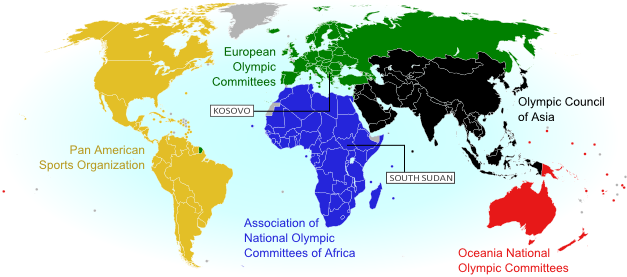
World map showing the five continental associations of National Olympic Committees, including all nations eligible for the Olympic games
The Olympics include most of the world’s independent countries, and some dependent territories too.

About half of the dependent territories in the Olympics are overseas possessions of the US (like Puerto Rico) or the UK (like Bermuda). Some nearly-independent “countries” like the Cook Islands (associated with New Zealand) and Aruba (a “constituent country” of the Netherlands) are included too.

Every UN member country is also in the Olympics, with the latest addition, South Sudan, joining in August 2015.  The one UN Observer State in the Olympics is Palestine; Vatican City apparently isn’t interested. As for the two partially-recognized countries in the games, Kosovo became an Olympic Nation in 2014, and Taiwan has been a member for some time, but has to call itself  “Chinese Taipei” after a deal struck with China in the 1980s.

Learn More: Parade of Nations: Which Countries Are (and Aren’t) in the Olympics

211 FIFA Countries Eligible for the World Cup
Soccer – or “football” as it’s known in many countries – is the world’s most popular sport, and most international matches all the way up to the World Cup are regulated by an organization called FIFA. If you’re a soccer super-fan, you might know that, until recently, there were 209 member countries that compete in FIFA matches (even though most don’t make it to the World Cup). That’s already more than the number of Olympic Nations, and definitely more than the total independent countries on most world maps.

Like the Olympics, FIFA didn’t always require independence or international recognition for its members. Now it’s a bit stricter, but any team that’s already a member is allowed to stay. The two newest members, which joined in May 2016, both made it in under special circumstances: Kosovo, a partially-recognized country, was voted in after being recognized by more than half of the UN’s members; and Gibraltar, an overseas territory of the UK, recently got a court order allowing it in without being independent.

Based on European tradition, FIFA also allows England, Scotland, Wales, and Northern Ireland to compete as separate teams, even though they’re all part of the UK.
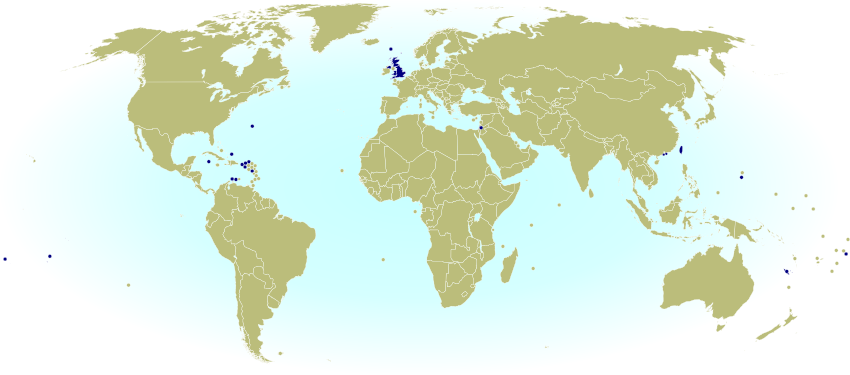
World map marking dependent territories, partially recognized sovereign states, and subnational entities that have national football (soccer) teams recognized by FIFA, making them eligible for the World Cup.
Map from 2014 of FIFA members that aren’t recognized as independent countries by the UN

Teams of UN Member States: 186
Teams of UN Observer States: 1
Teams of Partially Recognized States: 2
Teams of UK Constituent Countries: 4
Teams of Dependent Territories: 18
Total FIFA Member Associations: 211

You might notice that not all of the 193 UN member states are included. That’s because several very small countries aren’t members, plus the UK is replaced by its four “constituent countries”, which aren’t UN members on their own.

Learn More: Which Countries Are (and Aren’t) Part of FIFA? (2014)

249 Country Codes in the ISO Standard List
Ever been filling out an internet form, and had to choose from a surprisingly long list of countries? You were probably looking at the international standard “country code” list, formally known as ISO 3166-1. Lots of companies and other organizations adopt this standard list instead of spending their own time compiling one. The standard also includes convenient two-letter codes for each country, like us for the United States, de for Germany, and jp for Japan, which you might recognize from website addresses specific to those countries.

This ISO standard is based on an official list kept by the UN…but then why on Earth are there 249 country codes? That’s way more than the total number of UN member and observer countries! Well, the standard list does leave out some breakaway states not recognized by the UN, but makes up for it by listing dependent territories separately from their parent countries. In other words, the ISO list is more an answer to the question, “How many countries and territories in the world?” than “How many countries in the world?”

This means there are “country codes” not just for actual countries, but also for nearly-independent states, overseas colonies, uninhabited islands, and even Antarctica! This is important, because organizations might need an option for every place that any person can be located, and dependent territories often aren’t technically part of the countries they belong to.

UN Members: 193
UN Observer States: 2
States With Partial Recognition:
Inhabited Dependent Territories: 45
Uninhabited Territories: 6
Antarctica: 1
Total: 249

So there you have it! Next time someone tells you “There are 194 countries in the world,” remember that the real answer isn’t so simple!
How Many Countries Are There in the World in 2017?

There are newer editions of this article available. To find the most recent, view all “How Many Countries in the World” updates!

This article, originally from 2011, has been revised and updated to June 2017.

How many countries in the world?
A world political map published by the US government (public domain)

One of the most basic questions for map-lovers is, “How many countries are there in the world?” But anyone who replies with just a number is leaving out part of the story. It actually depends a lot on how you define a “country”.

Here are six of the most common answers, each correct in its own way:

195 Sovereign States According to the UN
“Country” and “nation” are casual words for what political scientists call a “sovereign state”, meaning a place with its own borders and completely independent government. The question of which places count as sovereign states can be controversial, but for starters we can count all the member and observer countries of the United Nations (UN):

UN Members: 193
UN Observer States: 2
Total: 195

These countries mostly all accept each other as sovereign states, and they’re the ones you’ll see on most world maps and many lists of the world’s countries. Almost every country you’ve ever heard of is probably a member of the UN, and the two UN Observer States are Vatican City (represented by the Holy See) and Palestine. If you want to know the names of all 195, Wikipedia has a complete list.

The last addition to the list was in 2012, when Palestine became a UN Observer State, and the last time the number of full UN members changed was when South Sudan joined in 2011.

Note: Palestine’s approval as a UN Observer State was controversial, so some lists may still only include 194 countries.

201 States With At Least Partial Recognition
Several more country candidates are left out of the UN itself, but are still officially acknowledged by at least one UN member (this kind of official acceptance is called “diplomatic recognition“). These controversial countries are usually labeled on world maps as disputed territories or special cases, if they’re on the map at all.

Map of Serbia, Kosovo, and North Kosovo
Kosovo is claimed by Serbia, but recognized as independent by over 100 countries.

UN Members: 193
UN Observer States: 2
States With Partial Recognition:
Total: 201

The six non-UN states with partial recognition are Taiwan, Western Sahara, Kosovo, South Ossetia, Abkhazia, and Northern Cyprus. All of these are claimed as parts of other countries, but aren’t actually controlled by them (at least not completely). The number of UN members recognizing them varies, from just one for Northern Cyprus to over 100 for Kosovo.

A few lists also include the Cook Islands and Niue as partially-recognized states. These two places sometimes act like independent countries, but they’ve never actually declared independence or tried to join the UN. They’re usually considered overseas territories of New Zealand

204-207 De Facto Sovereign States
But wait, there’s more! Those six partially recognized countries aren’t the only breakaway states with full self-governance. There are at least three more self-declared countries that aren’t recognized by any UN members at all, but still operate independently from the countries that claim them. These are often called “de facto” sovereign states, a fancy Latin way of saying they’re independent countries in actual fact, even if not on paper.

UN Members: 193
UN Observer States: 2
States With Partial Recognition:
Unrecognized de facto Sovereign States: 3 to 6 (see below)
Total: 204 to 207

The three places most often considered de facto independent countries are Nagorno-Karabakh, Transnistria, and Somaliland. And since 2014 there are three more contenders for the list: the so-called “Islamic State”, the Donetsk People’s Republic, and the Lugansk People’s Republic. But because those last three are located in active war zones and have only limited government structures, there’s some debate over whether they count even as de facto countries.

Tiny “micronations” declared by individual people usually aren’t taken seriously enough to put on the list. The closest contender would be Sealand, but it’s debatable whether this tiny “nation” really counts as having a territory, population, or government, all key ingredients for a sovereign state.

There are also many rebel-held territories (and fully self-governing areas like Puntland) that aren’t controlled by any country, but are left off the list because they don’t claim to be independent. They agree in principle that they’re part of another country, even though they might disagree about who should be in charge, or how the country should be governed.

206 Olympic Nations
Lots of people learn about the world’s list of countries by watching the Olympic Games every two years. If you’re one of them, you might be confused at why the Olympic Parade of Nations claims over 200 members, even though your atlas only has 195.

This is because the Olympics didn’t always require applicants to be independent countries. Dependent territories with partial self-government have sometimes been approved by the International Olympic Committee (IOC), and a couple of the partially-recognized states mentioned above have also managed it.

Olympic Nations that are UN Member States: 193
Olympic Nations that are UN Observer States: 1
Olympic Nations that are Partially-recognized States: 2
Olympic Nations that are Dependent Territories: 10
Total IOC-Recognized Olympic Nations: 206

World map showing the five continental associations of National Olympic Committees, including all nations eligible for the Olympic games
The Olympics include most of the world’s independent countries, and some dependent territories too.

About half of the dependent territories in the Olympics are overseas possessions of the US (like Puerto Rico) and of the UK (like Bermuda). Some nearly-independent “countries” like the Cook Islands (New Zealand) and Aruba (the Netherlands) are included too.

Every UN member country is also in the Olympics, with the latest addition, South Sudan, joining in August 2015.  The one UN Observer State in the Olympics is Palestine; Vatican City apparently isn’t interested. As for the two partially-recognized countries in the games, Kosovo just became an Olympic Nation in 2014, and Taiwan has been a member for some time, but has to call itself  “Chinese Taipei” after a deal struck with China in the 1980s.

Learn More: Parade of Nations: Which Countries Are (and Aren’t) in the Olympics

211 FIFA Countries Eligible for the World Cup
Soccer – or “football” as it’s known in many countries – is the world’s most popular sport, and most international matches all the way up to the World Cup are regulated by an organization called FIFA. If you’re a soccer super-fan, you might know that until recently there were 209 member countries that compete in FIFA matches (even though most don’t make it to the World Cup). That’s already more than the number of Olympic Nations, and definitely more than the total independent countries on most world maps.

Like the Olympics, FIFA didn’t always require independence or international recognition for its members. Now it’s a bit stricter, but any team that’s already a member is allowed to stay. And since May 2016, there are now two more FIFA members: Kosovo, a partially-recognized country that was voted in after being recognized by more than half of the UN’s members; and Gibraltar, an overseas territory of the UK that recently got a court order allowing it in without being independent.

Based on European tradition, FIFA also allows England, Scotland, Wales, and Northern Ireland to compete as separate teams, even though they’re all part of the UK.

World map marking dependent territories, partially recognized sovereign states, and subnational entities that have national football (soccer) teams recognized by FIFA, making them eligible for the World Cup.
Map from 2014 of FIFA members that aren’t recognized as independent countries by the UN

Teams of UN Member States: 186
Teams of UN Observer States: 1
Teams of Partially Recognized States: 2
Teams of UK Constituent Countries: 4
Teams of Dependent Territories: 18
Total FIFA Member Associations: 211

You might notice that not all of the 193 UN member states are included. That’s because several very small countries aren’t members, plus the UK is replaced by its four “constituent countries”, which aren’t UN members on their own.

Learn More: Which Countries Are (and Aren’t) Part of FIFA? (2014)

249 Country Codes in the ISO Standard List
Ever been filling out an internet form, and had to choose from a surprisingly long list of countries? You were probably looking at the international standard “country code” list, formally known as ISO 3166-1. Lots of companies and other organizations adopt this standard list instead of spending their own time compiling one. The standard also includes convenient two-letter codes for each country, like us for the United States, de for Germany, and jp for Japan, which you might recognize from web addresses specific to those countries.

This ISO standard is based on an official list kept by the UN….but then why on Earth are there 249 country codes? That’s way more than the total number of UN member and observer countries! Well, the standard list does leave out some breakaway states not recognized by the UN, but makes up for it by listing dependent territories separately from their parent countries. So there are country codes not just for actual countries, but also for nearly-independent states, overseas territories, uninhabited islands, and even Antarctica! This is important, because organizations might need an option for every place that any person can be located, and dependent territories often aren’t technically part of the countries they belong to.

UN Members: 193
UN Observer States: 2
States With Partial Recognition:
Inhabited Dependent Territories: 45
Uninhabited Territories: 6
Antarctica: 1
Total: 249

So there you have it! Next time someone tells you “There are 194 countries in the world,” remember that the real answer isn’t so simple!
How Many Countries Are There in the World in 2016?

There are newer editions of this article available. To find the most recent, view all “How Many Countries in the World” updates!

This article, originally from 2011, has been revised and updated to August 2016. (Latest update: Gibraltar and Kosovo are now FIFA members.)

How many countries in the world?
A world political map published by the US government (public domain)

One of the most basic questions for map-lovers is, “How many countries are there in the world?” But anyone who replies with a simple number is leaving out part of the story. It actually depends a lot on how you define a “country”.

Here are six of the most common answers, each correct in its own way:

195 Sovereign States According to the UN
“Country” and “nation” are casual words for what political scientists call a “sovereign state”, meaning a place with its own borders and completely independent government. The question of which places count as sovereign states can be controversial, but for starters we can count all the member and observer countries of the United Nations (UN):

UN Members: 193
UN Observer States: 2
Total: 195

These countries mostly all accept each other as sovereign states, and they’re the ones you’ll see on most world maps and many lists of the world’s countries. Almost every country you’ve ever heard of is probably a member of the UN, and the two UN Observer States are Vatican City (represented by the Holy See) and Palestine. If you want to know the names of all 195, Wikipedia has a complete list.

The last addition to the list was in 2012, when Palestine became a UN Observer State, and the last time the number of full UN members changed was when South Sudan was admitted in 2011.

Note: Palestine’s status as a UN Observer State is controversial, so some lists may still only include 194 countries.

201 States With At Least Partial Recognition
Several more country candidates are left out of the UN itself, but are still officially acknowledged by at least one UN member (this kind of official acceptance is called “diplomatic recognition“). These controversial countries are usually labeled on world maps as disputed territories or special cases, if they’re on the map at all.

Map of Serbia, Kosovo, and North Kosovo
Kosovo is claimed by Serbia, but recognized as independent by over 100 countries.

UN Members: 193
UN Observer States: 2
States With Partial Recognition:
Total: 201

The six non-UN states with partial recognition are Taiwan, Western Sahara, Kosovo, South Ossetia, Abkhazia, and Northern Cyprus. All of these are claimed as parts of other countries, but aren’t actually controlled by them (at least not completely). The number of UN members recognizing them varies, from just one for Northern Cyprus to over 100 for Kosovo.

A few lists also include the Cook Islands and Niue as partially-recognized states. These two places sometimes act like independent countries, but they’re usually considered overseas territories of New Zealand, because they’ve never actually declared independence or tried to join the UN. 

204-207 De Facto Sovereign States
But wait, there’s more! Those six partially recognized countries aren’t the only breakaway states with full self-governance. There are at least three more self-declared countries that aren’t recognized by any UN members at all, but still operate independently from the countries that claim them. These are often called “de facto” sovereign states, a fancy Latin way of saying they’re independent countries in actual fact, even if not on paper.

UN Members: 193
UN Observer States: 2
States With Partial Recognition:
Unrecognized de facto Sovereign States: 3 to 6 (see below)
Total: 204 to 207

The three places most often considered de facto independent countries are Nagorno-Karabakh, Transnistria, and Somaliland. And since 2014 there are three more contenders for the list: the Islamic State, the Donetsk People’s Republic, and the Lugansk People’s Republic. But because those last three are located in active war zones and have only limited government structures, there’s some debate over whether they count even as de facto countries.

Tiny “micronations” declared by individual people usually aren’t taken seriously enough to count on the list. The closest contender would be Sealand, but it’s debatable whether this tiny “nation” really counts as having a territory, population, or government, all key ingredients for a sovereign state.

There are also many rebel-held territories (and fully self-governing areas like Puntland) that aren’t controlled by any country, but are left off the list because they don’t claim to be independent countries. They agree in principle that they’re part of another country, even though they might disagree about who should be in charge, or how the country should be governed.

206 Olympic Nations
Lots of people learn about the world’s list of countries by watching the Olympic Games every two years. If you’re one of them, you might be confused at why the Olympic Parade of Nations claims over 200 members, even though your atlas only has 195.

This is because the Olympics didn’t always require applicants to be independent countries. Dependent territories with partial self-government have sometimes been approved by the International Olympic Committee (IOC), and a couple of the partially-recognized states mentioned above have also managed this.

Olympic Nations that are UN Member States: 193
Olympic Nations that are UN Observer States: 1
Olympic Nations that are Partially-recognized States: 2
Olympic Nations that are Dependent Territories: 10
Total IOC-Recognized Olympic Nations: 206

World map showing the five continental associations of National Olympic Committees, including all nations eligible for the Olympic games
The Olympics include most of the world’s independent countries, and some dependent territories too.

About half of the dependent territories in the Olympics are overseas possessions of the US (such as Puerto Rico) and of the UK (such as Bermuda). Some nearly-independent “countries” such as the Cook Islands (New Zealand) and Aruba (the Netherlands) are included as well.

Every UN member country is also in the Olympics, with the latest addition, South Sudan, joining in August 2015.  The one UN Observer State in the Olympics is Palestine; Vatican City isn’t interested. As for the two partially-recognized countries in the games, Kosovo just became an Olympic Nation in 2014, and Taiwan has been a member for some time, but has to call itself  “Chinese Taipei” after a deal struck with China in the 1980s.

See Also: Parade of Nations: Which Countries Are (and Aren’t) in the Olympics

211 FIFA Countries Eligible for the World Cup
Soccer, or football as it’s known in much of the world, is the world’s most popular sport, and most international matches all the way up to the World Cup are regulated by an organization called FIFA. If you’re a soccer superfan, you might know that until recently there were 209 member countries that compete in FIFA matches (though most don’t make it to the World Cup). This is already more than the number of Olympic Nations, and certainly more than the number of independent countries on most world maps.

Like the Olympics, FIFA didn’t always require independence or international recognition of its member states. Now it’s a bit stricter, but any team that’s already a member is allowed to stay. And since May 2016, there are now two more FIFA members: Kosovo, a partially-recognized country that was voted in after being recognized by more than half of the UN’s members; and Gibraltar, an overseas territory of the UK that recently got a court order allowing it in despite not being independent.

Based on European tradition, FIFA also allows England, Scotland, Wales, and Northern Ireland to compete as separate teams, even though they’re all part of the UK.

World map marking dependent territories, partially recognized sovereign states, and subnational entities that have national football (soccer) teams recognized by FIFA, making them eligible for the World Cup.
Map from 2014 of FIFA members that aren’t recognized as independent countries by the UN

Teams of UN Member States: 186
Teams of UN Observer States: 1
Teams of Partially Recognized States: 2
Teams of UK Constituent Countries: 4
Teams of Dependent Territories: 18
Total FIFA Member Associations: 211

You might notice that not all the 193 UN member states are included. That’s because several very small countries aren’t members, plus the UK is replaced by its four “constituent countries”, which aren’t UN members on their own.

See Also: Which Countries Are (and Aren’t) Part of FIFA? (2014)

249 Country Codes in the ISO Standard List
Have you ever been filling out an internet form, and had to choose from a surprisingly long list of countries? You were probably looking at the international standard “country code” list, officially known as ISO 3166-1. Many companies and other organizations adopt this standard list rather than spending their own time compiling one. The standard also includes convenient two-letter codes for each country, like us for the United States, de for Germany, and jp for Japan, which you might recognize from web addresses specific to those countries.

This ISO standard is based on an official list kept by the UN….but then why on Earth are there 249 country codes? That’s way more than the total number of UN member and observer countries! Well, the standard list does leave out some breakaway states not recognized by the UN, but makes up for it by listing dependent territories separately from their parent countries. So there are country codes not only for actual countries, but also for nearly-independent states, overseas territories, uninhabited islands, and even Antarctica! This is important because organizations might need an option for every place that any person can be located, and dependent territories often aren’t technically part of the countries they belong to.

UN Members: 193
UN Observer States: 2
States With Partial Recognition:
Inhabited Dependent Territories: 45
Uninhabited Territories: 6
Antarctica: 1
Total: 249

So there you have it! Next time someone tells you “There are X countries in the world,” remember that the real answer isn’t so simple!
How Many Countries Are There in the World in January 2016?

There are newer editions of this article available. To find the most recent, view all “How Many Countries in the World” updates!

This article was first published in 2011, and the version below was last updated in January 2016 for South Sudan’s admission as an Olympic Nation

How many countries in the world?
A world political map published by the U.S. government (public domain)

One of the most basic questions for map-lovers is, “How many countries are there in the world?” But anyone who replies with a simple number is leaving out part of the story. The fact is, the answer depends heavily on how you define “country”.

Here are six of the most common answers, each correct in its own way:

195 Sovereign States According to the UN
“Country” and “nation” are casual words for what political scientists call a “sovereign state”, meaning a place with its own borders and completely independent government. The question of which places count as sovereign states can be controversial, but for starters we can count all the member and observer countries of the United Nations (UN):

UN Members: 193
UN Observer States: 2
Total: 195

These countries mostly all accept each other as sovereign states, and they’re the ones you’ll see on most world maps and many lists of the world’s countries. Most of the countries you’ve ever heard of are probably members of the UN, and the two UN Observer States are Vatican City (represented by the Holy See) and Palestine. If you want to know the names of all 195, Wikipedia has a complete list.

The last addition to the list was in 2012, when Palestine became a UN Observer State, and the last country to join the UN as a full member was South Sudan in 2011.

Note: Palestine’s status as a UN Observer State is controversial, so some lists may still only include 194 countries.

201 States With At Least Partial Recognition
Several more country candidates are left out of the UN itself, but are still officially acknowledged by at least one UN member (this kind of official acceptance is called “diplomatic recognition“). These controversial countries are usually labeled on world maps as disputed territories or special situations, if they’re on the map at all.

Map of Serbia, Kosovo, and North Kosovo
Kosovo is claimed by Serbia, but recognized as independent by over 100 countries.

UN Members: 193
UN Observer States: 2
States With Partial Recognition:
Total: 201

The six non-UN states with partial recognition are Taiwan, Western Sahara, Kosovo, South Ossetia, Abkhazia, and Northern Cyprus. All of these are claimed as parts of other countries, but aren’t actually controlled by them (at least not completely). The number of UN members recognizing them varies, from just one for Northern Cyprus to over 100 for Kosovo.

A few lists also include the Cook Islands and Niue as partially-recognized states. These two places sometimes act like independent countries, but they’ve never actually declared independence or tried to join the UN, and are usually considered overseas territories of New Zealand.

204-207 De Facto Sovereign States
But wait, there’s more! Those six partially recognized countries aren’t the only breakaway states with full self-governance. There are at least three more declared countries that aren’t recognized by any UN members at all, but still operate independently from the countries that claim them. These are often called “de facto” sovereign states, a fancy Latin way of saying that they’re independent countries in actual fact, even if not on paper.

UN Members: 193
UN Observer States: 2
States With Partial Recognition:
Unrecognized de facto Sovereign States: 3 to 6 (see below)
Total: 204 to 207

The three places most often considered de facto independent countries are Nagorno-Karabakh, Transnistria, and Somaliland. And since 2014 there are three more contenders for the list: the Islamic State, the Donetsk People’s Republic, and the Lugansk People’s Republic. But because these last three are located in active war zones and have only limited government structures, there’s some debate over whether they count even as de facto countries.

Tiny “micronations” declared by individual people are usually not taken seriously enough to count on the list. The closest contender would be Sealand, but it’s debatable whether this tiny “nation” really counts as having a territory, population, or government, all key ingredients for a sovereign state.

There are also many rebel-held territories (and fully self-governing areas like Puntland) that aren’t controlled by any country, but are left off the list because they aren’t trying to become independent countries. They agree in principle to be part of the country they’re in, even though they might disagree about who should be in charge or how the country should be governed.

206 Olympic Nations
Lots of people learn about the world’s list of countries by watching the Olympic Games every two years. If you’re one of them, you might be confused at why the Olympic Parade of Nations claims over 200 members, even though your atlas only has 195.

This is because the Olympics didn’t always require applicants to be independent countries. Dependent territories with partial self-government have sometimes been approved by the International Olympic Committee (IOC), and a couple of the partially-recognized states mentioned above have also managed this.

Olympic Nations that are UN Member States: 193
Olympic Nations that are UN Observer States: 1
Olympic Nations that are Partially-recognized States: 2
Olympic Nations that are Dependent Territories: 10
Total IOC-Recognized Olympic Nations: 206

World map showing the five continental associations of National Olympic Committees, including all nations eligible for the Olympic games
The Olympics include most of the world’s independent countries, and some dependent territories too.

About half of the dependent territories in the Olympics are overseas possessions of the US (such as Puerto Rico) and of the UK (such as Bermuda), and some nearly-independent “countries” such as the Cook Islands (New Zealand) and Aruba (the Netherlands) are included as well.

Every UN member country is also in the Olympics, with the latest addition, South Sudan, joining in August 2015.  The one UN Observer State in the Olympics is Palestine; Vatican City isn’t interested. As for the two partially-recognized IOC members, Kosovo just became an Olympic Nation in 2014, and Taiwan has been a member for some time, but has to call itself  “Chinese Taipei” after a deal struck with China in the 1980s.

See Also: Parade of Nations: Which Countries Are (and Aren’t) in the Olympics

209 FIFA Countries Eligible for the World Cup
Soccer, or football as it’s known outside North America, is the world’s most popular sport, and most international matches all the way up to the World Cup are regulated by an organization called FIFA. If you’re a soccer superfan, you might know there are 209 member countries that compete in FIFA matches (though most don’t make it to the World Cup). This is even more than the number of Olympic Nations, and certainly more than the number of independent countries on most world maps.

Like the Olympics, FIFA didn’t always require independence or international recognition of its member states. Now it’s a bit stricter, but any team that’s already a member is allowed to stay. And based on European tradition, FIFA allows England, Scotland, Wales, and Northern Ireland to compete as separate teams, even though they’re all part of the UK.

World map marking dependent territories, partially recognized sovereign states, and subnational entities that have national football (soccer) teams recognized by FIFA, making them eligible for the World Cup.
Map of FIFA members that aren’t recognized as independent countries by the U.N.

Teams of UN Member States: 186
Teams of UN Observer States: 1
Teams of Partially Recognized States: 1
Teams of UK Constituent Countries: 4
Teams of Dependent Territories: 17
Total FIFA Member Associations: 209

You may notice that not all of the 193 UN member states are included. That’s because several very small countries aren’t members, plus the UK is replaced by its four “constituent countries”, which aren’t UN members on their own.

See Also: Which Countries Are (and Aren’t) Part of FIFA?

249 Country Codes in the ISO Standard List
Have you ever been filling out an internet form, and had to choose from a surprisingly long list of countries? You were probably looking at the international standard “country code” list, officially known as ISO 3166-1. Many companies and other organizations adopt this standard list rather than spending their own time compiling one. The standard also includes convenient two-letter codes for each country, like us for the United States, de for Germany, and jp for Japan, which you might recognize from web addresses specific to those countries.

This ISO standard is based on an official list kept by the UN….but then why on Earth are there 249 country codes? That’s way more than the total number of UN member and observer countries! Well, the standard list does leave out some breakaway states not recognized by the UN, but makes up for it by listing dependent territories separately from their mother countries. So there are country codes not only for actual countries, but also for nearly-independent states, overseas territories, uninhabited islands, and even Antarctica! This is important because organizations might need an option for every place that any person is located, and dependent territories often aren’t technically part of the countries they belong to.

UN Members: 193
UN Observer States: 2
States With Partial Recognition:
Inhabited Dependent Territories: 45
Uninhabited Territories: 6
Antarctica: 1
Total: 249

So there you have it! Next time someone tells you “There are X countries in the world,” remember that the real answer isn’t so simple!

Is Palestine Really a Country?

(Keep up with changes to Palestine’s situation: view all Palestine updates.)

Palestine is now recognized as a country by both the U.N. and a majority of its members, but many  have questioned whether this new-found status reflects the truth on the ground. Is Palestine really an independent country, or is this a political fantasy concocted by supporters in the U.N.?

The Olso Accords divided the Palestinian territories into three areas of control (see article for explanation). Map by Evan Centanni. Sources: Natural Earth, B’Tselem, U.N. OCHA oPt.

What is a “sovereign state”?
By the most common definition, a “state” has to have:

  1. A government
  2. A defined territory
  3. A permanent population
  4. The ability to conduct foreign relations with other states

This definition is called the “declarative theory of statehood“, and was formalized in the Montevideo Convention of 1933. To be a “sovereign” state (i.e. an independent country), it’s also important that the government answers to no other country, and that the territory and population are actually under the government’s control.

A prospective country that fits these criteria is described by geographers as a de facto sovereign state, even if it’s not recognized by the international community (de facto is Latin for “in actual fact”).

Palestine: Sovereign State or Not?
Can Palestine be considered a real, de facto sovereign state based on the declarative theory of statehood? Let’s look at the criteria one by one:

A government that answers to no one
Palestine is represented abroad by the Palestinian Liberation Organization (PLO), and governed within its administrative area by the Palestinian National Authority (PNA), an elected government established by the PLO under the Oslo Accords. Though it faces frequent pressure and demands from Israel, the Palestinian government does not take orders from any country.

Defined territory under its control
The State of Palestine claims two territories: the West Bank and the Gaza Strip. The U.N. considers both of these regions to be occupied by Israel, but the Palestinians do control some parts of them since 1995. The Oslo II Accord temporarily designated three types of control within the West Bank (see map above):

  • Area A – Fully governed by the Palestinians, with no Israeli administration or Israeli military presence (currently 18%)
  • Area B – Shared control; Palestinian civil administration with joint Israeli-Palestinian military control (currently 21%)
  • Area CFull Israeli control, with some exceptions for Palestinian residents (currently 61%)
Flag of Palestine Country Name:  
• Palestine (English)
Filasṭīn (Arabic)
Official Name:  
• State of Palestine (English)
• Dawlat Filasṭin (Arabic)
Capital: 
• Jerusalem (claimed)
Ramallah (administrative)

The Gaza Strip is a special case: Israel withdrew from the territory in 2005, leaving it effectively part of Area A. However, a brief Palestinian civil war in 2007 left Gaza in the hands of extremist group Hamas, which currently doesn’t answer to the PLO (though it did support the campaign for U.N. observer state status). [Update: As of June 2014, Gaza and the West Bank are nominally united under a Palestinian unity government.]

Besides area C, Israel also controls all of the airspace and territorial waters associated with the West Bank and Gaza Strip. Additionally, it has completely annexed (integrated as part of the country) two sections of Area C itself: East Jerusalem, which both sides claim for their capital, and a strip of “no man’s land” which was located between Israel and the West Bank when the latter was still controlled by Jordan.

In other words, Israel controls most of Palestine’s claimed territory, but not all of it. Since many countries don’t control all of their claimed land and waters, that alone doesn’t disqualify Palestine as a state.

A permanent population
There are almost four million Palestinians living within the West Bank and the Gaza Strip, so this requirement is no problem. Even if we only count the West Bank’s Area A, the Palestinian Authority has full control  over close to one million people. By comparison, there about 40 U.N. member states with populations of less than one million.

Ability to conduct foreign relations
This requirement is also clearly fulfilled. Not only is Palestine seated as an observer state in the U.N. General Assembly, but its representatives also maintain direct diplomatic relations with 142 countries (even more than the number who recognize its independence), plus the European Union. It’s also a member or observer in various international organizations.

So what’s the answer?
Palestine has its own government (the PLO/PNA), a defined and controlled territory (Area A in the West Bank), a permanent population (one to four million Palestinians), and the ability to maintain relations with other states. So whatever we think about what should happen in the future, Palestine does seem to qualify as a de facto sovereign state at the present.

Palestine Recognized as a Country by the U.N.

(Keep up with changes to Palestine’s situation: view all Palestine updates.)

This Thursday, the U.N. General Assembly voted to change Palestine’s status in the organization from “observer” to “observer state”. This is the first time the international body has recognized Palestine as a state, giving it the same status enjoyed by U.N. non-member Vatican City. 

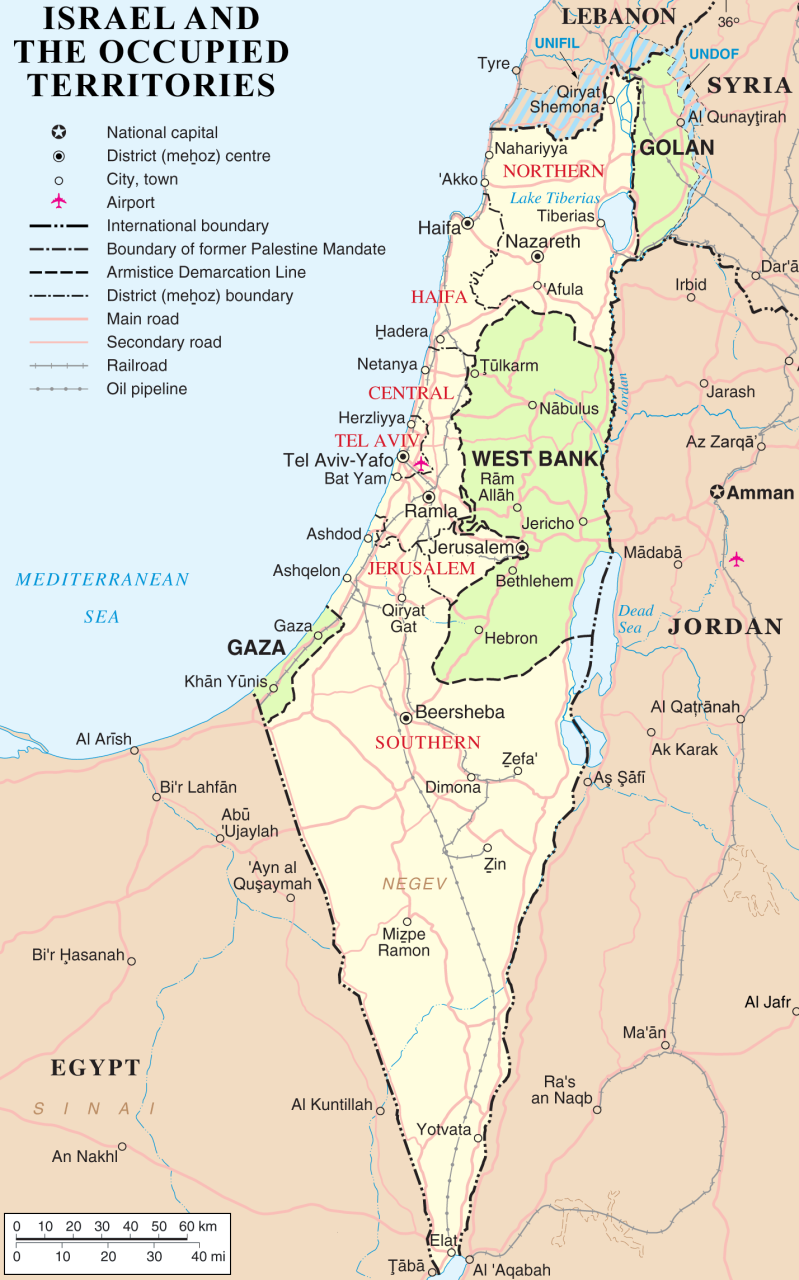
Map of Israel with the occupied territories of the West Bank, Gaza Strip, and Golan Heights highlighted
The State of Palestine claims the West Bank and Gaza, which are largely occupied by Israel. The Golan Heights are not part of the Palestinian Territories. Public domain map (source).

Until this Thursday, Palestine was a partially recognized country, acknowledged by some U.N. member nations, but not by the U.N. itself (See also: How many countries are there in the world?). Although its delegation has had observer status at the U.N. since 1974, it was never classified as a “state”, being treated as something between a country and a non-government organization. Now, the organization has officially voted to change Palestine’s status to “observer state” – effectively a recognition that it’s an independent country, even though it’s still not a U.N. member.

The Palestinian delegation campaigned to join the U.N. as a member last year, but had to give up after the U.S. promised to veto the application in the U.N. Security Council. Observer status, on the other hand, is determined by a majority vote in the U.N. General Assembly, which no single country can veto. That vote happened on November 29th, with members voting 138 to 9 in favor of granting Palestine observer state status (41 members abstained, and 5 were absent from the vote; see the full breakdown of national votes).

The only other U.N. observer state is the Holy See, which represents Vatican City. Many other countries have been observer states in the past, but all of them have since been accepted into the U.N. as full members (the last to join were Switzerland in 2002 and North and South Korea in 1991). While yesterday’s events may help settle Palestine’s legal status, the situation on the ground is more complicated, with most of the country’s claimed territory under the control of Israel. The recognized Palestinian government also does not currently administer the Gaza Strip, one of the Palestinian Territories, which is instead controlled by right-wing opposition party Hamas. But despite their differences, the leadership of Hamas supported the campaign for statehood at the U.N.

Document: Full text of U.N. General Assembly resolution authorizing state observer status for Palestine

Color-coded map showing how each U.N. member voted on the General Assembly resolution recognizing Palestine as an observer state
Results of U.N. General Assembly vote on granting observer state status to Palestine. Green: In favor; Red: Against; Yellow: Abstaining; Blue: Absent; Black: Palestine. Map by B1mbo/Wikimedia (source). License: CC BY-SA

What will change with Palestine’s new status?
Since the change is to Palestine’s political status, the effects will be mostly in the domain of politics. Its actual role within the U.N. General Assembly will change little, because observers’ privileges are mostly assigned on a case-by-case basis anyway. But now other U.N. agencies are more likely to consider Palestine for membership. It already successfully joined UNESCO last year, but was rejected from the U.N.-connected International Criminal Court (ICC) on the basis that members need to be states. Possible Palestinian membership in the ICC has received a lot of political attention, because it would allow Palestine to pursue war crimes charges against the Israeli government.

Flag of Palestine Country Name:  
• Palestine (English)
Filasṭīn (Arabic)
Official Name:  
• State of Palestine (English)
• Dawlat Filasṭin (Arabic)
Capital: 
• Jerusalem (claimed)
Ramallah (administrative)

The current Israeli administration of Prime Minister Benjamin Netanhyahu, supported by the U.S., insists that the statehood bid violated the terms of the Oslo Accords by bypassing the existing peace process between Israel and the Palestinians. And in the weeks leading up to the vote, Netanyahu had threatened to punish the PLO for seeking statehood, possibly by withholding money from taxes that Israel collects on the Palestinian government’s behalf. But his government seemed to back down as the campaign came to an end, downplaying the results of the vote and saying they wouldn’t retaliate unless Palestine tries to take them to court in the ICC. Some Israelis, such as the previous prime minister, Ehud Olmert, actually supported the statehood bid.

Another area to watch will be Palestine’s treatment by geographers: since the most common definition of “independent country” in maps and other publications is “member or observer state of the U.N.”, Palestine may begin showing up on more maps and lists of countries from now on. Although it’s already shown on many maps, it’s usually indicated as special-case disputed territory rather than a country. Alternatively, if Palestine’s nationhood proves too controversial, we could possibly see some change in how independent countries are defined in maps and books. In the U.S., some may choose to follow the lead of the American government, which currently recognizes all U.N. members and observers except Palestine.

Further Reading: Q&A – Palestinian bid for upgraded UN status (BBC), Why Palestine Won Big at the U.N. (TIME)

Libya Reunited Under Rebels

Country Name (official): Libya (English), Lībyā (Arabic)
News Category: Divided Countries
Summary: Libya’s civil war came to an end two weeks ago, as rebels under the National Transitional Council (NTC) completed their two-month campaign to flush out the last forces loyal to dictator Muammar Gaddafi. After taking the capital city of Tripoli in August, the NTC had already assumed Libya’s seat in the United Nations, the African Union, and the Arab League, with formal recognition from 100 U.N. member states. With the end of the war, the air-based foreign military intervention that helped bring victory to the rebels has also now come to a close.

The NTC’s last campaigns to reunite Libya. Gaddafi-held cities (green) and
rebel-held cities (black) as of 2 Sep. Rebel movements and capture dates
in red. My own work based on public domain map from Wikipedia (source).

Full Story
Libya’s participation in the “Arab Spring” movement happening across the Middle East and North Africa began as a series of protests in February, and quickly transformed into an armed uprising after national leader Muammar Gaddafi responded with violent crackdowns. Soon the country’s territory was divided between Gaddafi’s government and rebel forces under the National Transitional Council (NTC), with the latter dominating the eastern half of the country as well as the western mountains near Tripoli, the national capital. A near-stalemate held for about five months, as a U.N.-mandated no-fly zone and NATO-led bombing campaign kept Gaddafi’s forces at bay. Then, in late August, the rebels suddenly stormed into Tripoli, taking the national capital and many of the surrounding areas. The Gaddafi government only remained in control of a few scattered cities and desert outposts.

See Also: Political Geography Now: Libyan Rebels Take Capital

The NTC’s official flag of Libya (bottom) has replaced that
of Gaddafi (top). Public domain, from this Wikipedia page.

For two months following the takeover of Tripoli, the NTC mounted a campaign to drive out the last bastions of Gaddafi loyalist control and reunite the country under their own banner. The first area to fall was the southwestern Fezzan, a desert region with Sabha as its major city, in mid-to-late September. Then came Tripoli’s neighbor Bani Walid on 17 October, and finally Gaddafi’s hometown of Sirte three days later. As Sirte fell to the rebels, Gaddafi himself was finally captured, and soon died under mysterious circumstances. NTC Chair Mustafa Abdul Jalil declared the war officially over on 23 October. NATO’s enforcement and bombing mission ended one week later, following the U.N. Security Council’s withdrawal of its authorization for a no-fly zone and military protection of civilians. The rebel victory also brings an end to the dispute over the country’s flag (see illustration at left) and its official name, now just “Libya” rather than Gaddafi’s inventive “Great Socialist People’s Libyan Arab Jamahiriya.”

Wikipedia: 2011 Libyan Civil War

As the NTC rebels expanded their control over the country and Libyan diplomats abroad defected by the dozen, many countries around the world made the gesture of recognizing the NTC as the legitimate government of Libya. One hundred U.N. member states and four non-member states have declared their recognition of the new government, though the point is largely moot now that the NTC officially represents Libya in the United Nations itself. On 16 September, the U.N. General Assembly voted by a majority to hand over the country’s seat to the NTC, with 114 countries in favor and only 17 countries from Africa and Latin America voting against (a number of other delegations abstained or were absent). The African Union, within which Muammar Gaddafi was until recently a prominent figure, had declined to fully support the rebels during the war, but finally authorized the NTC to hold Libya’s seat in the organization on 20 October. Libya is also a member of the Arab League, which handed representation over to the NTC after the fall of Tripoli in August. Prior to that, Libya’s Arab League membership had been suspended in support of the rebels.

Countries officially recognizing the NTC during the war in dark blue, and countries officially opposing it in dark red. Libya in yellow. Countries in lighter colors unofficially acknowledged or opposed the NTC through diplomatic activities or votes in the U.N. General Assembly. Slightly modified from public domain Wikimedia map (source).

Wikipedia: International Recognition of the National Transitional Council

States Recognize Palestine Ahead of U.N. Bid

Country Name: Palestine (English), Filastin (Arabic)
Official Name: State of Palestine (English), Dawlat Filastin (Arabic)
News Category: Partially Recognized States, Diplomatic Recognition
Summary: The Palestinian Liberation Organization, which claims sovereignty over the disputed territories of the West Bank and Gaza Strip as the State of Palestine, will apply for U.N. membership this week. Meanwhile, the total number of countries recognizing Palestinian independence has grown sharply in the lead-up to the U.N. bid.

The Palestinian Territories. Area A: Full Palestinian Control
(on the ground); Area B: Joint Palestinian-Israeli Control;
Area C: Full Israeli Control. Israeli government considers
the green areas “disputed territory”. Map is my own work.
Sources: Natural Earth, B’Tselem, U.N. OCHA oPt, others.

Full Story
Palestine is a unique case within the nation-state system. It is recognized as an independent state by more than half of the world’s countries, but not by the U.N. itself or by any major Western powers. It indirectly administers much of its claimed territories, yet exercises full sovereign control over none of them. At the heart of one of the world’s most intractable conflicts, it is perhaps the most controversial topic in international politics. The coming weeks could see significant changes to the political status of the Palestinian Territories on the world stage.


The Palestinian Territories are made up of the West Bank and the Gaza Strip, two regions previously controlled by Jordan and Egypt respectively, which were captured by Israel in the Six Day War of 1967. Israel has never fully relinquished control, and Egypt and Jordan eventually gave up their claims to the regions, leaving them in an unusual political situation. Despite widespread calls for independence based on a 1947 U.N. partition plan, Israel refuses to refer to them as anything other than “disputed territories” until negotiations determine their final status. Some of the land within the territories is now administered by the Palestinians, though much of it is still ruled by the Israeli military, which also controls all associated airspace and territorial waters.

Wikipedia: History of the Israeli-Palestinian Conflict 

This week, Mahmoud Abbas, chairman of the Palestinian Liberation Organization (PLO), will formally request full membership for the State of Palestine in the United Nations. The PLO declared independence in 1988, and has enjoyed a degree of support from the U.N. General Assembly, but currently only holds observer status in the organization, which pointedly labels it as a “non-state entity”. Palestinian membership in the U.N. is likely to be vetoed by the U.S., which holds a permanent seat in the U.N. Security Council. However, Palestine may still achieve “state observer” status by a majority vote in the General Assembly, which would elevate it to the same level as the Holy See (Vatican City): a U.N.-recognized state with legal rights.

Countries recognizing the State of Palestine. Recent additions (in the last year) indicated in lighter color.
Modified from this map by Alinor at en.wikipedia (license: CC BY-SA).

Though 90 U.N. members recognized Palestine during the first year after its declaration, the number grew little over the next 15 years. However, since the campaign for U.N. membership began a few years ago, recognition has risen sharply. The State of Palestine is now recognized by 126 U.N. members – nearly two-thirds of the world body – 17 of which have announced their recognition just in the last year. This summer alone has seen six new additions: Syria, Liberia, El Salvador, Honduras, St. Vincent and the Grenadines, and Belize. Palestine’s independence is also endorsed by Western Sahara, a partially-recognized state without U.N. membership.

Chart over time of total U.N. members recognizing the State of Palestine. My own work (source).


Wikipedia:
State of Palestine, Palestinian Territories, International Recognition of the State of Palestine

South Sudan Joins U.N.

Country Name: South Sudan
Official Name: Republic of South Sudan
News Categories: Intergovernmental Organizations, New Countries
Summary: The newly independent Republic of South Sudan was admitted into the United Nations (U.N.) last week, effectively giving it full status as a nation-state in the international community. Diplomatic recognition from individual countries is still continuing, though the process is now little more than a formality.

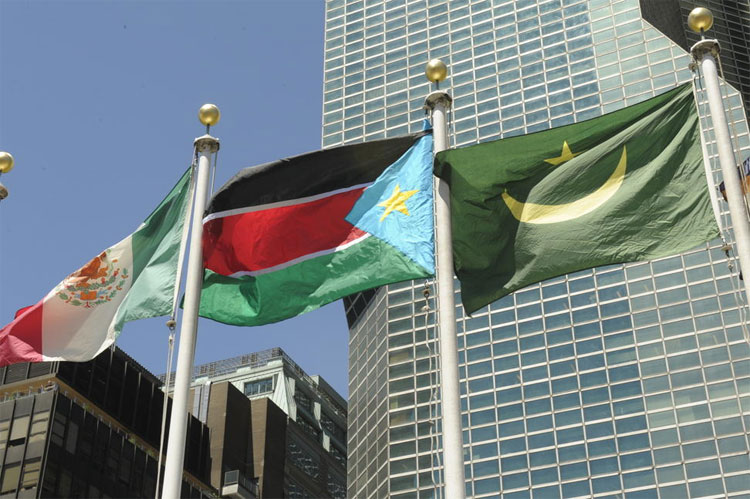
U.N. headquarters in New York fly South Sudan’s flag
after accepting the new state as a member. U.N. photo
used in accordance with official usage policy (source).

See Also: New Country: South Sudan

Full Story
Just five days after officially declaring independence, the new Republic of South Sudan has been welcomed as the 193rd member of the United Nations. The small African country received membership through a unanimous vote of the U.N. General Assembly on July 14th, following a recommendation from the U.N. Security Council the day before, which was also unanimous. Membership will allow the new state to participate fully in the U.N. and all of its associated organizations, and gives it the legitimacy required for a guaranteed place on world maps and lists of the world’s countries.

See Also: How many countries are there in the world? (UPDATED)

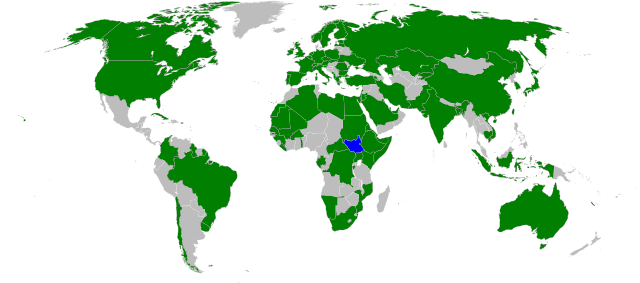
In addition to U.N. membership, South Sudan has continued to receive recognition from individual countries. Approximately 88 U.N. members and six other sovereign states have now made official statements recognizing the new country. Although that still leaves 104 U.N. member countries which have not yet formally recognized South Sudan, the unanimous vote of the U.N. General Assembly suggests that all members do intend to acknowledge its legitimacy, whether by official decree or not. No state has indicated any intention to oppose the new state’s independence.

Countries which have officially stated their recognition of South Sudan’s sovereignty (green). South Sudan in blue. Modified from this Wikimedia map (public domain).

Wikipedia: South Sudan, Foreign Relations of South Sudan, United Nations