Map: Which Schengen Borders are Closed to Passport-Free Travel in August 2017?

Last year, we explained Europe’s Schengen free travel area in plain English, then published maps of which European countries had temporarily reintroduced border controls as of March 2016, August 2016, and February 2017. Here’s an update and summary for August of 2017.
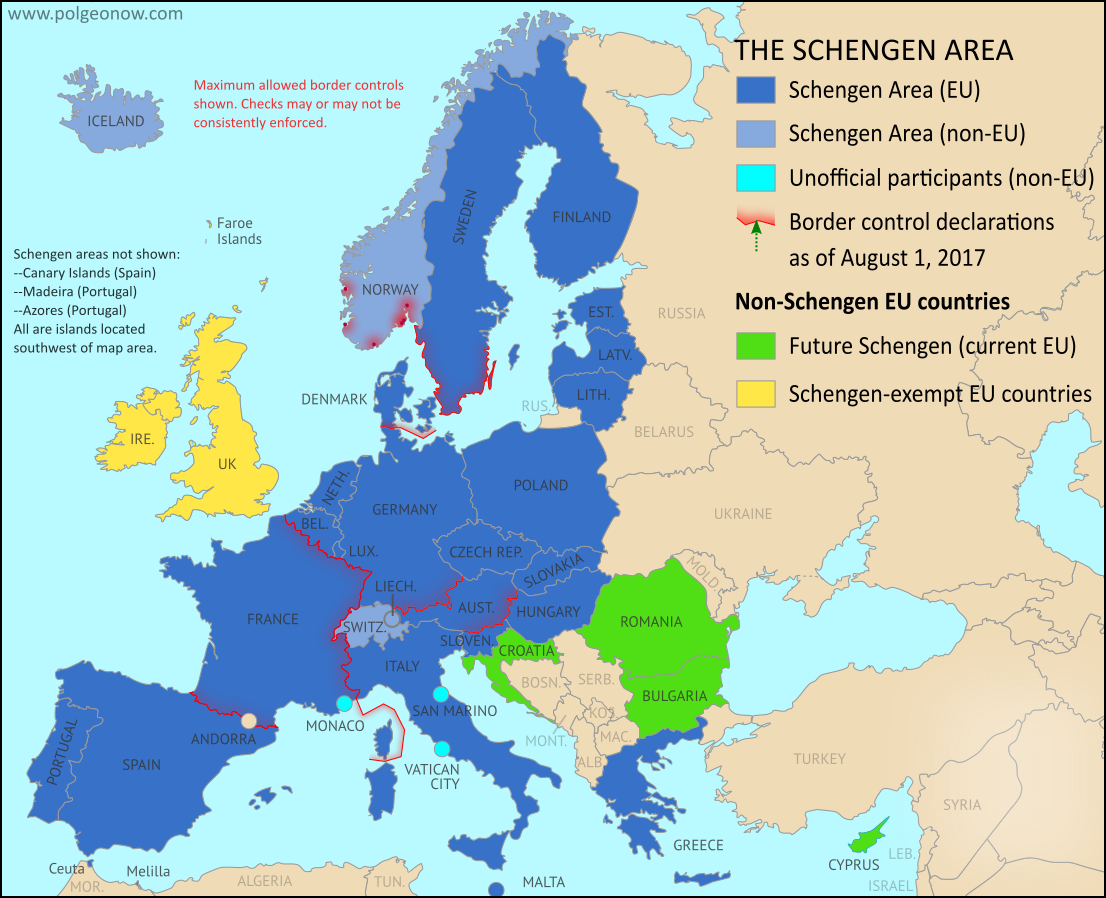
Schengen borders map showing temporary reintroduction of border controls in the Schengen Area (the European Union's border-free travel zone) as of August 2017, showing internal Schengen borders closed to passport-free travel in the period after the election of French President Emmanual Macron.
Map by Evan Centanni, from blank map by Ssolbergj. License: CC BY-SA

Article by Evan Centanni

Current Border Controls Between Schengen Countries

As anyone who’s visited Europe in recent decades knows, much of the continent is linked together as part of the “Schengen Area“, a collection of countries that don’t make travelers show any ID to cross back and forth across their borders (though this system is overseen by the European Union, the Schengen Area and the EU aren’t the same thing). But the system does allow countries to temporarily reintroduce border controls under certain circumstances.

With the spike in numbers of refugees and other immigrants arriving in Europe in the past two years, many Schengen countries have rushed to control the flow of people by using these special temporary exemptions. When we published our previous map of border controls within Schengen this past February, there were seven member countries reserving the right to perform border checks. Now there’s one fewer, and the remaining six have renewed their declarations – perhaps for the last time.

It’s important to note that the border controls shown on the map above are the maximum allowed under each country’s declaration – actual enforcement may be extensive, limited, or even absent depending on the circumstances.

Learn More: The UK already isn’t part of the Schengen Area or Eurozone, so what will change when it leaves the EU?

The 5 Schengen Countries with Negotiated Border Controls
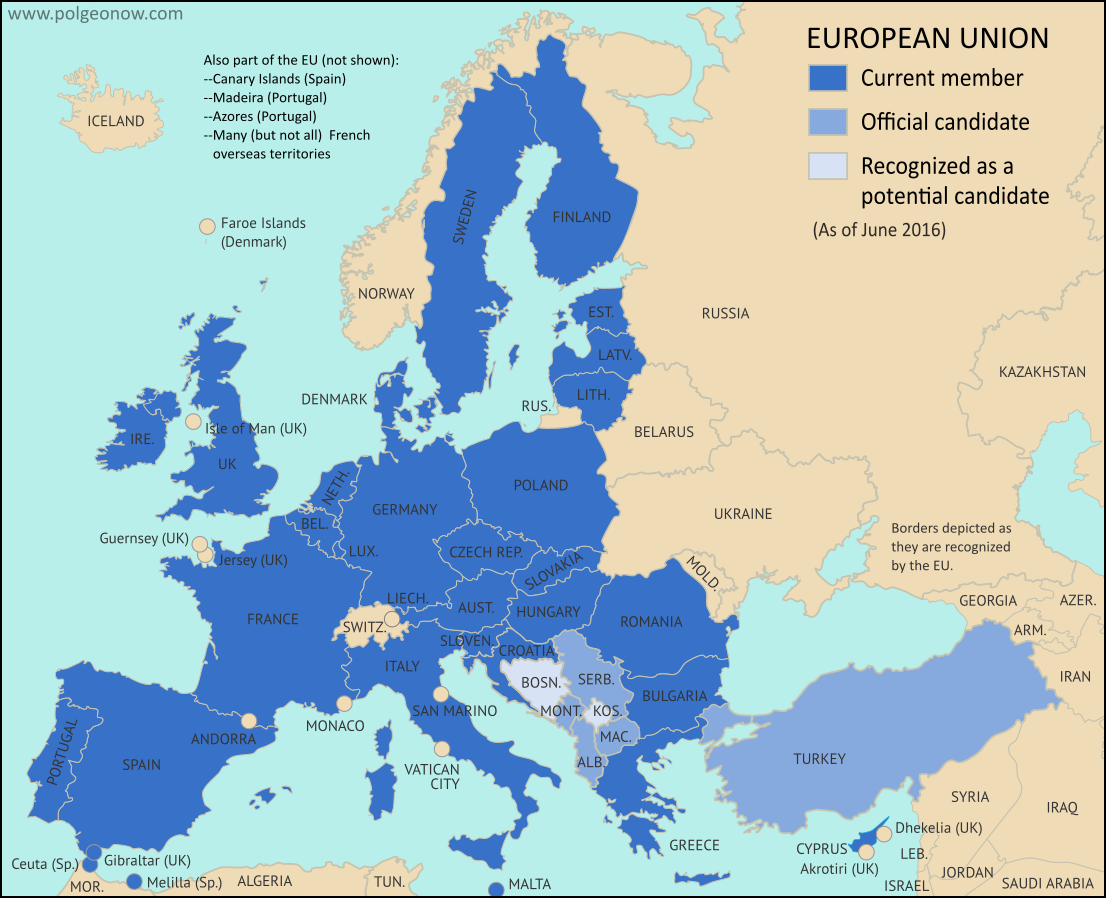
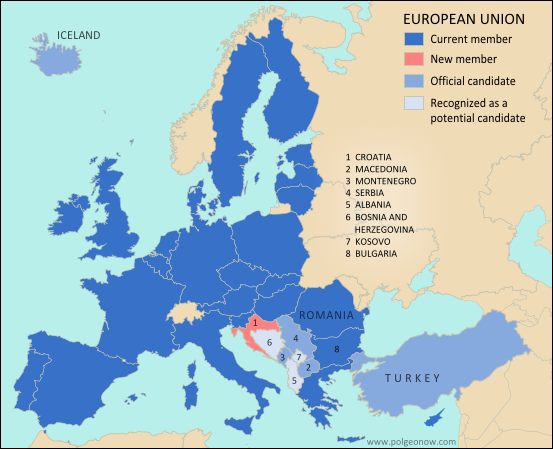
Map of the European Union (EU) and prospective member countries
The full EU and prospective members

Amid fears that the Schengen Area’s dream of free travel was going down the drain, the foreign ministers of the EU’s member countries met up and hashed out a compromise solution last year, with five countries reducing the scope of their border controls by refocusing them on high-priority areas:

  • Germany agreed to control only its border with Austria, ruling out border controls with Switzerland, the Czech Republic, Luxembourg, Belgium, the Netherlands, and Denmark.
  • Austria agreed to control only its borders with Slovenia and Hungary, ruling out border controls with Italy, Switzerland, Liechtenstein, the Czech Republic, and Slovakia.
  • Denmark agreed to control only its border with Germany (including land crossings and ferry connections), ruling out border control for arrivals from Sweden or Norway.
  • Sweden agreed to control only crossings over the bridge from Denmark and sea arrivals along its western and southern coastline, ruling out controls for land borders with Norway and Finland or arrivals by sea along its east-central and northern coasts.
  • Norway agreed to control only arrivals in ports with ferry connections to Sweden, Denmark, and Germany, ruling out controls along its land borders with Sweden and Finland.

These border controls were extended three more months in November 2016, then another three months in February 2017. Finally, on May 11, the EU government approved one more extension – this time for six months. But this will be the final extension allowed under official Schengen rules: According to the plan, the five affected countries will have to phase out all Schengen-internal border controls by the deadline of November 11, 2017.

In fact, Sweden had already announced just before the extension that it would be ending some border checks for travelers arriving from Denmark; but the announcement said other types of checks would continue, and the country did go ahead and notify the EU that it would accept the extension to November.

France’s Border Controls Extended for the Fifth Time

Unlike most of the countries with temporary border checks, which have focused their controls on specific stretches of borders popular with refugees and other migrants, France has reserved the right to maintain controls on all its borders – except, presumably, the boundary with tiny Monaco, which for immigration control purposes is already treated like part of France.

Unlike other countries with border checks, France’s controls are justified mostly as an anti-terrorism measure, not as a way of keeping out migrants. The French border controls were first declared in 2015 and have been in place ever since then due to several extensions:

Start Date Duration Stated Reason
Nov. 13, 2015* 1 month Paris Climate Change Conference 
Dec. 14, 2015 6 months, 12 days “emergency state as introduced further to Paris attacks
May 27, 2016 2 months Euro 2016 and Tour de France
July 26, 2016 6 months “emergency state as introduced further to Nice attack
Jan. 27, 2017 5 months, 18 days “persistent terrorist threat”
July 16, 2017 3 months, 15 days “persistent terrorist threat”

*France’s November-December 2015 border controls were only for air and land borders (sea ports were excluded)

The most recent extension, posted on the EU’s Schengen website but apparently not reported in the English-language media, expires after October 31. This is probably part of newly elected President Emmanuel Macron’s plans to extend the country’s overall state of emergency, though Macron does say he believes in preserving Schengen’s free-travel principles in the long run. That attitude stands in contrast to his defeated opponent for the presidency, Marine Le Pen, who had promised to suspend all participation in Schengen while also preparing for a vote on leaving the EU.

Temporary Border Controls in Malta, Portugal, Italy, and Germany

At the time of our last Schengen border control map report, the tiny island country of Malta had also declared temporary border checks as a security precaution while the country was hosting two important political summits related to migration into Europe. Those checks lasted for just twenty days, expiring after February 9.

Since then, Portugal also announced temporary border controls, for security during a visit by the Pope (May 10-14), and Italy did the same when hosting a G7 summit (May 10-30). Germany also reserved the right to enforce controls on all its borders – not just with Austria – from May 15 to July 9 while it prepared to host the G20 financial summit.

These truly temporary suspensions of free travel are a normal part of the Schengen system, and all three countries have since let the declared controls expire.

Learn More:
Which Countries Are in the Schengen Area, and Which EU Countries Aren’t? 
Map of Temporary Schengen Border Controls in March 2016 
Map of Temporary Schengen Border Controls in August 2016 
Map of Temporary Schengen Border Controls in February 2017 
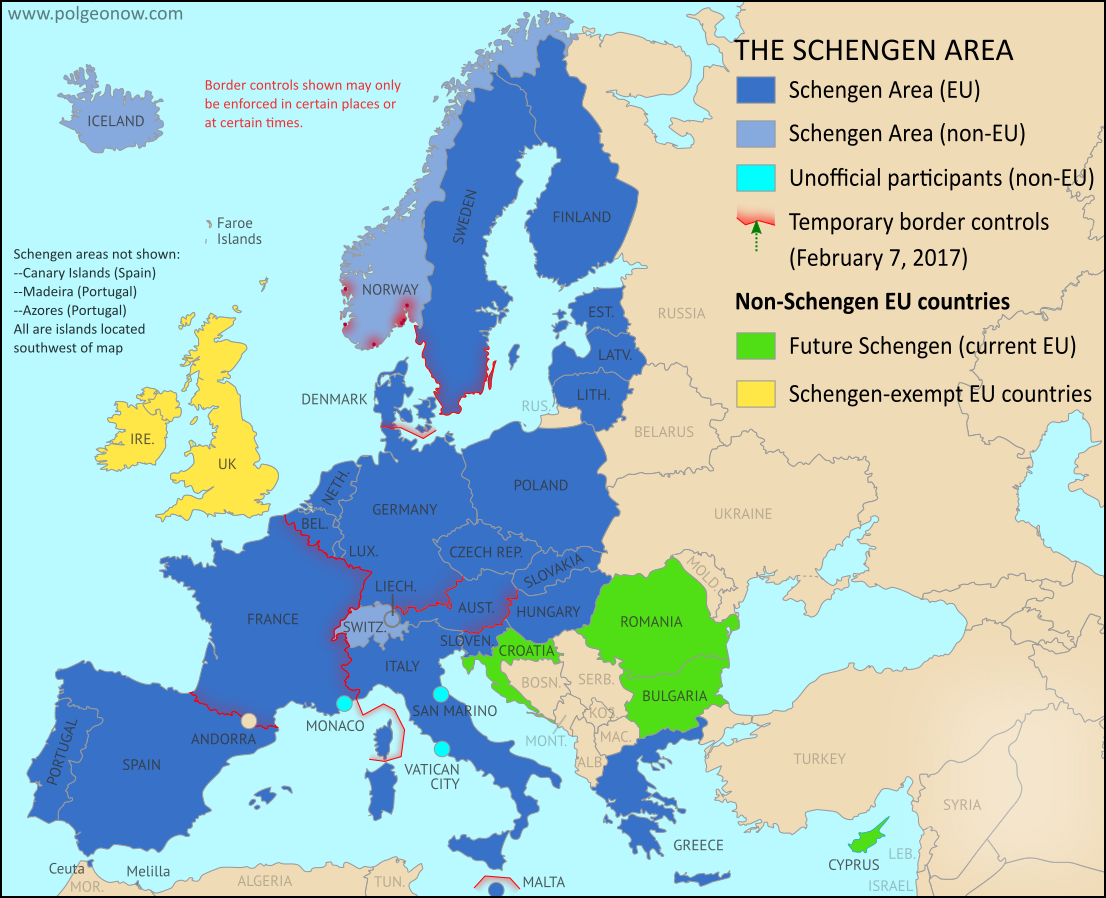
Schengen Border Controls in February 2017: Map of Free Travel Restrictions

There are newer versions of this map available. To see them, view all Schengen Area articles. 

Last year, we explained Europe’s Schengen free travel area in plain English, then published maps of which European countries had temporarily reintroduced border controls as of March 2016 and August 2016. We now present an updated map and summary of the situation.

Schengen border checks map: map of Temporarily Reintroduced Border Control in the Schengen Area (the European Union's border-free travel zone) as of February 2017, color-coded for EU Schengen countries, non-EU Schengen countries, future Schengen countries, and Schengen-exempt EU countries, as well as microstates unofficially participating in the Schengen agreements (colorblind accessible).
Map by Evan Centanni, from blank map by Ssolbergj. License: CC BY-SA

(Subscribers click here to view this article in the members area.)

Article by Evan Centanni

Changes to Schengen Border Controls Since 2016

As anyone who’s visited Europe in recent decades knows, much of the continent is linked together as part of the “Schengen Area“, a collection of countries that don’t make travelers show any ID to cross back and forth across their borders (though this system is overseen by the European Union, the Schengen Area and the EU are not the same thing). But the system does allow countries to temporarily reintroduce border controls under certain circumstances.

With the spike in numbers of refugees and other immigrants arriving in Europe in the past two years, many Schengen countries have rushed to control the flow of people by using these special temporary border controls. When we published our previous map of temporary Schengen border controls in August of last year, there were six countries policing their borders with fellow Schengen members. At the moment there are seven, but the situation has largely remained the same since last summer.

It’s important to note that the border controls shown on the map above are the maximum possible under each country’s declaration – in some cases actual controls may be limited to only certain parts of these borders, or to certain times.

Map of the European Union (EU) and prospective member countries
The full EU and prospective members

France’s Border Controls Extended

Unlike most of the countries with temporary border checks, which have focused their controls on specific stretches of borders popular with refugees and other migrants, France has reserved the right to maintain controls on all its borders – except, presumably, the boundary with tiny Monaco, which for immigration-control purposes is already treated as if it were within France.

Unlike other countries with border checks, France’s controls are justified mostly as an anti-terrorism measure, not as a way of keeping out migrants. The French border controls were declared over a year ago and have been in place ever since then due to several extensions:

Start Date Duration Stated Reason
Nov. 13, 2015* 1 month Paris Climate Change Conference 
Dec. 14, 2015 6 months, 12 days “emergency state as introduced further to Paris attacks
May 27, 2016 2 months Euro 2016 and Tour de France
July 26, 2016 6 months “emergency state as introduced further to Nice attack
January 27, 2017 5 months, 18 days “persistent terrorist threat”

*France’s November-December 2015 border controls were only for air and land borders (sea ports were excluded)

The most recent extension, declared on the 27th of last month, had the most generic justification yet, and came as France’s front-running presidential candidate promised to “ignore” the Schengen agreement and re-institute permanent border checks if he’s elected this May.

The 5 Schengen Countries with Negotiated Border Controls

Amid fears that the Schengen Area’s dream of free travel was going down the drain, the foreign ministers of the EU’s member countries met up and hashed out a compromise solution last year, with five countries reducing the scope of their border controls by refocusing them on high-priority areas:

  • Germany agreed to control only its border with Austria, ruling out border controls with Switzerland, the Czech Republic, Luxembourg, Belgium, the Netherlands, and Denmark.
  • Austria agreed to control only its borders with Slovenia and Hungary, ruling out border controls with Italy, Switzerland, Liechtenstein, the Czech Republic, and Slovakia.
  • Denmark agreed to control only its border with Germany (including land crossings and ferry connections), ruling out border control for arrivals from Sweden or Norway.
  • Sweden agreed to control only crossings over the bridge from Denmark and sea arrivals along its western and southern coastline, ruling out controls for land borders with Norway and Finland or arrivals by sea along its east-central and northern coasts.
  • Norway agreed to control only arrivals in ports with ferry connections to Sweden, Denmark, and Germany, ruling out controls along its land borders with Sweden and Finland.

These border controls, originally set to expire in November, were extended another three months, and now expire on February 11-12. However, EU leaders appear to have approved yet another three month extension, to May 2017, and Germany’s government is talking about switching to France-style anti-terrorism controls.

Temporary Border Controls in Malta

Besides those same six countries, border controls are also in place right now for the tiny island country of Malta. However, Malta’s border checks are truly temporary, and are only scheduled for January 21 to February 9, as a security precaution while the country is hosting two important political summits related to migration into Europe.

Learn More:
Which Countries Are in the Schengen Area, and Which EU Countries Aren’t? 
Map of Temporary Schengen Border Controls in March 2016 
Map of Temporary Schengen Border Controls in August 2016 

Map of Border Controls Inside Europe’s Schengen Area: August 2016

There are newer versions of this map available. To see them, view all Schengen Area articles.

Last March, we explained Europe’s Schengen free travel area in plain English, then published a map of which European countries had temporarily reintroduced border controls. We now present an updated and improved version of the border control map, reflecting several changes from the past five months.

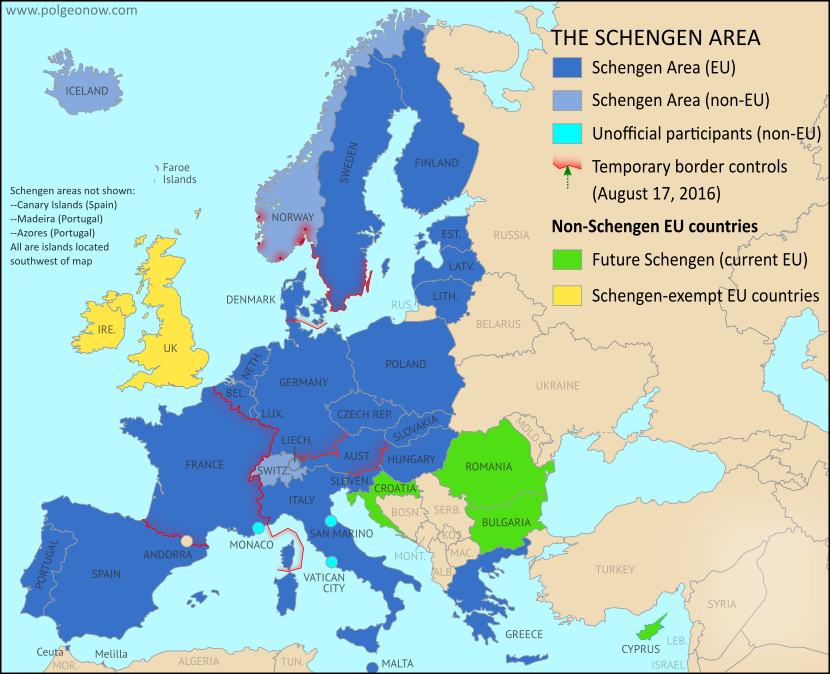
Map of Temporarily Reintroduced Border Control in the Schengen Area (the European Union's border-free travel zone) in August 2016, color-coded for EU Schengen countries, non-EU Schengen countries, future Schengen countries, and Schengen-exempt EU countries, as well as microstates unofficially participating in the Schengen agreements (colorblind accessible).
Map by Evan Centanni, from blank map by Ssolbergj. License: CC BY-SA

(Subscribers click here to view this article in the members area.)

Article by Evan Centanni

Changes to Schengen Border Controls Since March

As anyone who’s visited Europe in recent decades knows, much of the continent is linked together as part of the “Schengen Area“, a collection of countries that don’t make travelers show any ID to cross back and forth across their borders (though this system is overseen by the European Union, the Schengen Area and the EU are not the same thing). But the system does allow countries to temporarily reintroduce border controls under certain circumstances.

With last year’s spike in numbers of refugees and other immigrants arriving in Europe, many Schengen countries have rushed to control the flow of people by using these special temporary border controls. When we published our previous map of temporary Schengen border controls back in March, there were seven countries policing their borders with fellow Schengen members. Today there are only six, and there have been major changes to which borders are controlled:

Belgium’s French Border Controls Expire

In February, Belgium controversially declared an emergency reintroduction of controls along part of its border with France, which it claimed was necessary to limit flows of displaced people caused by the forced closure of a major refugee camp in France. Normally, emergency border controls have to be renewed every ten days, though Belgium announced from the outset that it planned to keep them for a whole month. However, in the end the country did respect the two-month renewal limit on emergency controls, letting them expire in late April.

Denmark Border Controls Expire, then are Reintroduced

Map of the European Union (EU) and prospective member countries
The full EU and prospective members

Denmark declared emergency controls at all its borders in January, citing “unexpected migratory flow” as the reason. Like Belgium, it kept them in place for the full two months allowable, ending on March 4.

However, Denmark followed that expiration immediately with a normal, non-emergency reintroduction of border controls, which it said were to deal with a “big influx of persons seeking international protection”.

EU-brokered Compromise Aims to Stabilize Schengen

Amid fears that the Schengen Area’s dream of free travel was going down the drain, the foreign ministers of the EU’s member countries met up and hashed out a compromise solution, which they published as an EU “recommendation” document on May 12. Though a lot of their recommendations involved telling Greece to try harder not to let refugees into Europe, they also came up with a plan to reduce the scope of the border controls by refocusing them on high-priority areas.

In exchange for keeping their controls for another six months (more than the normal maximum), five of the six remaining countries agreed to limit which parts of their borders they would police:

  • Germany agreed to control only its border with Austria, ruling out border controls with Switzerland, the Czech Republic, Luxembourg, Belgium, the Netherlands, and Denmark.
  • Austria agreed to control only its borders with Slovenia and Hungary, ruling out border controls with Italy, Switzerland, Liechtenstein, the Czech Republic, and Slovakia.
  • Denmark agreed to control only its border with Germany (including land crossings and ferry connections), ruling out border control for arrivals from Sweden or Norway.
  • Sweden agreed to control only crossings over the bridge from Denmark and sea arrivals along its western and southern coastline, ruling out controls for land borders with Norway and Finland or arrivals by sea along its east-central and northern coasts.
  • Norway agreed to control only arrivals in ports with ferry connections to Sweden, Denmark, and Germany, ruling out controls along its land borders with Sweden and Finland.

All of these border controls will be up for renegotiation after November 11-12, 2016.

France’s Border Controls Continue

The sixth country, France, has continued to control all its borders – except, presumably, the boundary with tiny Monaco, which for immigration-control purposes is already treated as if it were within French borders. France has been policing all its borders since December 14, 2015, when it introduced border controls for security in the aftermath of the massive terror attacks in Paris.

In May 2016, when its border controls were nearing their six-month expiration date (the maximum allowed for any one purpose), France notified the EU that it was extending controls for two more months while it hosted the European soccer championship and the Tour de France cycling race (major sporting events are a normal reason for Schengen countries to temporarily reintroduce border controls).

Before the two months was up, France had experienced another episode of bloody terrorist violence, the July 14 attack in the city of Nice, and it used the resulting state of emergency as reasoning to declare another six months of border controls, to last until January 2017.

And One More: Temporary Border Controls in Poland

Although the number of Schengen countries with reintroduced border controls fell to six after Belgium’s expired, for one month since our last update there were again seven of them. Poland implemented a routine reintroduction of controls on all its borders from July 4 to August 2, for security during a NATO summit and a Catholic Church “World Youth Day” event that featured a visit from Pope Francis.

The EU’s official Temporary Introduction of Border Control page actually lists Poland’s controls as continuing until September 2, but this appears to be an error. Other sources, including the same site’s comprehensive PDF record of border control notifications, all say the controls ended on August 2.

Learn More:
Map of Temporary Schengen Border Controls in March 2016
Which Countries Are in the Schengen Area, and Which EU Countries Aren’t? 

Europe’s Free Travel Zone in Danger: Map of Temporary Border Controls in the Schengen Area, March 2016

There are newer versions of this map available. To see them, view all Schengen Area articles.

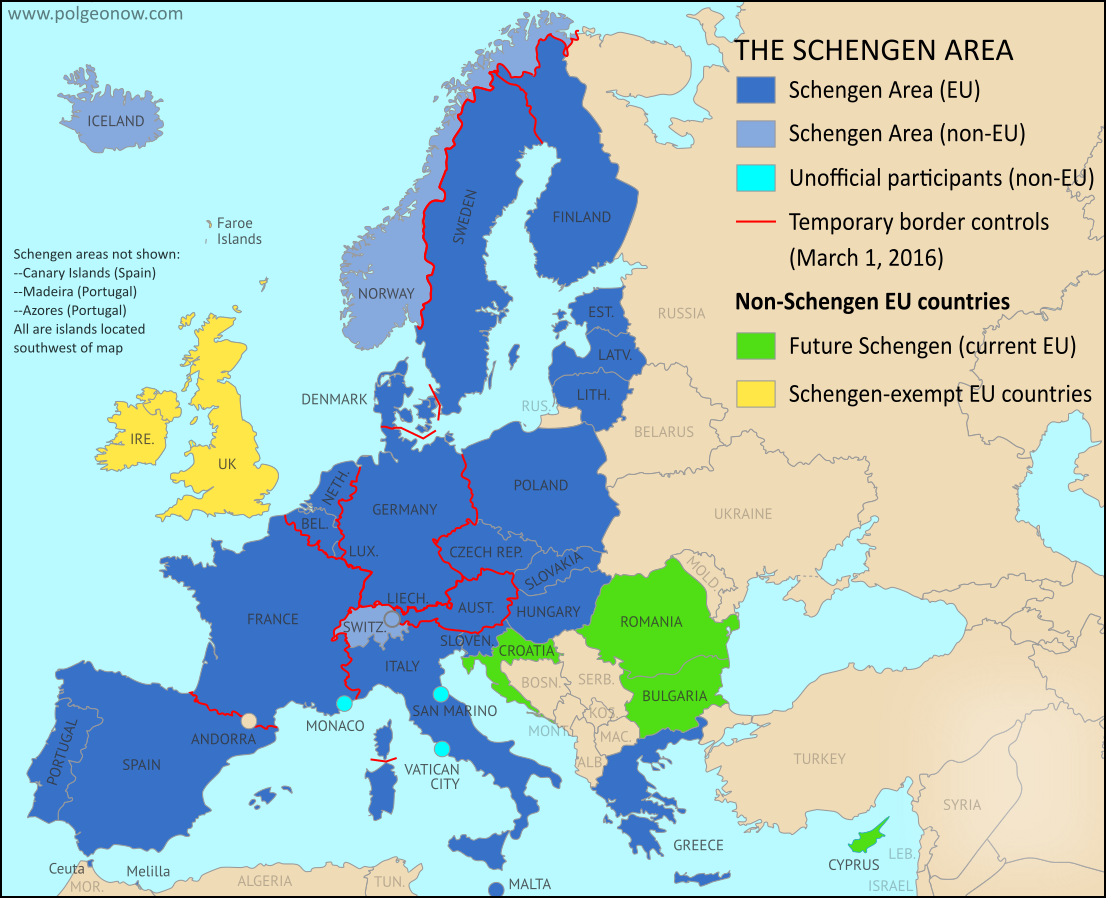
In the companion to this article, we explain in plain English what the Schengen Area is, and which countries are part of it. Here, we present a map of the area’s current crisis, showing where border checks have been reintroduced. Details and explanation in the article below.

Map of Temporarily Reintroduced Border Control in the Schengen Area (the European Union's border-free travel zone), color-coded for EU Schengen countries, non-EU Schengen countries, future Schengen countries, and Schengen-exempt EU countries, as well as microstates unofficially participating in the Schengen agreements (colorblind accessible).
Map by Evan Centanni, from blank map by Ssolbergj. License: CC BY-SA

Subscribers click here to view this article in the ad-free members area. Not a member yet? Learn about PolGeoNow subscriptions!

Article by Evan Centanni

Borders Re-emerging Inside the Schengen Area

Over the past months, concern has been rising that Europe’s border-free travel zone, known as the Schengen Area, is falling apart. As unprecedented numbers of refugees and other migrants enter the Schengen Area, individual member countries have begun to re-start border checks in the places where they abolished them decades ago. Read on to learn the why, how, and where of the Schengen Area’s new border controls!

How are Schengen Border Checks Legal?

Although the Schengen rules require members to get rid of all the customs and ID checks on their borders, a country can declare a short-term exception under special circumstances. These “temporary reintroductions of border control” are tightly regulated by the EU government, which holds them to specific time limits, after which the countries have to remove the border checks again. The EU limits each country’s border controls to 30 days, which can renewed up to six months (for fast-tracked emergency declarations, the limit is 10 days and renewal up to two months).

Why do Schengen Countries Reintroduce Border Controls?

Map of the European Union (EU) and prospective member countries
The full EU and prospective members

In the past these temporary border controls were used to strengthen security for major sports events and political meetings, or in extreme cases like the 2015 Paris terrorist attacks. But everything has changed over the past year, with a historical surge in refugees coming to Europe from Syria, Afghanistan, and other places. More and more Schengen countries have been using temporary border controls to limit the number of refugees they will host or allow to pass through.

Which Schengen Countries have Reintroduced Border Controls?

At the beginning of March 2016, there were seven Schengen countries with temporary border controls: Denmark, Norway, Sweden, Austria, Germany, France, and Belgium (for Belgium, the controls are only along part of its border with France). Denmark used an emergency declaration starting January 4, so it’s scheduled to reach its two-month limit tomorrow, March 4.

After tomorrow, Denmark will presumably stop checking ID for new arrivals, though visitors leaving Denmark for neighboring Germany, Sweden, and Norway will still face checks when entering those countries. Like the rest of the countries that currently have border controls, those three national governments used regular declarations, and still have several months left before they reach the six-month limit.

Besides the current cases, Hungary and Slovenia also reintroduced border controls in connection to the refugee crisis in 2015, but only for short periods. Their border control programs have been ended again since then.

Could Schengen Border Controls Become Permanent? (Update 2016-03-04) 

On March 4, 2016, a new EU plan was revealed to remove all internal Schengen border controls by November 2016 – but only if Greece improves security on its external borders (where refugees and other migrants first arrive in Europe, often by sea to Greek islands). 

If Greece doesn’t do what the other EU members want by May 12, the EU could change the rules and allow Schengen countries to extend their border controls up to two years instead of just six months. They might even set up a coordinated system of border controls, rather than leaving countries to each declare new controls on their own. 

If the EU countries can’t agree on a better way to handle the the refugee crisis even after two years, it’s hard to say whether the Schengen Area’s free-travel principles have any future at all.

Learn More:
What’s the Difference Between the Schengen Area and the European Union?
Which Countries Are in the Schengen Area, and Which EU Countries Aren’t?