All About Swaziland’s Name Change (With Maps)

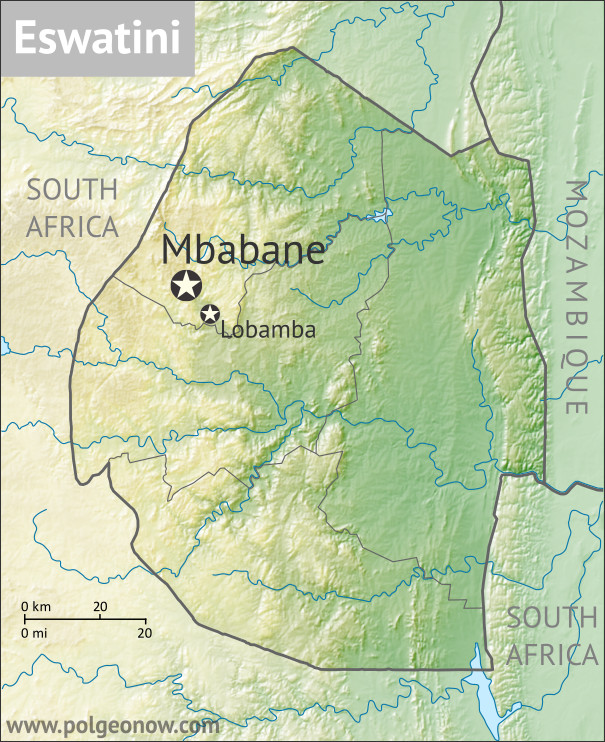
Topographic map of Eswatini (Swaziland), showing terrain, rivers, bordering countries, and capital cities.
Eswatini, formerly known as Swaziland. Based on this map by Htonl and NordNordWest.

Swaziland’s New Name

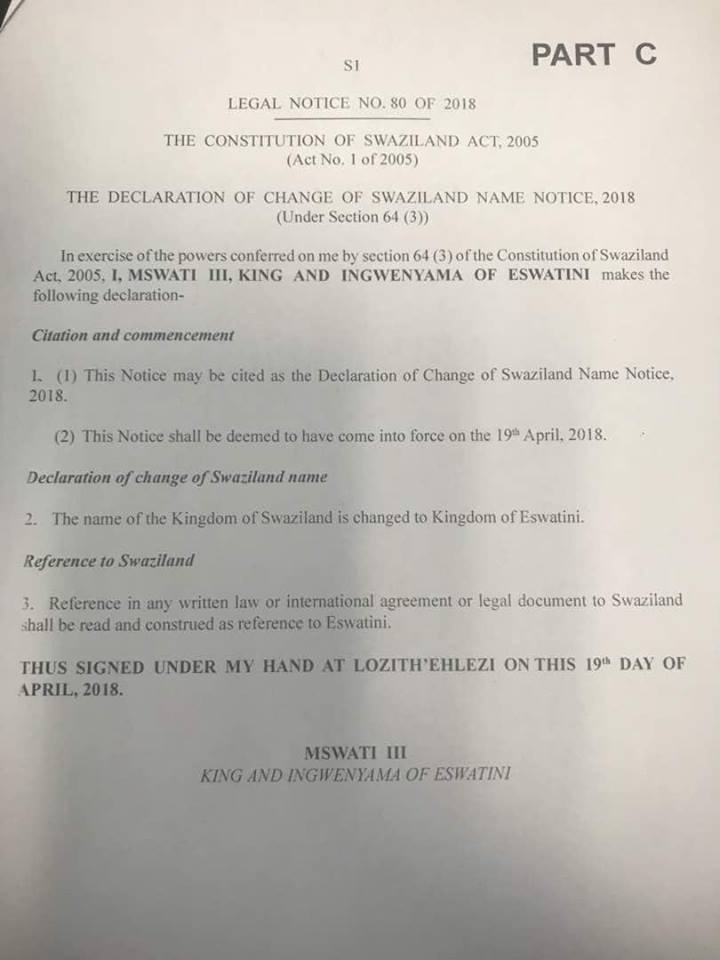
If you follow PolGeoNow on Twitter, you already know that the small, southern African country of Swaziland was renamed “Eswatini” this April. The full English name of the country, previously “Kingdom of Swaziland”, has also been changed to “Kingdom of Eswatini”.

The rename was first announced by the country’s king on April 19 – his 50th birthday. (Some media incorrectly reported that April 19 was also Swaziland’s 50th anniversary of independence. The country is indeed celebrating its 50th this year, but the actual day of the anniversary is September 6.)

The change was apparently effective immediately: A purported copy of the legal order making the new name official, also dated April 19, was posted on a Swaziland news blog in May, with some validation from other sources.

The announcement was unexpected, but King Mswati III has been using the new name in speeches for years, so it wasn’t a complete surprise. Still, citizens of the country of course had varying opinions on the change. Some called it long overdue, while others denounced it as a distraction from more important national issues. Some of those critics noted that renaming a country isn’t purely a symbolic act – you also have to spend time and money changing all the things the name is written on.

Why “Eswatini”?

Actually, “eSwatini” was already the country’s name – in the local Swazi language. Like Cape Verde’s switch to “Cabo Verde” in 2013, this is just a case of adjusting the official English name to match the native name. And just like “Swaziland” in English, eSwatini means “place of the Swazi people” in Swazi (or as the language calls itself, “Swati”).

But why change the English name to match the Swazi one? King Mswati argued that it only makes sense to do the same as other African countries, many of which “reverted to their ancient, native names” when they became independent. For Swaziland, he said, that ancient name was eSwatini.

On top of that, some people considered the name “Swaziland” an awkward mix of the Swazi and English languages, and the king has complained that the name “Swaziland” often gets mistaken for “Switzerland”.

Capitalization: Eswatini or eSwatini?

Journalists reporting on the name change when it first happened in April spelled the new country name “eSwatini”, with a lowercase “e” and capital “S”. That’s the way the country’s name is properly written in the Swazi language, and it was also spelled that way in the government’s official transcript of King Mswati’s September 2017 speech to the United Nations (which was delivered in English). Capitalizing only the second letter of a name is unusual in English, but then, that doesn’t stop you from shopping on eBay with your iPhone.

Where is Eswatini? Map of Eswatini's location in Africa. Formerly known as the Kingdom of Swaziland, the country was renamed Kingdom of Eswatini in 2018.
Location of Eswatini (Swaziland) in Africa. Derived from this blank map by Eric Gaba. License: CC BY-SA

Still, the point seems to be moot: The purported legal order for Swaziland’s name change spells it “Eswatini” with a capital “E” and lower case “s”, and official sources from other countries have done the same – probably following the official notice they’ve received from the Swazi government.

The government’s own websites, where the name has been updated, also use the capital “E” spelling for the name. So that seems to be the officially proper way to write it.

[Edit: The official ISO standard list of countries, now updated, also uses the capital “E” spelling.]

Eswatini: How to Pronounce It?

So what’s the correct pronunciation of Eswatini? Well, international news outlets we checked have been pronouncing it “ess-wah-TEE-nee”. But King Mswati himself seems to pronounce it differently – to our ears, it sounds more like “eh-SWAH-tee-nee”, with emphasis on the “swa”.

You can listen for yourself in his announcement speech, or in his September 2017 speech to the United Nations (country name at 1:59, 3:08, and 6:08).

Eswatini vs. Swaziland: Which Name Wins?

Ultimately, no country’s government can completely control what people call it in another language, and it’s always been common for places to have completely different names in foreign tongues. Think of how Deutschland and Nippon are known as “Germany” and “Japan” in English – it would be pretty hard to convince all English speakers to switch to the native names.

And every language does this. In some, like Chinese or Arabic, almost every single country’s name is at least a little different from the native version, since they have to spell it using a whole different writing system that doesn’t have the same letters.
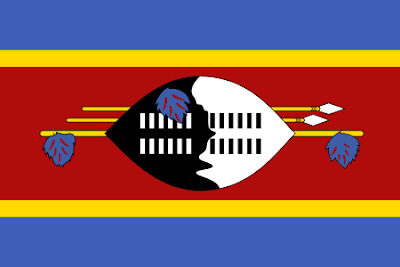
Flag of Eswatini (Swaziland)Country Name:  
• Eswatini (official English)
• eSwatini (Swazi)
• Swaziland (unofficial English)
Full Name:  
• Kingdom of Eswatini (English)
• Umbuso weSwatini (Swazi)
Capital:  
• Mbabane (executive and UN-registered official)
• Lobamba (legislative and ceremonial) 
Adjective: Swazi

In English, some news outlets and organizations have already switched from Swaziland to Eswatini (or more often, eSwatini with the lowercase “e”), but many more haven’t. Only time will tell, but country name changes are usually slow to catch on, especially if they involve substituting a non-English word for the traditional English name.

Wikipedia, whose editors prioritize commonly-used names over official ones, still calls Côte d’Ivoire “Ivory Coast” 30 years after the country ordered the switch. Traditional, more English-sounding names still prevail for Cabo Verde and Timor-Leste too, and the Czech Republic’s invented short name hasn’t made the grade yet either. (On the other hand, changes for Zaire and Western Samoa in the 1990s have caught on just fine.)

So What Really Changes?

Besides English-language signs and documents within the country, Swaziland’s name change will also affect official usage in the United Nations (UN), and foreign governments and diplomats have been asked to use the new name for official English communications. Meanwhile, the ISO 3166-1 international standard list of country codes is based on UN usage, so pretty soon “Eswatini” should start showing up as an option on drop-down lists of the world’s countries. Other websites and apps, like Google Maps, may also make the switch.

At the moment, the UN’s official country names website and the ISO 3166-1 country name database are still showing “Swaziland”, but it looks like they just haven’t been updated yet. A different UN web page lists the country as “Eswatini (Kingdom of)”, and foreign governments haven’t waited to jump on board. It’s almost certainly just a matter of time until ISO and the UN country name site also show “Eswatini”.

Once the UN page updates, we can answer our last question: The UN also records official country names in Arabic, Chinese, French, Russian and Spanish – so is Swaziland only changing its name in English, or in other UN languages too? We’ll let you know when we find out!

Update 2018-07-16: ISO has now updated its list with the new name, Eswatini, spelled with a capital “E”. The name has also been changed in French, which is the only other language that ISO offers its standard in (there are Russian and Spanish versions of the ISO website, but the standard country names aren’t translated into those languages.)

PolGeoNow always reports on changes to countries’ names – learn about others by viewing all country name change articles.

Graphic of the Swazi flag is in the public domain (source).
All About Nagorno-Karabakh’s 2017 Name Change

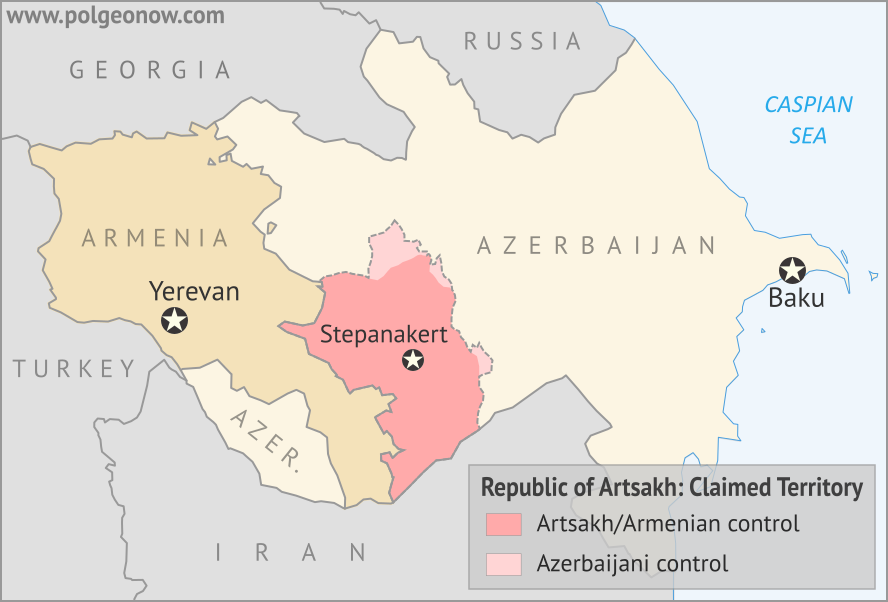
Map of the self declared Republic of Artsakh (Nagorno-Karabakh Republic) in relation to Armenia and Azerbaijan. Includes capital cities Yerevan, Baku, and Stepanakert.
Map by Evan Centanni, modified from this map by Bourrichon and Lesqual. License: CC BY-SA

Nagorno-Karabakh is Now “Artsakh”

Most country name changes are just modifications to the country’s official long name, or a switch in the name’s preferred English translation. But last year, one self-proclaimed country changed its title completely.

In February 2017, the disputed Nagorno-Karabakh Republic officially became the “Republic of Artsakh“. The name switch was part of a new constitution, approved in an internationally-controversial Feb. 20 referendum. According to the breakaway government’s official figures, the referendum passed by 88%, with a voter turnout of 76%.

What is Nagorno-Karabakh/Artsakh?

The status of the so-called Republic of Artsakh is a matter of hot dispute. According to the UN and all its member countries, Nagorno-Karabakh was never officially a country at all. The region is claimed by Azerbaijan and labeled a disputed territory by the international community, but it declared independence during the breakup of the Soviet Union, and has been ruled separately from Azerbaijan since the early 1990s.

In terms of military defense and day-to-day administration, Artsakh is heavily integrated with neighboring Armenia (most people living there are culturally Armenian). But the region’s government officially considers itself an independent country, and Armenia maintains a formal separation, neither recognizing Artsakh’s independence nor making it officially part of Armenia.

The only formal recognition of Artsakh’s independence comes from three other unrecognized, self-proclaimed countries – Abkhazia, South Ossetia, and Transnistria – plus a long list of local governments inside the US who have made symbolic declarations of support (presumably at the urging of that country’s Armenian political lobby).

Nagorno-Karabakh and Artsakh: Both Names Accepted

The name “Republic of Artsakh” didn’t come out of nowhere – in fact, it was already an official alternate name for the claimed country. The new constitution basically just switches the two names’ places:

Before After
Main Name in Constitution Nagorno-Karabakh Republic Republic of Artsakh
Official Alternate Name Artsakh Republic Republic of Nagorno-Karabakh

The old constitution declares that the two names are “the same”, and the new one similarly states that both official titles “are identical”. “Artsakh Republic” is also still in use by some official sources, probably as an alternate English translation. Minor spelling variants seen in government sources include “Nagorno Karabakh” (without the hyphen) and “Nagorno Karabagh”.

What Does “Artsakh” Mean, and Why Choose it Over “Nagorno-Karabakh”?

“Artsakh” is probably easier to remember and pronounce for most people, but the change is also related to the history of the two names. “Nagorno-Karabakh” is actually the Russian name of the region, from when it was part of the Soviet Union, but the “Karabakh” part is based on its name in the Azerbaijani language (likely coming from ancient words meaning “Black Garden“). 

The territory now being disputed is the highland area of the historic Karabakh region, with the Russian word “nagorno” (or “nagorny”) added on signify that. In other words, “Nagorno-Karabakh” means “Upper Karabakh” in Russian.

“Artsakh”, on the other hand, is a thoroughly Armenian name for the territory. Though the actual origin of the word has been lost to history, it was the undisputed name of an Armenian province that occupied the area from ancient times into the Middle Ages. Given that, it’s no surprise that this name is preferred by the Armenia-oriented government of the disputed republic, or by its culturally Armenian majority population.

Flag of the autonomous community of Catalonia Short Name:  
• Artsakh (English, Armenian)
• Dağlıq Qarabağ (Azerbaijani)
Alternate Short Name:
• Nagorno-Karabakh (English)
• Lerrnayin Gharabagh (Armenian)
Full Declared Name:
• Republic of Artsakh (English)
• Artsakhi Hanrapetut’yun (Armenian)
Alternate Full Name:
• Nagorno-Karabakh Republic (English)
• Lernayin Gharabaghi Hanrapetut’yun (Armenian)
Capital: Stepanakert
Status According to Azerbaijan: Armenia-occupied area of Azerbaijan

When Did The Name Change Officially Happen?

When a fully-recognized country, like the Czech Republic, changes its name, it’s fairly simple to the confirm that the change has gone into effect: It soon gets registered in UN databases and the ISO standard list of country codes and names. But for a disputed breakaway region like Artsakh, there’s no such official international documentation.

As with Malawi’s 2012 flag change, we at PolGeoNow were unsure at first if the change had officially come into effect yet – part of the reason we haven’t published an article until now. News outlets reported on Nagorno-Karabakh’s Feb. 20 referendum, but none seemed to say when the change would actually become official (at least, not in English).

So we dug a little deeper, learning that the official law authorizing the referendum says:

[The changes will] enter into force from the moment of publishing the drafts in the “Official Bulletin of the Nagorno Karabakh Republic” within five days after announcing the resolution of the Central Commission or the Supreme Court on the results of the the [sic] Referendum.

We couldn’t find the Official Bulletin in English online, but a declaration on the final referendum results from the Central Electoral Commission is dated to February 23. This seems to suggest that the official name change happened within five days of that, by February 28, 2017. Confirming that the new name has been adopted, the official website of the republic’s president is using “Artsakh”, even though some other government websites haven’t yet changed their headers.

PolGeoNow reports on every country name change that happens in the world! To see the full list, view all country name change articles.

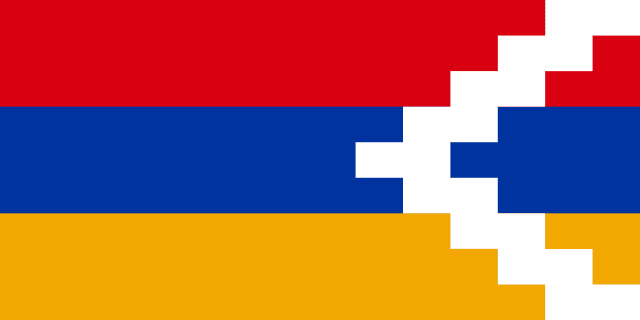
Graphic of the flag of the Republic of Artsakh is in the public domain (source).

The Gambia Changes Its Name Back

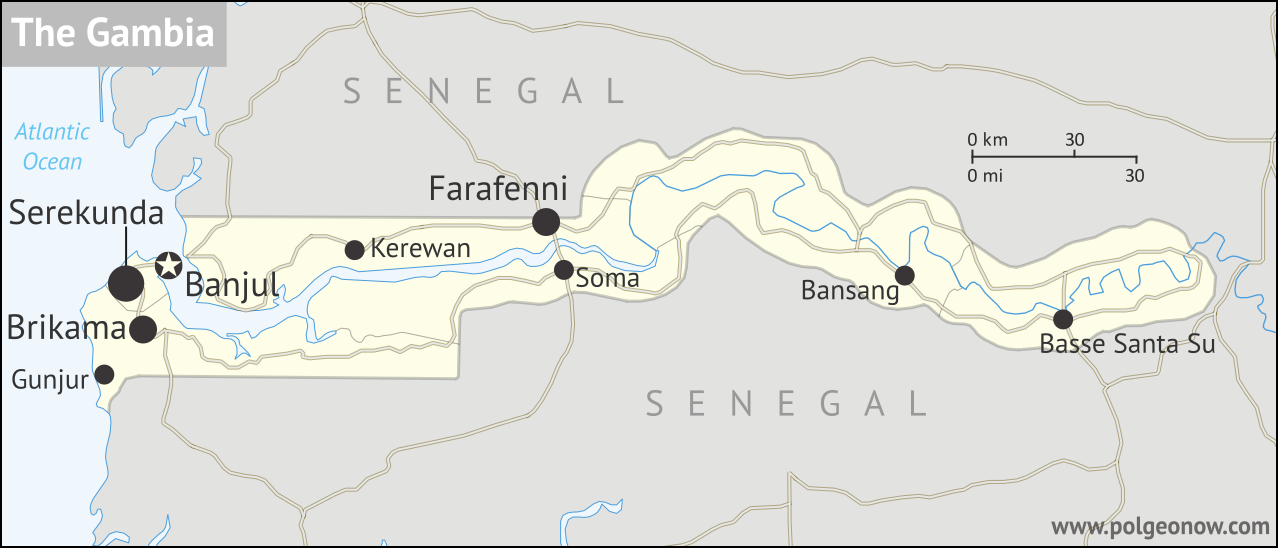
Map of the Gambia: towns, roads, borders, and rivers, with scale shown.
Map by Evan Centanni. Contact for usage rights.

Gambia Name Change Reversal

Last year we reported on how the Gambia, a tiny country located along the banks of a river in West Africa, had changed its official name at the UN. The country’s maverick dictator had decided in 2015 to switch from “Republic of The Gambia” to “Islamic Republic of The Gambia”.

Learn More: The Gambia’s 2015-2016 Name Change

Then, this January, the country’s longtime president stepped down. He had unexpectedly conceded defeat in a late-2016 election, though in the end it still took the threat of an invasion by neighboring countries to force him out. Within 10 days, the new president had already declared a reversal of the name change.

Flag of the Gambia Country Short Name:  
• The Gambia
Official Name:  
• Republic of the Gambia
Capital: Banjul

Name Change Registered with UN and ISO

Since most of the world’s countries, including the Gambia, are part of the United Nations (UN), it’s expected that if a country’s name changes, the change will be filed with the administrative offices of the UN. This lets world organizations and other countries know they should start using the new name.

Unlike the Gambia’s first name change, which was declared in 2015 but not formally registered until months into 2016, this year’s reversal all happened pretty fast. About a month and a half after the president’s announcement about the rollback, the change was already being distributed to users of ISO 3166, the international standard list of countries and country codes used by organizations and companies all around the world.

That meant the name had already been changed in the UN’s official name database too – ISO bases its country names on official UN usage – though PolGeoNow hasn’t been able to determine exactly when the UN change was made.

Name Changed in Other Languages

Unlike some countries that have only changed their name for foreign language speakers, English is actually the official language of the Gambia. The UN, on the other hand, has six official languages, so the name change reversal also took effect in each of those:

Language Before After
English the Islamic Republic of the Gambia the Republic of the Gambia
French la République islamique de Gambie la République de Gambie
Spanish la República Islámica de Gambia la República de Gambia
Russian Исламская Республика Гамбия Республика Гамбия
Chinese 冈比亚伊斯兰共和国 冈比亚共和国
Arabic  جمهورية غامبيا الإسلامية جمهورية غامبيا

Islam in the Gambia

Even though the country’s earlier name change made it sound like the Islamic religion would be playing a larger role in the government, that didn’t ever really happen. Ninety percent of Gambians are Muslims, and there’s not complete separation between church and state in the country, but the Gambian constitution does protect freedom of religion. In the year and a half since the country was first declared an “Islamic republic” and when the name was changed back, there wasn’t much indication that anything had actually changed.

How Often Do Countries Change Their Names?

Out of the world’s nearly 200 countries, there’s an average of about one official country name change each year, most of them involving adjustments to the country’s full name or preferred English name. The Gambia is the first UN-recognized country to change its name in 2017, while 2016 also saw a slightly different kind of name change for the Czech Republic. (Editor’s Note: As we reported later, the unrecognized, self-proclaimed Nagorno-Karabakh Republic also changed its name, in February 2017.)

Before the Gambia’s original “Islamic Republic” announcement in 2015, no countries had changed their names since Cape Verde in 2013. That African island country changed its preferred English name at the UN to Cabo Verde, the same as its native Portuguese-language name; the same year, war-torn Libya had clarified its new long-form name as “State of Libya”. The year before, Somalia’s 2012 constitution changed the country’s full name to the Federal Republic of Somalia, and a new Hungarian constitution traded “Republic of Hungary” for just “Hungary”.

More substantial changes to countries’ names, not just involving translation decisions or adjustments to full names, are much less common. The best recent examples are Yugoslavia’s name change to “Serbia and Montenegro” in 2003, Western Samoa’s change to just “Samoa” in 1997, and Zaire’s reversion to its previous name of “Democratic Republic of the Congo”, also in 1997.

Click here to see all articles on country name changes!

Graphic of the flag of the Gambia is in the public domain (source).

The Czech Republic is Now Officially “Czechia” For Short

(Subscribers click here to view this article in the members area.)

Czech Republic Changes Official Name

Location of “Czechia” within the European Union
Map by David Liuzzo (CC BY-SA)

Last month, we wrote about a formal name change for the Gambia, a small country in Africa. But the Gambia wasn’t the only country to modify its official name this year: Europe’s Czech Republic also filed a name change with the UN, of a slightly different kind.

Rather than changing the details of its full name, as the Gambia did when it switched out “Republic of the Gambia” for “Islamic Republic of the Gambia”, the Czech Republic actually only changed its foreign language short name.

Long known for not really having a good short name in English, the Czech Republic now wants you to call it “Czechia” (pronounced “CHECK-ee-ah”) in all casual contexts. (The complete formal name is still “Czech Republic”.)

The Origins of Czechia

Regions of Czechoslovakia between WWI and WWII. Sub-Carpathian Rus’ became a part of Ukraine after WWII. (Public domain map by Panonian)

The modern Czech Republic has only been an independent country for the past 23 years. But the core of what’s now the Czech Republic was historically known to English speakers as “Bohemia” – or Čechy in the local language.

When it declared independence from the defeated Austro-Hungarian Empire at the end of World War I, the country named itself Czechoslovakia, after its two biggest ethnic groups, the Czechs and the Slovaks. When that country peacefully split in two in 1993, the eastern half quickly became known as “Slovakia”. But people couldn’t agree on a better English name for the western half than its full official designation, the “Czech Republic”.

Gradual Adoption of “Czechia”

In the Czech language, the new country was often known for short as Česko, from the first half of Česko-Slovensko, the native name of Czechoslovakia. Though Czech people are still getting used to it, today this name seems to have won out over the historical Čechy (Bohemia), because the modern country also includes historical Moravia and part of Silesia, both regions that weren’t part of Bohemia proper.

As for the English version, “Czechia” has reportedly been used by some branches of the country’s government since as far back as 1993 (and has been used occasionally by foreigners for hundreds of years). But the short English name has never really caught on, probably because Czech people themselves have often been reluctant to really get behind it. Still, it could be seen from time to time within the country itself.

Making “Czechia” Official Internationally

Tired of not having an agreed-upon short name for the country (competing suggestions included “Czechlands” or just “Czech”), the Czech government this year decided to go all the way with “Czechia”. After a joint endorsement of the name by the president, top ministers, and leaders of the legislature, the government moved to register an official name change at the United Nations (actually just adding a new short name alongside the formal full name of “Czech Republic”). 
 

Flag of Czechia (tje Czech Republic) Country Short Name:  
• Czechia (official English) 
• Česko (Czech)
Full Official Name:  
• Czech Republic (English)
• Česká republika (Czech)
Capital: Prague

By July, the new name was showing up in the United Nations UNGEGN country name database, and in September the new short name was added to ISO 3166, a standard list of country codes and names used by many organizations and businesses around the world (ISO isn’t associated with the UN, but uses the UN database as the main authority for world countries).   

Unlike Burma’s controversial change of English name to “Myanmar” in 1989, “Czechia” has earned quick acceptance from the governments of the world’s two most prominent English-speaking countries: the US and the UK. The British government announced in September that it was officially recommending the new short name, and the US government’s well-known CIA World Factbook website has also adopted the new name. 

But it’s hard to say how long it will take to catch on among average English speakers around the world. Ivory Coast’s name change to “Cote D’Ivoire” is still struggling to catch on outside diplomatic circles, even after 30 years. And if opinions within “Czechia” itself are anything to go by, it’s not off to a good start.
 

“Czechia” in Other Languages

In fact, the Czech Republic’s new short name isn’t only for English speakers. The UN has six official languages, and the country’s official short name has also been changed in the other five languages:

Language Before After
English the Czech Republic Czechia
French la République tchèque la Tchéquie
Spanish la República Checa Chequia
Russian Чешская Республика Чехия
Chinese 捷克共和国 捷克
Arabic الجمهورية التشيكةِ التشيك

Source: UNGEGN

For other languages, there’s no worldwide authority saying what you should call any given country. But as many have pointed out, some languages already have a popular short way of referring to the Czech Republic, such as the German Tschechien. PolGeoNow staff can also attest that Chinese 捷克 (also spelled Jieke, and pronounced roughly as “jayka”), was in widespread use even before the official name change.

Country Name Changes: Is This Normal?

Countries register official name tweaks with the UN at an average rate of about one per year, and it’s not unusual for a country to change its name only in English and other foreign languages, as Cape Verde did back in 2013. However, this may be the first time in modern history that a country has changed just its short name, without making any change to the full official name. Political Geography Now wasn’t able to find another such case in the entire history of the UN system – and before the UN was founded in 1945, we doubt there was any central place for countries to register official nicknames. But then, there’s no rule against it, so why not?

Graphic of the Czech flag is in the public domain (source).
The Gambia’s Name Change

(Subscribers click here to view this article in the members area.)

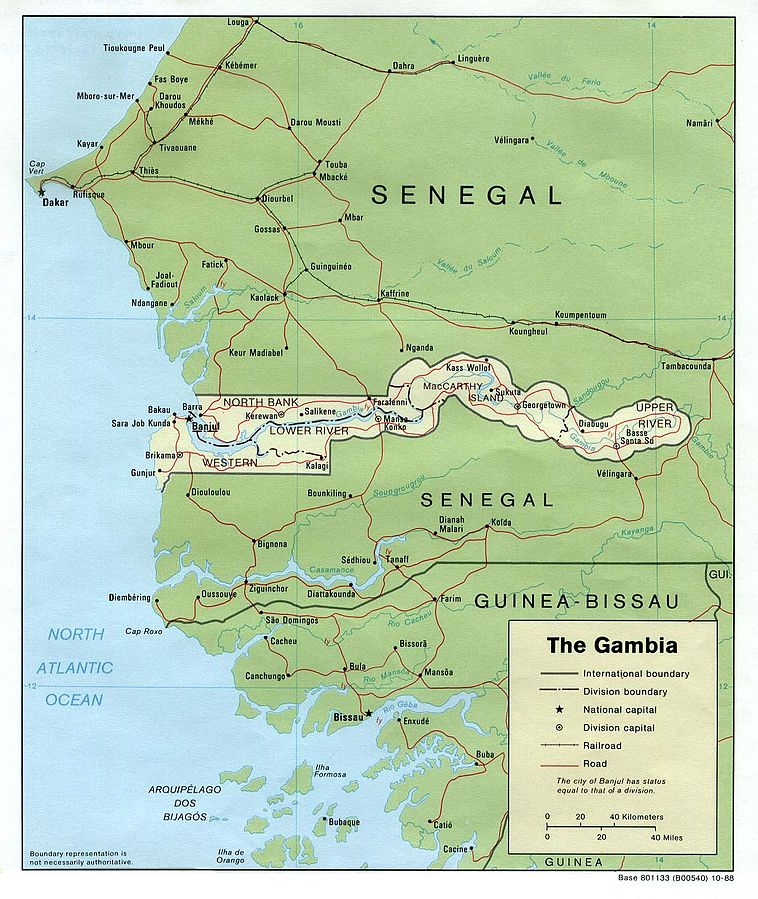
US government map of the Gambia (source)

The Gambia Changes Official Name
If you read our review of world political geography changes in 2015, you might remember a brief note on the official name of the Gambia, a tiny country located along the banks of a river in West Africa. Last December, the Gambia’s maverick dictator decided to declare the country an “Islamic republic”, a designation that can have various meanings and is used by four other countries in the world.

At the time, at least one regional news source claimed that the country’s official name had indeed been changed from “Republic of The Gambia” to “Islamic Republic of The Gambia”. But for a country’s name to be formally changed, its government normally has to pass a law or at least issue some kind of proclamation, and at the time it wasn’t clear whether that had actually  happened.

Flag of the Gambia Country Name:  
• The Gambia
Official Name:  
• Islamic Republic of the Gambia
Capital: Banjul

New Name Registered with UN and ISO
Since most of the world’s countries, including the Gambia, are part of the United Nations (UN), it’s expected that if the country’s name changes, the change will be filed with the administrative offices of the UN so world organizations and other countries will know to start using the new one.

And earlier this year, that finally happened, with the UN updating its terminology database to show that the Gambia’s official long-form English name had been changed to “the Islamic Republic of the Gambia”.

This confirmed the name change, and soon led to the same modification being made to ISO 3166, the international standard list of countries and country codes that’s used by organizations and companies all around the world.

How Often Do Countries Change Their Names?
Out of the world’s nearly 200 countries, there’s an average of about one official country name change each year, most of them involving changes to the country’s full name or preferred English name. Besides the Gambia, no countries changed their names in 2014 or 2015, with the last country to do so being Cape Verde in late 2013. That African island country changed its preferred English name at the UN to Cabo Verde, the same as its native Portuguese-language name; the same year, war-torn Libya clarified its new long-form name as “State of Libya”. The year before, Somalia’s 2012 constitution changed the country’s full name to the Federal Republic of Somalia, and a new Hungarian constitution traded “Republic of Hungary” for just “Hungary”.

More substantial changes to countries’ names, involving more than just translation decisions or adjustments to full names, are much less common. The best recent examples are Yugoslavia’s name change to “Serbia and Montenegro” in 2003, Western Samoa’s change to just “Samoa” in 1997, and Zaire’s reversion to its previous name of “Democratic Republic of the Congo”, also in 1997.

Name Changed in Other Languages
Unlike some countries that have only changed their name for foreign language speakers, English is actually the official language of the Gambia. The UN, on the other hand, has six official languages, so the country’s new name also had to be translated and made official in each of those languages:

Language Before After
English the Republic of the Gambia the Islamic Republic of the Gambia
French la République de Gambie la République islamique de Gambie
Spanish la República de Gambia la República Islámica de Gambia
Russian Республика Гамбия Исламская Республика Гамбия
Chinese 冈比亚共和国 冈比亚伊斯兰共和国
Arabic جمهورية غامبيا جمهورية غامبيا الإسلامية

Islam in the Gambia
Although the country’s name change might seem to suggest that the Islamic religion will be playing a larger role in the government, this doesn’t seem to be the case. Ninety percent of Gambians are Muslims, and there is not complete separation between church and state. But the Gambian constitution does protect freedom of religion, and there’s little sign anything is changing in that area.

Graphic of the flag of the Gambia is in the public domain (source).

ICYMI: Cape Verde’s Name Change

In the following weeks, PolGeoNow will be publishing several short “in case you missed it (ICYMI)” articles on events from 2013. This is news that we weren’t able to cover when it first broke, but that we thought our readers might still want to know about.

Premium members click here to view this article in the ad-free members area. Not a member yet? Subscribe now!

Topographic map of Cape Verde, now known officially as Cabo Verde
Cape Verde, now officially Cabo Verde (click to enlarge). Map by Oona Räisänen/Wikimedia (CC BY-SA) (source).

By Evan Centanni

Cape Verde Changes Official Name
If you read our article on the year 2013 in political geography changes, you’ve already heard about the change to Cape Verde’s official English name. But since keeping track of country name changes is one of the primary missions of Political Geography Now, we are now presenting this in-depth report on the topic.

On October 25, 2013, this West African island country changed its official English name at the U.N., from “Cape Verde” to “Cabo Verde”. Unlike other recent country name changes, like those of Libya or Hungary, Cape Verde is changing its short-form official name as well as the long-form one. The long name has also been changed, from “Republic of Cape Verde” to “Republic of Cabo Verde”.

Location on the globe of Cape Verde, now known officially as Cabo Verde
Location of Cabo Verde. Graphic slightly modified from this map by Eddo/Wikimedia (CC BY-SA).

Language Issues
In fact, in its own official language of Portuguese the country has always been known as Cabo Verde, meaning “green cape”. But curiously, partially translated “Cape Verde” has long been the established English name. Perhaps to avoid the inconvenience of juggling these slightly different appellations, the country’s government has now requested to be known only by the fully Portuguese version. It is also promoting a name change in French, from “le Cap-Vert” to just “Cabo Verde”.

How Do You Say That?
The traditional English name of the country, Cape Verde, is pronounced “kayp verd”. On the other hand, the new name is presumably intended to be pronounced as closely as possible to the Portuguese: approximately “kah-bo vehr-dih” (the “e” at the end is pronounced something like an English “short i”). Our bet is that common English usage will default to either “vehr-day” or “vehr-dee”.

What’s in a Name Change?

Flag of Cabo Verde (Cape Verde)Country Name:  
• Cabo Verde (Portugues, official English)
• Cape Verde (traditional English)
Full Name:  
• Republic of Cabo Verde (English)
• República de Cabo Verde (Portugues)
Capital: Praia
Demonym: Cape Verdean (traditional), Cabo Verdean (official)

Ultimately no country’s government can control what people call it in another language, and it’s always been normal for them to be called very different names by speakers of foreign tongues. Think of how Deutschland and Italia are known as “Germany” and “Italy” in English – it would be very difficult to convince all English speakers to switch to the native names. And every language does this. For some, such as Chinese or Arabic, every country’s name is at least a bit different from its native appellation, due to the needs of transliterating from Latin letters into the language’s native script.

What Cape Verde’s change will affect is official usage in the United Nations, and diplomats will also be obliged to use the new name in official English communications. Meanwhile, the international standard list of country codes, ISO 3166-1, is based on U.N. usage, meaning that “Cabo Verde” will soon begin appearing on country lists online and elsewhere (though the change hasn’t come through quite yet).

Some organizations, like National Geographic, which already favors using native names whenever possible, will also oblige the Cape Verdean government in their publications. However, the majority of news media and average people may be reluctant to make the switch, as has been the case with Ivory Coast and East Timor.

Graphic of the flag of Cape Verde (Cabo Verde) is in the public domain (source).

Who Recognizes Palestine in 2013?

(Keep up with changes to Palestine’s situation: view all Palestine updates.)

 Palestine is now an Observer State in the U.N., but it’s still not recognized individually by all U.N. member countries. Read on for more about the latest countries to recognize Palestine, plus other recent changes to its international status.

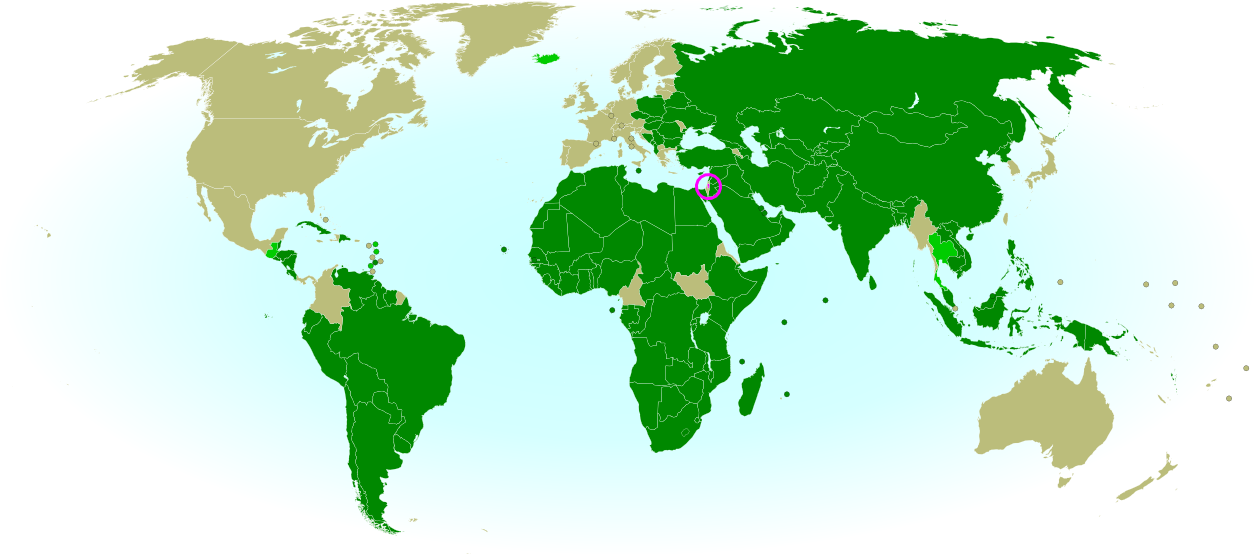
Map of countries that recognize the State of Palestine as an independent country, updated for May 2013 with most recent additions highlighted
Countries recognizing the State of Palestine in green, with most recent additions highlighted in lighter green. Palestine in magenta (circled). Map by Evan Centanni, modified from public domain graphic (source).


By Evan Centanni

Countries that Recognize the State of Palestine
Despite opposition from Israel, the U.S., and other Western countries, Palestine was recognized as an Observer State by the U.N. last year. However, recognition by individual countries is a separate matter. In September of 2011 we reported that the declared State of Palestine had accumulated recognition from 126 U.N. members plus partially-recognized Western Sahara. But have more states recognized Palestine as an independent country since then?

Yes, a few. As highlighted on the map above, several more U.N. member countries have recognized the State of Palestine over the last year and a half. New additions since our previous update are the Caribbean island nations of Dominica, Antigua and Barbuda, and Grenada, plus Thailand in Southeast Asia and Iceland in Europe. The latest, recognizing Palestine for the first time just last month, is the Central American state of Guatemala.

Flag of Palestine Country Name:  
• Palestine (English)
Filasṭīn (Arabic)
Official Name:  
• State of Palestine (English)
• Dawlat Filasṭin (Arabic)
Capital: 
• Jerusalem (claimed)
Ramallah (administrative)

This brings the total number of U.N. members that consider Palestine a sovereign state to 132, or about 68 percent. Or could it be more? Last year, before Guatemala’s announcement, the Palestinian government was already claiming recognition from 132 countries, and the U.N. resolution which made it an Observer State mention that Palestine was already recognized by 132 “members of the United Nations”. However, no additional recognitions have emerged in the months since then, so it seems likely that it was an error. The number 132 probably refers to the 131 U.N. members recognizing at the time, plus Western Sahara.

Wikipedia: List of countries recognizing Palestine

Palestine in UNESCO
Also since our September 2011 report, Palestine was accepted as a member of the United Nations Educational, Scientific and Cultural Organization (UNESCO), a specialized agency of the U.N. This happened before its elevation to Observer State status in the General Assembly, and was quite controversial at the time. It was speculated that becoming an Observer State would increase the likelihood of Palestine being accepted into more U.N. organizations in the future – however, this has not yet happened.

Change of Standard ISO Name
Another change to Palestine’s treatment internationally came with a February 2013 update to the standard list of country codes and names from the International Organization for Standardization (ISO). This standard, which is used by many organizations and companies around the world, is tied to official United Nations usage. After the Palestinian government received Observer State status from the U.N., its name was changed in the standard from “the Occupied Palestinian Territory” to “the State of Palestine”.

Online company Google caused a bit of a stir last week when it changed the name of its Palestinian search page from “Palestinian Territories” to “Palestine”, receiving criticism from the Israeli government. However, Google argued that it was not making a political statement, but only following the lead of the U.N. and the standard used by websites around the world.

Check For Updates: See more recent recognition reports by viewing all Palestine posts.

Related Articles:

Is Palestine Really a Country?

Libya Changes Official Name

Map of rebel campaigns during the last stage of Libya's 2011 civil war
Map of the last stage of Libya’s 2011 civil war (click to see full map and original article). Map by Evan Centanni, based on public domain map from Wikipedia (source).

State of Libya
Last month, the North African country of Libya changed its official long-form name to “State of Libya” (Arabic: Dawlat Libya). This comes as part of Libya’s governmental transition following its 2011 civil war, in which a rebel coalition defeated the regime of dictator Muammar Gaddafi.

Over the last year, the country’s formal name had not been clearly defined, with the country referred to in most documents simply as “Libya”. The rebel National Transitional Council had only made a point of ceasing to use the Gaddafi-era name.

During the last decades of Gaddafi’s reign, the country was known in long form as the “Great Socialist People’s Libyan Arab Jamahiriya”. The word “jamahiriya” was coined by Gaddafi by combining the Arabic words for “republic” (jumhuriya) and “the masses” (jamahir).

The new name, “State of Libya”, voted in by the country’s General National Congress on January 8th, is intended to be temporary pending the approval of a new national constitution. However, it is entirely possible that the constitution, once drafted, could also choose to use the same name.

This marks the third year in a row that a country has changed its official name during the year’s first two months: last January, the Republic of Hungary changed its name to just “Hungary”, and in February 2011, the Republic of the Fiji Islands shortened its name to “Republic of Fiji”.

Hungary Shortens Official Name

Country Name: Hungary (English), Magyarország (Hungarian)
News Category: Name Changes
Summary: Hungary’s full official name changed from “Republic of Hungary” to just “Hungary” when a new constitution came into effect in the Central European country at the beginning of this year.

Full Story

Map of Hungary from the CIA World Factbook (public domain)

A member of the Soviet-influenced Eastern Bloc during the Cold War, Hungary was one of the many European countries that underwent major reforms after the fall of the Iron Curtain in 1989. Its name was changed from “People’s Republic of Hungary” to “Republic of Hungary”, and the old communist constitution was heavily amended to welcome in democracy.

Flag of Hungary (source)

However, uniquely among the former Eastern states, the old constitution was never completely discarded. Change finally came last year, when the Hungarian parliament, led by the conservative Fidesz party, began drafting a replacement constitution. The new document, which holds the historical distinction of being the first ever national constitution written on an iPad, was signed into law on April 25 and entered into effect on January 1, 2012. Curiously, the new text further reduces the country’s official name from “Republic of Hungary” to just “Hungary”.

Link: Full English text of Hungary’s new constitution (PDF)

Hungary’s location within the European Union (copyright
David Liuzzo, used with permission per its Wikimedia page)

To many of the new constitution’s opponents, the name change symbolizes the authoritarian tendencies of Fidesz and Prime Minister Viktor Orbán, who they have nicknamed “Viktator”. Opposition parties have complained that the constitution was pushed through without broad consensus, enshrining the ruling party’s conservative ideology into the country’s basic law. Among the document’s right-wing provisions are clauses condemning gay marriage and abortion, as well as a pointed failure to protect sexual orientation under anti-discrimination measures. To those who see an anti-democratic constitution whose preamble appeals to a history of monarchy and Christianity, the deletion of “Republic” from Hungary’s name is the icing on the cake.

News Report: Opposition protests fill Hungarian capital (Washington Post & Al-Jazeera)

Libyan Rebels Take Capital

Country Name: Libya (English), Lībyā (Arabic)
Official Name (National Transitional Council): Libya, Libyan Republic
Official Name (Gaddafi Regime): Great Socialist People’s Libyan Arab Jamahariya (English), al-Jamāhīriyyah al-‘Arabiyyah al-Lībiyyah ash-Sha‘biyyah al-Ishtirākiyyah al-‘Uẓmá (Arabic)
News Category: Divided Countries
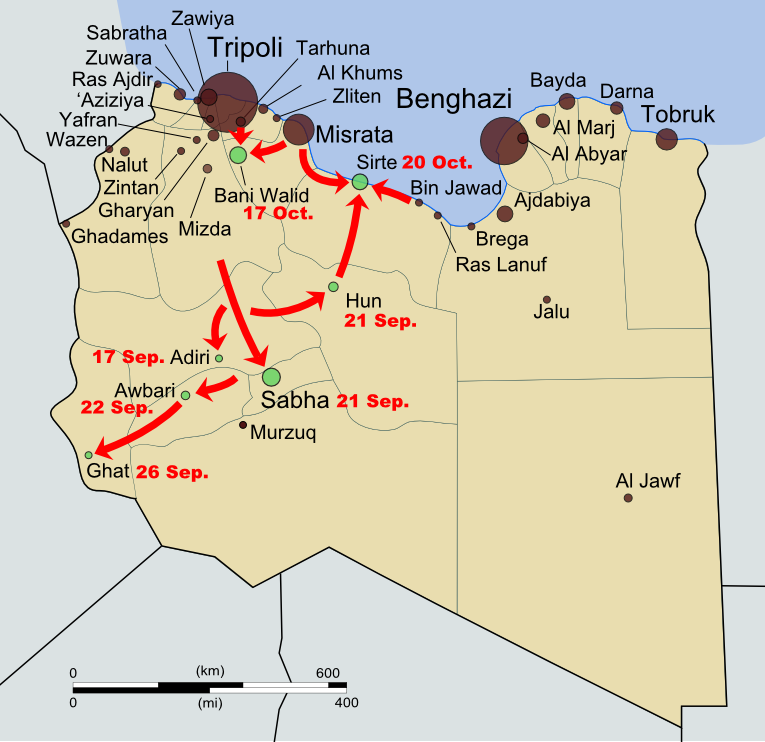
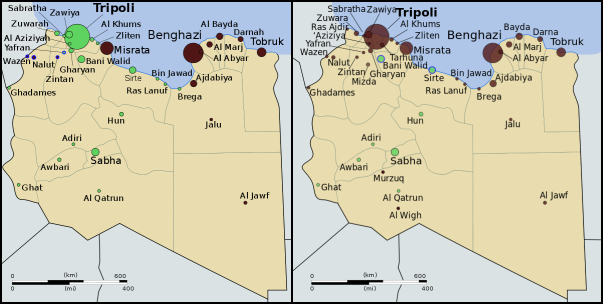
Summary: Libyan rebels last month took sudden control of the national capital of Tripoli and other cities, ending months of stalemate in the North African country’s civil war. Although the old government of Muammar Gaddafi maintains control of a few holdout cities, the rebel National Transitional Council is gaining increasing recognition internationally. The power transition is bringing with it changes to the country’s flag and official name.

Control of Libya on June 1 (left) and September 2 (right). Gaddafi-held cities in green, rebel-held cities in
black. Blue represents ongoing struggle for control. Public domain maps from Wikimedia (source).


Full Story
Libya’s division between warring factions began in mid-February of this year, during the height of the “Arab Spring” protests happening across the Middle East and North Africa. Dictatorships in Tunisia and Egypt had recently fallen to popular protest movements, and many Libyans were fed up with their country’s erratic and sometimes brutal leader, Muammar Gaddafi. Protesters hit the streets, and when the government answered with violent crackdowns, the protesters fought back. Within days, several cities in eastern Libya had fallen to the rebels, who by the end of the month controlled most of the country’s east and some parts of the west. A government counteroffensive stalled after intervention by NATO, and the country was effectively divided in two, with rebel-held territories governed by the National Transitional Council (NTC) and the remainder under Gaddafi’s control.

Link: Interactive map of the Libyan uprising (February-April) – The New York Times

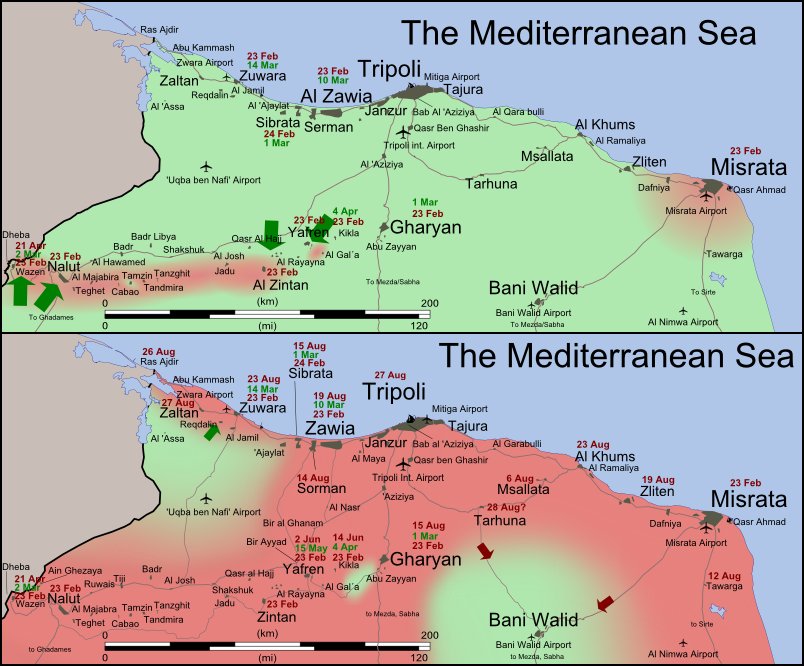
Control of northwestern Libya on June 1 (top) and September 2 (bottom).
Gaddafi-held territory is shown in light green; rebel-held territory is
shown in dark pink. Map by Wikimedia user Rafy (source; CC BY-SA).

The civil war in Libya remained in apparent stalemate for the next five months, with the two sides trading small amounts of territory but not making any major gains. All that changed in late August, when rebel forces suddenly began taking more western towns, then quickly stormed into the capital city of Tripoli, taking control and securing Gaddafi’s headquarters. More rebel gains followed on the eastern front. Gaddafi himself, along with much of his family, escaped from Tripoli and has not yet been located. Forces loyal to him remain in control of the cities of Sabha, Bani Walid, and Sirte – the last of which is Gaddafi’s hometown. Meanwhile, the NTC is in the process of moving its headquarters from its unnofficial capital in Benghazi to the official capital in Tripoli, and many Libyan embassies around the world have switched their allegiance from Gaddafi to the NTC. With international recognition for the NTC growing, the new government seems likely to soon fully replace Gaddafi as representative of the Libyan people on the international stage.

Wikipedia: 2011 Libyan Civil War

The flag of Libya under the Gaddafi regime (top) and under
the NTC (bottom). Public domain, from this Wikipedia page.

Changing Flag and Country Name
As with most revolutions, the rebellion in Libya has brought with it a changing identity. The rebel National Transitional Council, and the movement that spawned it, have been quick to discard any symbols of the Gaddafi regime. One of the most prominent of these symbols is the national flag. For decades, Gaddafi’s Libya has been known by it’s unique flag design: a plain, unmarked green rectangle. The rebel movement, on the other hand, has mostly used the flag of the Kingdom of Libya which Gaddafi overthrew, composed of red, black, and green stripes, with the crescent and star of the Ottoman Empire in white at the center. This was declared the official flag by the NTC, and is now flown at the United Nations and most of Libya’s embassies abroad.

Wikipedia: Flag of Libya

Another eccentricity of Gaddafi’s Libya was the country’s full official name, translated into English as the Great Socialist People’s Libyan Arab Jamahiriya. “Jamahiriya” is a word invented by Gaddafi for what he believed to be a unique and superior form of government, supposedly based on direct rule by the people. The word is a combination of the Arabic words jumhūriyya (“republic”) and jamāhīr (“the masses”). The NTC, again making a point of disassociating itself from Gaddafi, has preferred to simply refer to the country as “Libya”, occasionally using the term “Libyan Republic”.

International Recognition of the NTC
As the rebels and the National Transitional Council consolidate their control of the country, more and more countries are recognizing the NTC as the legitimate government of Libya. For most countries, which already recognize Libya as an independent country, this is a special diplomatic gesture of support for the rebels; or now that the NTC controls most of the country, a gesture of acceptance of the current state of affairs. The number of states recognizing the NTC has risen drastically, from only 11 when I reported on the situation two months ago, to a current total of 78 U.N. member states and two non-U.N. members (Palestine and Kosovo). Several more U.N. members have established diplomatic relations with the new Libyan government without making formal declarations of recognition. However, at least four countries – Venezuela, Zimbabwe, Ecuador, and Nicaragua – have stated their refusal to recognize the change in government.

Countries officially recognizing the National Transitional Council in dark blue; countries maintaining diplomatic relations with the NTC without official recognition in light blue; countries refusing to recognize the NTC in red;
Libya in yellow. Slightly modified from public domain Wikimedia map (source).