Mauritania Flies a New Flag

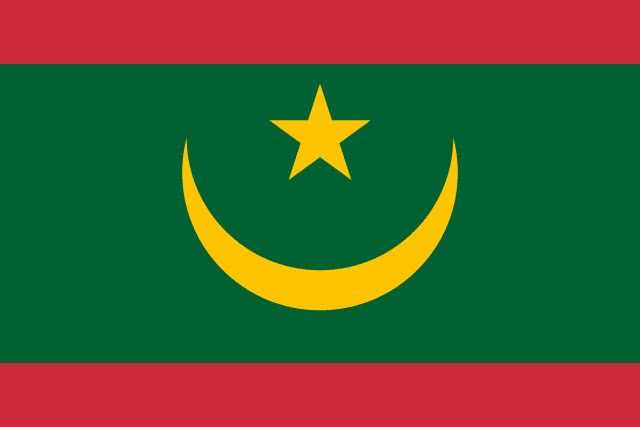
Mauritania Flag: 2017 new flag design after referendum, featuring red bands
Current flag of Mauritania (2017)

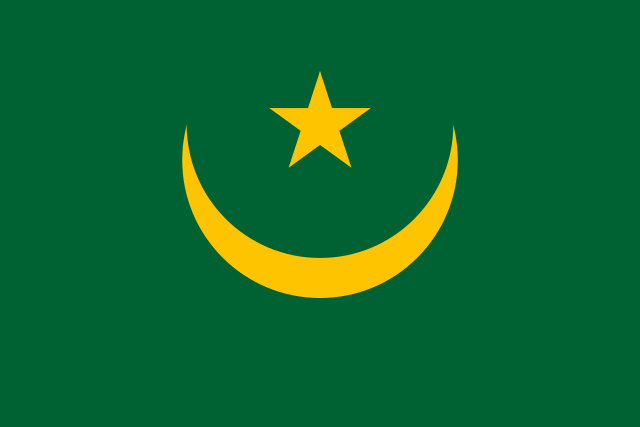
Mauritania Flag: Colors before 2017 referendum that added red bands
Previous flag of Mauritania (1959-2017)

Mauritania’s 2017 Flag Change

This year the West African country of Mauritania (pronounced “maur-ih-TAY-nee-ah”) became the latest of the world’s countries to change its flag, mostly keeping the old design but adding red bars on the top and bottom.

It’s common around the world for even a small flag change to be criticized as a political distraction or a waste of money, and this was no exception. But when it landed on ballots in an August 5 referendum this summer, the modification was approved by 86% of participating voters.

The new flag was first officially raised on November 28, Mauritania’s independence day.

What Does Mauritania’s Flag Mean?

Until this year, Mauritania was one of only a few world countries whose flag didn’t include the colors red, white, or blue. The star and crescent moon, originally an emblem of the Ottoman Empire, are now used in many national flags as symbol of the Muslim world.

The color green is also a symbol of Islam, while the golden yellow of the star and crescent are said to represent the sands of the Sahara Desert. The new red bars symbolize blood sacrificed to defend the national territory in both the past and in the future.

Country Name:  
• Mauritania (English)
• Mūrītānyā (Arabic)
Moritani (Pulaar)
Murutaane (Soninke)
Murutaane (Wolof)
• Mauritanie (French)
Official Name:  
• Islamic Republic of Mauritania (English)
• al-Jumhūrīyah al-Islāmīyah al-Mūrītānīyah (Arabic)
• Republik bu Lislaamu bu Gànnaar (Wolof)
• République islamique de Mauritanie (French) 
Capital: Nouakchott

Green and red are also part of the Pan-Arab colors used in flags across the Arab World, while red, green, and gold are one version of the Pan-African colors.

How Often Do Countries Change Their Flags?

There were almost 70 national flag changes in the 1990s, during the late stages of decolonization and the end of the Cold War, but since then the rate has slowed. From 2000 through 2009, there were about 25 flag changes, and since the beginning of 2010 there have been about 12.

That’s still an average of almost two changes annually, but the past four years have seen a bit of a dry spell: Before Mauritania, the most recent countries to change their flags were Paraguay and Afghanistan in 2013, preceded by Malawi and Belarus in 2012 and Libya in 2011.

For more news about past and future flag modifications, you view all flag change articles on PolGeoNow!

Graphic of current Mauritanian flag licensed under CC BY-SA (source). Graphic of the previous Mauritanian flag is in the public domain (source).

What Ever Happened with New Zealand’s Flag Referendum?

Subscribers click here to view this article in the ad-free members area. Not a member yet? Learn about PolGeoNow subscriptions!

The proposed new flag: “Silver Fern (Black, White, and Blue)” by Kyle Lockwood (CC BY 3.0 nz)

Referendum Complete
PolGeoNow readers might remember that New Zealand’s vote on whether to change its national flag was scheduled to continue until late March 24. So how did it turn out?

Preliminary results were released on March 24, with detailed final results coming out six days later. The answer: New Zealanders voted “NO” on changing their country’s flag to the proposed “Silver Fern” design, by a margin of 57% to 43%.

Visual comparison of the very similar current flags of Australia and New Zealand
Current flags of New Zealand (top) and Australia (bottom)

The result is that New Zealand will keep the same flag it’s been using since 1902. Even though this design is confusingly similar to the Australian flag, and even though many New Zealanders liked the idea of a flag change, the government didn’t suggest any designs that were popular enough to get a majority of voters behind them.

If you’re curious how each part of New Zealand voted, you can see a color-coded summary and map of the results on Wikipedia. Be be aware that the blue just represents regions that voted just over 50% in favor of changing the flag: No area had more than 52% of voters supporting the Silver Fern, and some of the red-coded areas also had almost 50% support for the change.

Read more: Everything You Need to Know About New Zealand’s Flag Referendum

Current flags of New Zealand (source) and Australia (source) are in the public domain.

New Zealand Voting on New Flag Design

Premium members click here to view this article in the ad-free members area. Not a member yet? Learn about our subscription service!

Updated 2015-12-16: Continue to the bottom of the article for the results of the flag referendum!

Graphic illustrating the five flag designs up for a vote in New Zealand's November-December 2015 flag referendum: Silver Fern (Black and White), Silver Fern (Red, White and Blue), Silver Fern (Black, White, and Blue), Koru (black), and First to the Light (Red Peak)
The five options for a new flag of New Zealand. Clockwise from top left: Silver Fern (Red, White and Blue) by Kyle Lockwood; Silver Fern (Black, White and Blue) by Kyle Lockwood; Koru (Black) by Andrew Fyfe; Silver Fern (Black and White) by Alofi Kanter; and Red Peak by Aaron Dustin. More information in article below. License: CC BY 3.0 nz

By Evan Centanni

A New Flag For New Zealand?
For decades, New Zealand has debated whether to change its flag, and now the country is finally putting the matter to a vote. A controversial initiative of Prime Minister John Key, the referendum officially began today, November 20. Over the coming three weeks, New Zealanders will choose their favorite from five contending flag designs. A final vote on whether to adopt the winner or stay with the old flag will happen next March. New Zealand’s current flag has been in place since 1902, nearly fifty years before the country became fully independent from the UK. Its top left corner is occupied by the so-called “Union Jack”, which is still the flag of the UK today.

Why Change the Flag?

Visual comparison of the very similar current flags of Australia and New Zealand
Current flags of New Zealand (top) and Australia (bottom)

In New Zealand, one of the most popular reasons to change the country’s flag is the same issue children all over the world have already noticed: It’s confusingly similar to the flag of Australia, especially since the two countries are right next to each other and share close historical ties.

Supporters of a change also argue that the current flag represents New Zealand’s former place as part of the British Empire, and that the country should follow Canada’s example by choosing a new flag for the post-independence era. And finally, many feel the flag’s European-style design excludes the indigenous Maori people, whose importance as New Zealand’s original inhabitants is increasingly being recognized in the country’s society and governance.

However, there are also many who oppose changing the flag. Among the top reasons are complaints that having a referendum and changing out the country’s flags is a waste of money that could be better spent elsewhere. The referendum process is expected to cost nearly $26 million New Zealand Dollars ($17 million USD), and if it passes, many physical flags will need to be replaced, from those flying on flagpoles, to military uniforms, to sports and tourism souvenirs.
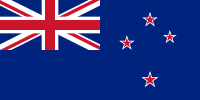
Current flag of New ZealandOfficial Country Name:  
• New Zealand (English)
• Aotearoa (Maori)
Capital: Wellington

Others feel that the flag’s century of history is more important than its design, with some arguing that switching out the flag would actually be disrespectful to the many soldiers who have died while serving under it. The government notes that the flag has already been changed twice in the past, prior to the current flag being officially adopted in 1902.

Choosing a New Design
Although the parliament could have changed the flag on its own, the Key administration chose instead to involve the people more directly in the decision by holding a public consultation and referendum. The first part of the process included asking the public for their suggestions of flag designs. The government received over 10,000 proposals, including many wacky or humorous flags, such as a drawing of a kiwi bird shooting laser beams from its eyes. A government-convened “Flag Consideration Panel” narrowed down the proposals to a list of 40 candidates, then to a shortlist of just four that would appear on the ballot.

Proposed new flag design for New Zealand: Silver Fern (Black and White) by Alofi Kanter, Option A on the ballot for the November-December 2015 referendum vote

Option A: Silver Fern (Black and White) by Alofi Kanter
The first option on the ballots now being sent to voters is this black and white fern design. The silver fern, or ponga, is a native plant living only in New Zealand, and often used a symbol of the country. It appears on the national coat of arms, famously represents many New Zealand sporting associations such as the “All Blacks” national rugby team, and even as an official symbol of the country’s military at some points in history. The design with alternating black and white is based on an official branding logo adopted by the New Zealand government.

Proposed new flag design for New Zealand: Silver Fern (Red, White and Blue) by Kyle Lockwood, Option B on the ballot for the November-December 2015 referendum vote

Option B: Silver Fern (Red, White and Blue) by Kyle Lockwood

The second option on the ballot combines the silver fern with a symbol from New Zealand’s existing flag: the stars of the Southern Cross, a constellation which is mostly visible from locations in the Southern Hemisphere and helped New Zealand’s earliest settlers navigate the ocean. According to the designer, “The red represents our heritage and sacrifices made” and “blue represents our clear atmosphere and the Pacific Ocean, over which all New Zealanders, or their ancestors, crossed to get here”. This design has also won informal design competitions in the past.

Proposed new flag design for New Zealand: Koru (Black) by Andrew Fyfe, Option C on the ballot for the November-December 2015 referendum vote Option C: Koru (Black) by Andrew Fyfe
The koru is actually a variation on the silver fern, showing the spiral shape of a new fern frond as it uncurls. According to the designer, the koru represents “new life, growth, strength and peace” in indigenous Maori culture, and also could be interpreted as “a wave, a cloud, and a ram’s horn”. Twitter users, on the other hand, have humorously named this design the “hypnoflag” for its hypnotic spiral pattern.

Proposed new flag design for New Zealand: Silver Fern (Black, White and Blue) by Kyle Lockwood, Option D on the ballot in the November-December 2015 referendum vote

Option D: Silver Fern (Black, White and Blue) by Kyle Lockwood
Submitted by the same designer as Option B, this flag’s main difference is using black on the left rather than red. Black is a widely-used official national color of New Zealand. Prime Minister Key favors the silver fern designs, but many have criticized the two Kyle Lockwood designs for looking too much like corporate logos, or like a combination of the logos of New Zealand’s two biggest political parties.

But Wait, That’s Not All!
When the government first announced the shortlist of four flag designs in September, the Flag Consideration Panel was widely criticized for choosing a number of similar designs, and for consulting with a Nike shoe designer instead of flag experts. Citizens launched a social media campaign to add a popular favorite design that hadn’t made the list, and under pressure, the Prime Minister eventually gave in and added one more design to the ballot:

Proposed new flag design for New Zealand: First to the Light (Red Peak) by Kyle Lockwood, Option E on the ballot in the November-December 2015 referendum vote

Option E: First to the Light (“Red Peak”) by Aaron Dustin
This flag candidate, added late to the list due to popular demand, intentionally leaves out the traditional symbols of New Zealand in favor of something simpler. It attempts to combine Maori and British-European symbolism by being reminiscent of both Maori traditional artwork and elements of the current New Zealand flag, such as the colors and the points of the stars. Its colors represent night (black), dawn (blue), and earth (red), with the shape evoking the mountainous terrain of New Zealand and the white point symbolizing the “the collision of two tectonic plates” which formed the islands of New Zealand in prehistoric times.

What’s Next?
During the three-week voting period of the first referendum, citizens of New Zealand will rank the five designs in order of their preference, and the winner will go up against the current flag in a second three-week referendum, to be held from March 3 to 24, 2016. In that vote, New Zealanders will have the option to either make the new design their national flag, or keep the old one.

If the people vote to keep the old flag, then nothing will change. But if they vote for the new proposed flag, it will replace the old one as the country’s official flag starting from six months after the referendum results come in. New Zealand will then begin the process of gradually switching out physical flags and replacing them with flags of the new design. The old flag will remain a recognized alternative because of its status as a “flag of historical significance“.

Update: Voting Results

The winner…for now!

Official results for the first-stage referendum were released on December 15, 2015. The winner was Silver Fern (Black, White and Blue) by Kyle Lockwood. The runners-up, in order of popularity, were:

  1. Silver Fern (Red, White and Blue) by Kyle Lockwood
  2. First to the Light (“Red Peak”) by Aaron Dustin
  3. Silver Fern (Black and White) by Alofi Kanter
  4. Koru (Black) by Andrew Fyfe

Silver Fern (Black, White and Blue) will now face off against the current New Zealand flag in the second-stage referendum this coming March. Stay tuned to PolGeoNow for ongoing coverage!

Current flags of New Zealand (source) and Australia (source) are in the public domain.

Paraguay’s Subtle Flag Change

Sometimes geopolitical changes make headlines, but other times they slip quietly under the radar. In particular, small modifications to national flags often fail to make the news. To make sure you don’t miss anything, here’s a report on one such flag change that even we discovered only recently.

Premium members click here to view this article in the ad-free members area. Not a member yet? Subscribe now!

Flag of Paraguay, obverse (front) side, 2013-present
Flag of Paraguay, 2013-present (front)

Flag of Paraguay, reverse (back) side, 2013-present
Flag of Paraguay, 2013-present (back)

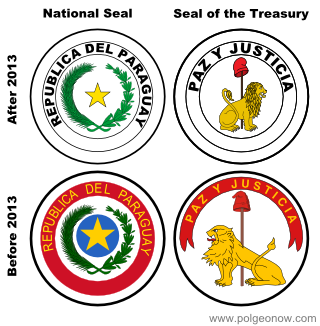
Changes to the Coat of Arms of Paraguay made in 2013, with a comparison of the National Seal and Seal of the Treasury as seen on the Paraguayan flag before and after its changes under the administration of President Federico Franco.
The Coat of Arms of Paraguay
(CC BY-SA; source graphics)

By Olga Rodriguez-Walmisley

2013 Flag Change
On July 15, 2013, Federico Franco, at that time the President of Paraguay, announced that the official seals on both sides of the Paraguayan flag would undergo changes in order to better represent the symbols first chosen for it in 1842. These two seals together make up the national coat of arms of Paraguay.

Franco said the modifications were the result of a long debate and “a consensus that is not often achieved among historians”. There had already been several changes to the seals in the past, especially after the Paraguayan War of 1864-1870, which pitted the country against Brazil, Argentina, and Uruguay.

Changes made to the National Seal
One of the biggest of the 2013 changes was to the ring around the star, where it says “República del Paraguay”. This ring has been red since about 1988, when it was changed under the rule dictator Alfredo Stroessner, whose political party was represented by that color. It is now white. The blue background behind the yellow star has also disappeared, and the text of the phrase “República del Paraguay” has changed from yellow to black.

Changes made to the Seal of the Treasury
On the reverse side of the flag, the roaring lion is now a light ochre (golden) color instead of yellow, the spear behind the lion is brown, while the cap on top of the spear, which according to tradition symbolizes liberty, continues to be red. The inscription “Paz y Justicia” (Peace and Justice) is now black instead of yellow, and the banner behind the inscription has gone from red to white.

Country Name:  
• Paraguay (English, Spanish)
• Paraguái (Guarani)
Official Name:  
• Republic of Paraguay (English)
• República del Paraguay (Spanish)
• Tetã Paraguái (Guarani)  
Capital: Asunción

Other proposed changes
According to Paraguayan Minister of Linguistic Policy Carlos Villagra Marsal, there were also unfruitful efforts to replace the palm frond on the National Seal with a pindo palm, and the olive branch with yerba mate, which would in his opinion have been better national symbols. However, he said the historians preferred to return to the original designs, rather than add entirely new elements to the flag.

The Paraguayan Flag Through History

The Blue Flag as flown under Francia

Since its independence in 1811, Paraguay has had four different major flag designs. The first flag of Paraguay, called “The Blue Flag,” was a royal blue color, with a six-pointed white star in the upper left corner representing the Virgin Mary of Asunción, who is the patron saint and namesake of the country’s capital city. The Blue Flag was in action from May 15th (the day Paraguay became independent from Spain) until June 16th of 1811. In 1826, it was reinstated by President Gaspar Rodríguez de Francia, and used in alternation with the red, white, and blue tricolor until the early 1840’s, when Francia died.

Paraguay’s second major flag design, used from June 17th until August 15th of 1811, was made up of three horizontal stripes of red, yellow, and blue. The red and yellow stripes on the top were taken from the flag of Spain, while the blue stripe on the bottom represented the Virgin Mary of Asunción.

Paraguay's first tricolor flag, of red, gold, and blue. Used in 1811.
Paraguay’s first tricolor flag
(CC BY-SA; source)

The third flag had the same color scheme as the present-day Paraguayan flag: red, white, and blue horizontal stripes. Red represented justice, white peace, and blue liberty. However, in the initial design the middle white stripe was wider than the other two, while the present-day flag sports three equal-width stripes. The early version of the flag was used until September 30th, 1812, when it was modified so that the three stripes were of equal width. The new tricolor was called the “first flag of the Republic”, since 1812 was the year Paraguay declared itself a republic, formally shedding its past as a province of Spain.

The seals of the Paraguayan coat of arms were added to the flag in November of 1842. On the front, the seal of Paraguay: a palm frond and olive branch intertwined at the bottom and open at the top, with a star in the middle, and the inscription “República del Paraguay” (Republic of Paraguay) above. On the reverse side of the flag, the seal of the Department of the Treasury was added: a lion within a circle, with the words “Paz y Justicia” (Peace and Justice) above.

Paraguay’s flag is unique in that the front and back have different designs: Saudia Arabia is the only other UN-recognized country with a national flag whose reverse side is not a mirror of the obverse—but in the case of the Saudi flag, the back side is merely a duplicate of the front side to prevent the flag’s sacred text from being reversed. (Until recently, Moldova’s flag also had a different front and back, but it was changed in 2010 so the two sides are now normal mirror images of each other.)

Graphics of the Paraguayan flag, other than the red, gold, and blue tricolor, are in the public domain (source).

Belarus’s Quiet Flag Change

Sometimes geopolitical changes make headlines, but other times they slip quietly under the radar. Such is the case with the flag of Belarus, which was changed without fanfare (or explanation) by a government decree back in 2012. We don’t want you to miss any changes to the world’s list of countries and flags, so we now present a belated report on this little-known event.

Premium members click here to view this article in the ad-free members area. Not a member yet? Subscribe now!

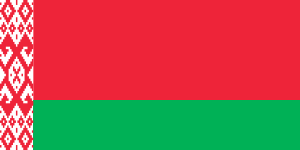
Flag of Belarus, 2012-present
Flag of Belarus, 1995-2012
Flag of Belarus, 1991-1995

By Caleb Centanni

Belarus, a former Soviet state in Eastern Europe, made a slight change to its flag in early 2012. On Feb. 10 of that year, the State Committee for the Standardization of the Republic of Belarus announced a minor change to the ornamental pattern on the left margin of the flag.

The pattern originally occupied one-twelfth of the flag’s total length, and was located inside a white margin making up one-ninth of the flag design. The ornamental pattern has now been extended to fill the entire one-ninth margin. The Belarusian government apparently provided no specific reason for the change.

Other than this minor adjustment, the current flag of Belarus has been in place since 1995, when it replaced the traditional white-red-white flag after a controversial referendum that critics denounced as unconstitutional.

Belarusian President Alexander Lukashenko supported the adoption of the 1995 flag, which is very similar to the Soviet-era flag. State-owned media argued the traditional tricolor flag was unacceptable due to its use by Nazi collaborators in World War II.

Country Name:  
• Belarus (English)
• Bielaruś (Belarusian)
• Belorussia (Russian) 
Official Name:  
• Republic of Belarus (English)
• Respublika Bielaruś (Belarusian)
• Respublika Belarus’ (Russian)  
Capital: Minsk

The white-red-white flag was re-adopted in 1991 after the collapse of the Soviet Union, and some still consider it the rightful flag of Belarus. Opposition activists have continued to use it in protests against the Lukashenko administration.

However, the flag is officially banned in the country, and many protesters have been arrested for displaying it, contributing to allegations of authoritarianism and the labeling of Belarus as a dictatorship by many international commentators.

All versions of the flag of Belarus are in the public domain (1995-2012 source; 2012-present source).

Malawi’s Flag Change

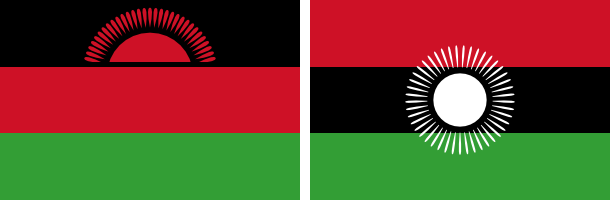
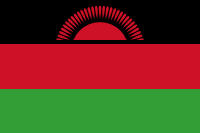
New and old flags of Malawi
Malawi’s original rising-sun flag (left) is being re-adopted, after being controversially replaced two years ago by the full-sun banner (right). Graphics are in the public domain (left source; right source).

Just two years after adopting a new flag, the southeast African country of Malawi is changing back to the old one. The original banner, in place from independence in 1964 until its replacement in 2010, was voted back in by the national parliament on May 28, 2012.

Flag of MalawiCountry Name:  
• Malawi (English)
• Malaŵi (Chichewa)
Official Name:  
• Republic of Malawi (English)
• Dziko la Malaŵi (Chichewa) 
Capital: Lilongwe

The independence flag, which displays a rising sun to represent the dawn of hope for Africa, was controversially replaced by President Bingu wa Mutharika two years ago. The colors were shuffled around to more closely match the Pan-African Flag, and the red rising sun was changed to a full white sun to symbolize the progress made by Malawi since independence.

When President Mutharika died last April, the Malawian government wasted little time in reverting the unpopular flag change. The move was supported by newly sworn-in President Joyce Banda, who had recently experienced a falling-out with Mutharika and started a new political party.

Although the flag change vote passed in parliament, it is still unclear whether it has passed officially into law via the required presidential signature. In any case though, the rising-sun flag appears to be widely in use again, being flown in the Olympics and displayed on many official websites (except for the main government homepage).

Syrian Uprising: Map Update 5

There are newer versions of this map available. To see them, view all Syria updates.

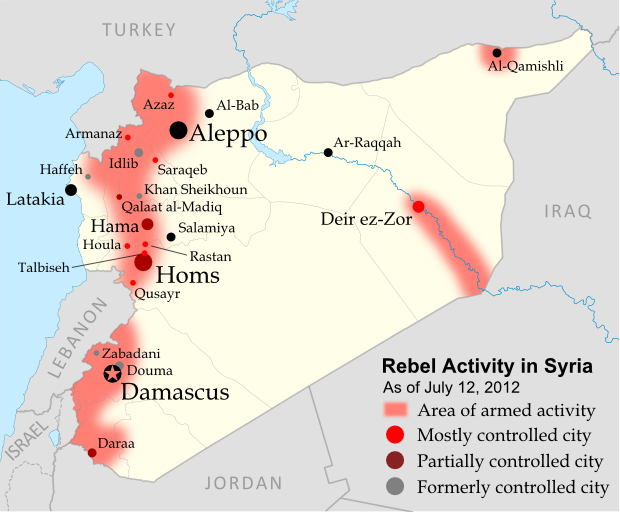
Political Geography Now presents an updated map of territorial division in Syria, where escalating violence is now referred to by the U.N. as a full-scale civil war. Read on for a rundown of recent events.

Map of rebel control in Syria's Civil War, updated for July 2012
Activity by rebel groups in Syria, marking areas of armed conflict as well as towns and cities held. Map by Evan Centanni, starting from this blank map by German Wikipedia user NordNordWest. License: CC BY-SA

Syrian Civil War

In the month since our previous Syria report, the Free Syrian Army (FSA), Syria’s main rebel group, has officially abandoned its failed ceasefire with government forces. This nominal change of stance has been presented as a response to continued massacres of Syrian civilians, for which government-supported militias are apparently to blame. Though even the FSA is only a loose organization of rebel cells, other groups have also joined the growing conflict, which the U.N. has begun calling a “civil war“.

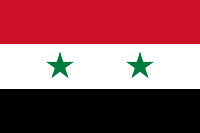
Flag of Syria under the current governmentCountry Name:  
• Syria (English)
• Sūriyya/Sūryā (Arabic)
Official Name:  
• Syrian Arab Republic (English)
• al-Jumhūriyyah al-‘Arabīyah  as-Sūriyyah (Arabic)
Capital: Damascus

Rebels Show Strength in North
In the northwest of the country, rebels continue to control much of rural Idlib province, recently capturing the town of Armanaz, and apparently retaking the larger town of Saraqeb (Saraqib). The historical fortress of Qalaat al-Madiq is currently occupied by government forces, but the adjacent town is rebel-controlled.

Furthermore, the long plain extending north from Qalaat al-Madiq nearly to the Turkish border is now reportedly administered by the rebels as something of a parallel state. Areas of the frontier itself have also become a rebel safe haven from air attacks, a result of Turkey’s transfer of weaponry to the border to defend its air space.

Meanwhile, for the first time major rebel activity has spread further westward to Latakia province, where a month ago the insurgents briefly captured the town of Haffeh (Haffah) before withdrawing again. Another defeat came in Khan Sheikhoun, a large town in Idlib province along the government-held Hama-Aleppo road.

Central & Eastern Syria Contested

The central province of Homs has also continued to see heavy fighting, with the FSA capturing the town of Talbiseh and claiming to control all of Qusayr (Quseir), which for months was divided between rebel and Syrian government held areas. In Syria’s capital region, the government has again driven rebels out of the Damascus suburb of Douma. On the other hand, recent reports indicate that opposition forces now control most of Deir ez-Zor (Deir Ezzor), a major city in the country’s far east.

Pre-Baath party flag of Syria, now used as a symbol of opposition in Syria's uprising
Pre-Baath flag of Syria (source)

Opposing Flags
Finally, in an echo of events in Libya last year, opposition protesters in Syria have been flying an older version of the country’s flag, from before President Bashar al-Assad’s Baath party came to power. Based on what happened in Libya, it seems likely this flag could come to serve as the banner of a competing rebel state if the Syrian civil war continues to escalate.

Further Reading: Holliday, Joseph. Syria’s Maturing Insurgency (PDF). Institute for the Study of War (June 2012). 

Graphic of current Syrian flag is in the public domain (source).

Libyan Rebels Take Capital

Country Name: Libya (English), Lībyā (Arabic)
Official Name (National Transitional Council): Libya, Libyan Republic
Official Name (Gaddafi Regime): Great Socialist People’s Libyan Arab Jamahariya (English), al-Jamāhīriyyah al-‘Arabiyyah al-Lībiyyah ash-Sha‘biyyah al-Ishtirākiyyah al-‘Uẓmá (Arabic)
News Category: Divided Countries
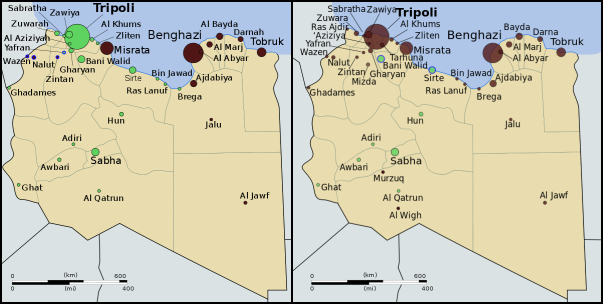
Summary: Libyan rebels last month took sudden control of the national capital of Tripoli and other cities, ending months of stalemate in the North African country’s civil war. Although the old government of Muammar Gaddafi maintains control of a few holdout cities, the rebel National Transitional Council is gaining increasing recognition internationally. The power transition is bringing with it changes to the country’s flag and official name.

Control of Libya on June 1 (left) and September 2 (right). Gaddafi-held cities in green, rebel-held cities in
black. Blue represents ongoing struggle for control. Public domain maps from Wikimedia (source).


Full Story
Libya’s division between warring factions began in mid-February of this year, during the height of the “Arab Spring” protests happening across the Middle East and North Africa. Dictatorships in Tunisia and Egypt had recently fallen to popular protest movements, and many Libyans were fed up with their country’s erratic and sometimes brutal leader, Muammar Gaddafi. Protesters hit the streets, and when the government answered with violent crackdowns, the protesters fought back. Within days, several cities in eastern Libya had fallen to the rebels, who by the end of the month controlled most of the country’s east and some parts of the west. A government counteroffensive stalled after intervention by NATO, and the country was effectively divided in two, with rebel-held territories governed by the National Transitional Council (NTC) and the remainder under Gaddafi’s control.

Link: Interactive map of the Libyan uprising (February-April) – The New York Times

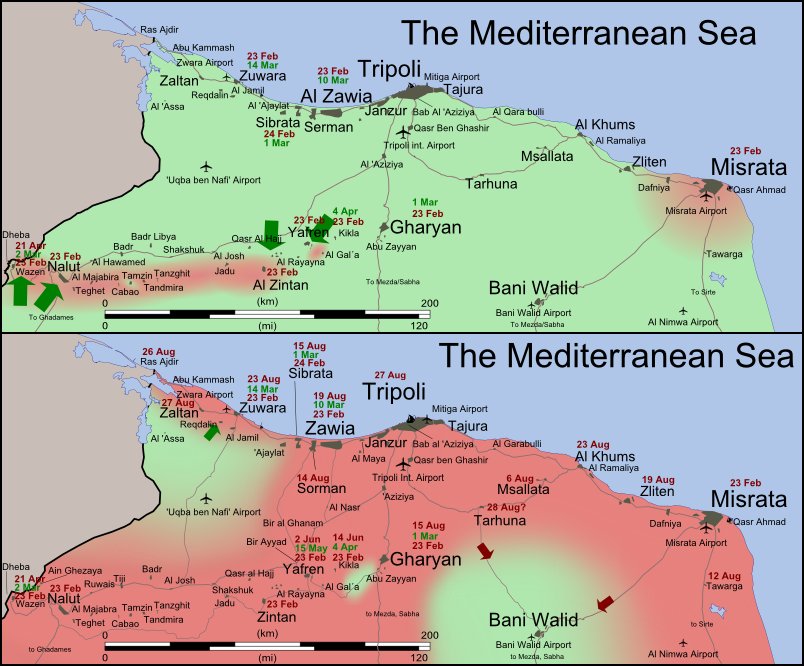
Control of northwestern Libya on June 1 (top) and September 2 (bottom).
Gaddafi-held territory is shown in light green; rebel-held territory is
shown in dark pink. Map by Wikimedia user Rafy (source; CC BY-SA).

The civil war in Libya remained in apparent stalemate for the next five months, with the two sides trading small amounts of territory but not making any major gains. All that changed in late August, when rebel forces suddenly began taking more western towns, then quickly stormed into the capital city of Tripoli, taking control and securing Gaddafi’s headquarters. More rebel gains followed on the eastern front. Gaddafi himself, along with much of his family, escaped from Tripoli and has not yet been located. Forces loyal to him remain in control of the cities of Sabha, Bani Walid, and Sirte – the last of which is Gaddafi’s hometown. Meanwhile, the NTC is in the process of moving its headquarters from its unnofficial capital in Benghazi to the official capital in Tripoli, and many Libyan embassies around the world have switched their allegiance from Gaddafi to the NTC. With international recognition for the NTC growing, the new government seems likely to soon fully replace Gaddafi as representative of the Libyan people on the international stage.

Wikipedia: 2011 Libyan Civil War

The flag of Libya under the Gaddafi regime (top) and under
the NTC (bottom). Public domain, from this Wikipedia page.

Changing Flag and Country Name
As with most revolutions, the rebellion in Libya has brought with it a changing identity. The rebel National Transitional Council, and the movement that spawned it, have been quick to discard any symbols of the Gaddafi regime. One of the most prominent of these symbols is the national flag. For decades, Gaddafi’s Libya has been known by it’s unique flag design: a plain, unmarked green rectangle. The rebel movement, on the other hand, has mostly used the flag of the Kingdom of Libya which Gaddafi overthrew, composed of red, black, and green stripes, with the crescent and star of the Ottoman Empire in white at the center. This was declared the official flag by the NTC, and is now flown at the United Nations and most of Libya’s embassies abroad.

Wikipedia: Flag of Libya

Another eccentricity of Gaddafi’s Libya was the country’s full official name, translated into English as the Great Socialist People’s Libyan Arab Jamahiriya. “Jamahiriya” is a word invented by Gaddafi for what he believed to be a unique and superior form of government, supposedly based on direct rule by the people. The word is a combination of the Arabic words jumhūriyya (“republic”) and jamāhīr (“the masses”). The NTC, again making a point of disassociating itself from Gaddafi, has preferred to simply refer to the country as “Libya”, occasionally using the term “Libyan Republic”.

International Recognition of the NTC
As the rebels and the National Transitional Council consolidate their control of the country, more and more countries are recognizing the NTC as the legitimate government of Libya. For most countries, which already recognize Libya as an independent country, this is a special diplomatic gesture of support for the rebels; or now that the NTC controls most of the country, a gesture of acceptance of the current state of affairs. The number of states recognizing the NTC has risen drastically, from only 11 when I reported on the situation two months ago, to a current total of 78 U.N. member states and two non-U.N. members (Palestine and Kosovo). Several more U.N. members have established diplomatic relations with the new Libyan government without making formal declarations of recognition. However, at least four countries – Venezuela, Zimbabwe, Ecuador, and Nicaragua – have stated their refusal to recognize the change in government.

Countries officially recognizing the National Transitional Council in dark blue; countries maintaining diplomatic relations with the NTC without official recognition in light blue; countries refusing to recognize the NTC in red;
Libya in yellow. Slightly modified from public domain Wikimedia map (source).