Taiwan Loses Recognition from Dominican Republic, Burkina Faso (Map)

You can always find the latest version of this map, and a list of all related articles, on our Which Countries Recognize Taiwan? page.
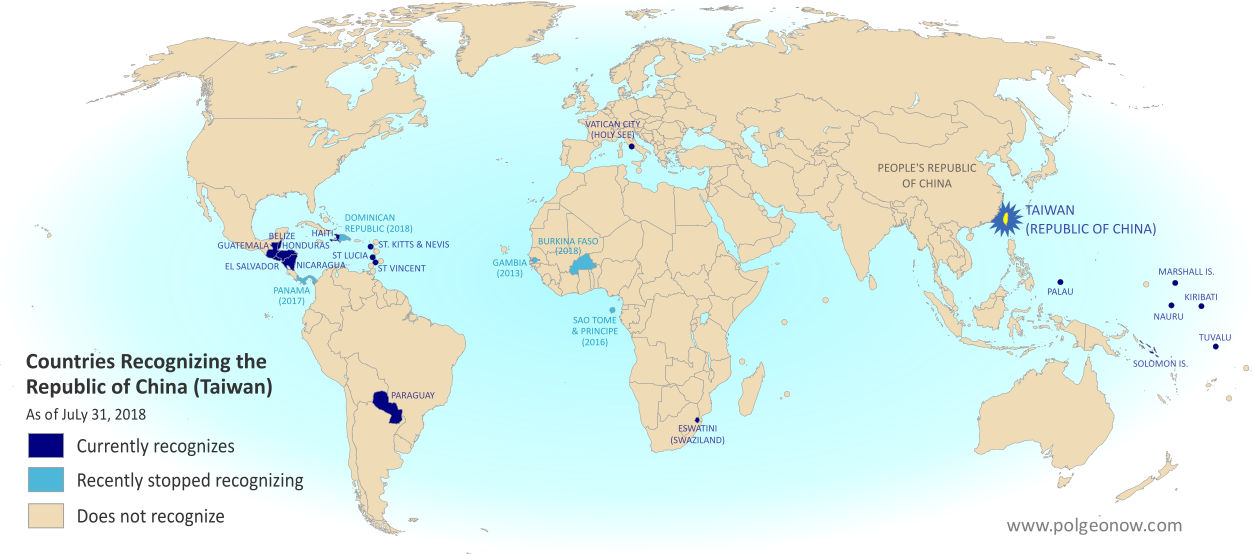
Map of who recognizes Taiwan (what countries recognize the Republic of China) in July 2018. Marks countries that have cut diplomatic ties with Taiwan (withdrawn recognition) in the last ten years: Burkina Faso, the Dominican Republic, Panama, Sao Tome and Principe, and the Gambia. Also answers question: Where is Republic of China located? (Colorblind accessible)
Click to enlarge. By Evan Centanni, modified from public domain blank world map.

Article by Evan Centanni

Dominican Republic, Burkina Faso Drop Taiwan
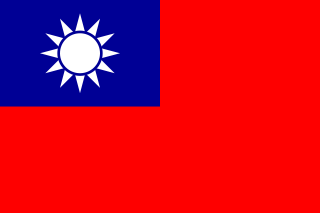
Flag of the Republic of China (Taiwan) Short Name (informal):  
• Taiwan (English)
• ROC (English)
• Táiwān (Chinese)
Official Name (in constitution):  
• Republic of China (English)
• Zhōnghuá Mínguó (Chinese)
Other names used officially:  
• “Republic of China (Taiwan)” (government offices)
• Chinese Taipei (international sports)
• Taiwan, Province of China (used by UN without Taiwan’s input)   
Capital: 
Taipei (de facto)
Claimed by: People’s Republic of China 

This past May, disputed Taiwan lost its official endorsements from both the Dominican Republic in the Caribbean, and Burkina Faso in West Africa. The two countries have cut ties with Taiwan in favor of setting up official relations with Mainland China, endorsing the Mainland’s claim that Taiwan is part of China.

The islands of Taiwan operate like an independent country today, but are governed under the constitution of the “Republic of China” (ROC), the government that ruled Mainland China before the country’s communist revolution (the administration that now rules the Mainland is called the People’s Republic of China, or PRC).

Since 1991, Taiwan’s government has sought recognition separate from Mainland China in the UN, without challenging the PRC’s right to the Mainland. But because the Mainland government insists Taiwan can’t be separate, it cuts ties with any countries that set up relations with Taiwan, even if they want to stay friends with China too.

The Dominican Republic announced it was cutting ties with Taiwan on May 1, 2018, saying the reason was “history and socioeconomic reality”. This reality allegedly includes the equivalent of $3.1 billion US dollars in investments and loans from China, though the Dominican government only mentioned future tourism opportunities as an example.

Burkina Faso followed on May 24, even though it had just co-sponsored Taiwan’s bid to become an observer at World Health Organization (WHO) meetings. The Burkinabe government also cited “socio-economic challenges” and the “evolution of the world” as the reasons for its switch.

Learn More: What Exactly is Taiwan, and Do Countries Really “Recognize” It?

Republic of China: Shrinking Recognition

Today, only 18 countries in the world (about 9%) still have formal diplomatic relations with the Taiwan-based “Republic of China” government – the closest equivalent to officially “recognizing” Taiwan as a country. Before the Dominican Republic and Burkina Faso cut ties in May, the last two countries to drop Taiwan in favor of the PRC were Panama in June 2017 and São Tomé and Príncipe in December 2016.

Only one country, the Gambia, abandoned Taiwan between 2008 and 2016, during a “diplomatic truce” initiated by Taiwan’s most Mainland-friendly president (even then, the PRC waited until Taiwan elected a more independence-leaning president before restoring its own relations with the Gambia).

Taiwan’s last remaining “diplomatic ally” in Africa is tiny Eswatini (Swaziland), whose king recently promised not to follow Burkina Faso in switching to the PRC. Supporters of a separate Taiwan worry their next loss might be the Holy See, government of the Catholic Church’s independent Vatican City in Rome. The Vatican has recently been working to patch up its bad relationship with the Mainland Chinese government.

Learn More: What’s the difference between Vatican City and the Holy See?

Graphic of the Republic of China (Taiwan) flag is in the public domain (source).
Map: Which Countries Recognize Palestine as Independent in 2016?

(Keep up with changes to Palestine’s situation: view all Palestine updates.)

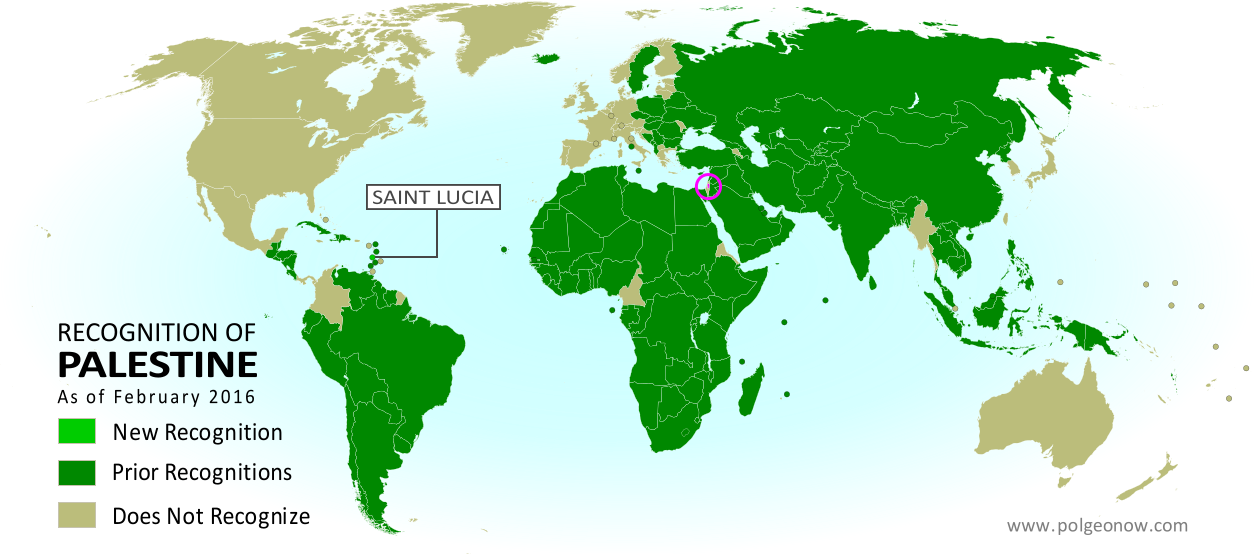
Map of countries that recognize the State of Palestine as an independent country, updated for February 2016 with recent addition Saint Lucia highlighted
Click to enlarge. Palestine in magenta (circled). Map by Evan Centanni, modified from public domain graphic (source).

Subscribers click here to view this article in the ad-free members area. Not a member yet? Learn about PolGeoNow subscriptions!

Article by Evan Centanni

Disputed Country

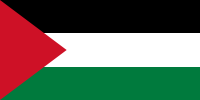
The Palestinian Liberation Organization (PLO) declared an independent State of Palestine in 1988, and continues to pursue its recognition as a country today. Though Palestine’s claimed territories are disputed and largely occupied by Israel, it has gathered recognition from more than two-thirds of the world’s countries, and is also treated as a country by the UN General Assembly, where it’s an “Observer State” but not a member.

Flag of Palestine Country Name:  
• Palestine (English)
Filasṭīn (Arabic)
Official Name:  
• State of Palestine (English)
• Dawlat Filasṭin (Arabic)
Capital: 
• Jerusalem (claimed)
Ramallah (administrative)

The number of individual countries recognizing Palestine has grown gradually over the past decades. Last June we reported that 135 U.N. member states (and one observer state) officially recognized Palestine, and since September the number is now 136 (about 70% of all UN members). Palestine is also recognized by the proclaimed government of Western Sahara, another disputed country that’s not formally recognized by the UN.

Saint Lucia Recognizes Palestine

Last September, the small Caribbean island country of Saint Lucia became the latest national government to recognize Palestine as independent. The formal acknowledgement came on September 14, 2015, when the two countries’ UN representatives signed an agreement in New York to establish diplomatic relations.

Saint Lucia is now one of about half the world’s countries whose government recognizes both Palestine and Israel as independent countries. All of the independent Caribbean countries except Cuba recognize Israel, and most also recognize Palestine, with the exception of Jamaica, the Bahamas, Saint Kitts and Nevis, Barbados, and Trinidad and Tobago.

Read More:
Is Palestine Really a Country?
Palestine Recognized as a Country by the UN
Map of Countries Recognizing Kosovo

Map Update: Kosovo Recognized by 3 More Countries in 2015 (108/193 UN members)

Premium members click here to view this article in the ad-free members area. Not a member yet? Subscribe now!

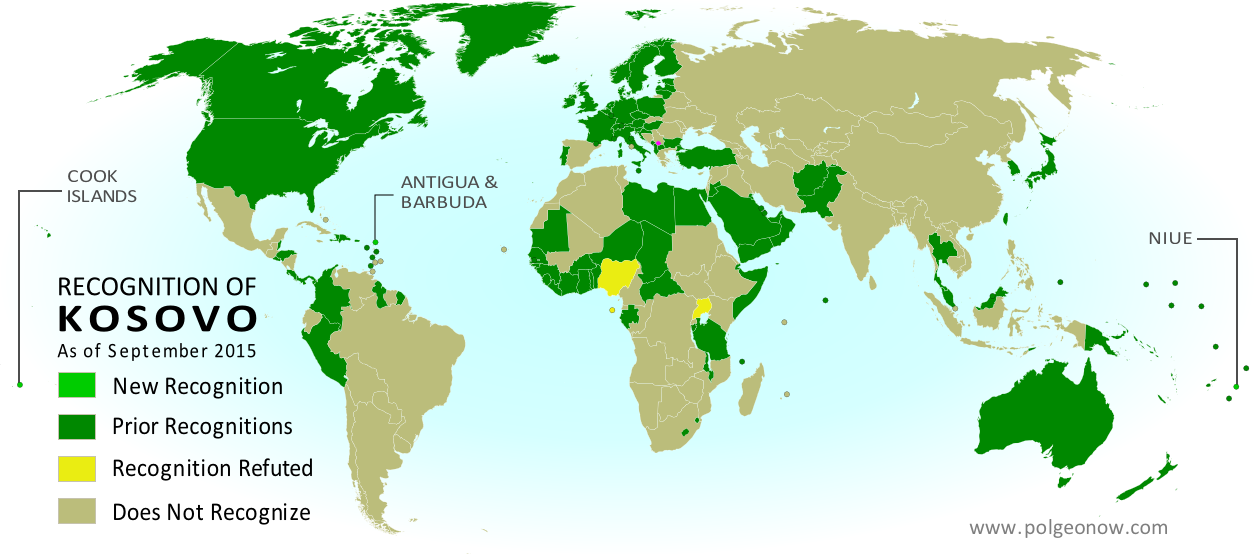
Map of countries that recognize the Republic of Kosovo as an independent state, updated to September 2015, with the most recent additions (Antigua and Barbuda, Cook Islands, and Niue) highlighted. Also shows countries that have refuted claims that they recognized Kosovo: Sao Tome and Principe, Nigeria, and Uganda.
Map by Evan Centanni, modified from public domain graphic (source).

Flag of the Republic of KosovoCountry Name:  
• Kosovo (English, Serbian)
• Kosova (Albanian)
Official Name:  
Republic of Kosovo (English)
Republika e Kosovës (Albanian)
Republika Kosovo (Serbian)
Capital: Pristina/Prishtina

Article by Evan Centanni, with additional reporting by Caleb Centanni

New Recognitions for Kosovo
Since our last Kosovo recognition map report nearly a year ago, the breakaway republic’s independence has been endorsed by three more countries. However, only one of these three new recognizers, Antigua and Barbuda, is a fully independent country and UN member. The other two, the Cook Islands and Niue, are semi-independent states often considered to be overseas territories of New Zealand.

Antigua and Barbuda, a small two-island country in the Caribbean, reportedly recognized Kosovo as independent on May 20, 2015, after several years of talks between the two states’ foreign ministers. Kosovo is now recognized by about half of the island countries in the Caribbean.

Also in May, the Cook Islands recognized Kosovo, with nearby Niue joining a month later. The Cook Islands and Niue are two nearly independent Pacific island countries in “free association” with New Zealand. They are often considered dependent territories rather than independent countries; their people retain New Zealand citizenship, and they have never declared independence or tried to join the UN. However, they are self-governed, with the choice to become independent at any time, and there’s no rule against them diplomatically recognizing other countries or being recognized in return.

Before this year, the last country to recognize Kosovo was Solomon Islands in August 2014. With the addition of Antigua and Barbuda, Kosovo is now considered independent by 108 of the 193 UN member countries (about 56 percent).

What is Kosovo?
The Republic of Kosovo, located in southeastern Europe, controversially declared independence from Serbia in 2008. It has been blocked from UN membership by objections from Serbia, Russia, and other countries who see its secession as invalid. In addition to the 108 UN members recognizing Kosovo, its independence is also acknowledged by non-UN member Taiwan. For more on Kosovo’s special situation, see our first Kosovo recognition report, which also includes a map of Kosovo’s location relative to Serbia.

Refuted Recognitions
In the past, the government of the Republic of Kosovo has been accused of exaggerating its numbers by claiming recognition from countries that didn’t really intend to recognize it. Three African countries – São Tomé and Príncipe, Uganda, and Nigeria – have denied recognizing Kosovo, and are not included in our numbers. However, they are often included in lists compiled by pro-Kosovo sources, so we have illustrated them in yellow on the above map.

And what about the most recent additions to the list? Antigua and Barbuda’s recognition of Kosovo has not been confirmed by sources outside Kosovo’s government, but because it has not been denied either, we are presuming its truth for now. The Cook Islands and Niue, on the other hand, both have online documents confirming that they’ve established diplomatic relations with Kosovo. Diplomatic relations aren’t always the same thing as recognition, but the documents make it fairly clear that the two states indeed consider Kosovo to be an independent country.

Stay Up to Date: Check for further news and map updates related to Kosovo’s recognition by viewing all Kosovo articles on Political Geography Now.
 
Flag graphic by Cradel (source). License: CC BY-SA

Map: ALBA Has 2 New Member Countries

Subscribers click here to view this article in the ad-free members area. Not a member yet? Subscribe now!

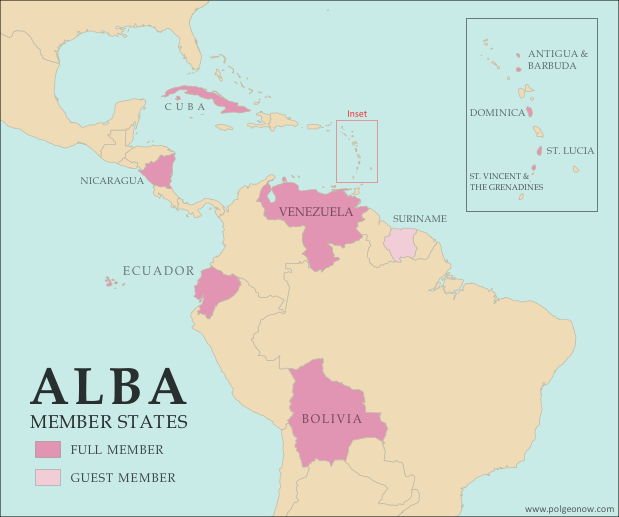
Map of the Bolivarian Alliance for the Peoples of Our Americas (ALBA), showing full member countries, including new members Grenada and Saint Kitts and Nevis, as well as special guest members (colorblind accessible).
The Bolivarian Alliance for the Peoples of Our America (ALBA). Map by Evan Centanni.

Emblem of the Bolivarian Alliance for the Peoples of Our Americas (ALBA)Organization Name:  
• Alianza Bolivariana para los Pueblos de Nuestra América (Spanish)
• Bolivarian Alliance for the Peoples of Our America (English)
Launched: 2004 in Havana, Cuba
Headquarters: Caracas, Venezuela
Website: www.alianzabolivariana.org

Article by Karina Barquet and Evan Centanni

Membership Growth
On December 14, 2014, three days after its 10th anniversary, the Bolivarian Alliance for the Peoples of Our America (ALBA) welcomed two new member countries: Grenada and St. Kitts and Nevis

ALBA’s other nine member countries are Venezuela, Cuba, Antigua and Barbuda, Bolivia, Dominica, Ecuador, Nicaragua, Saint Lucia, and Saint Vincent and the Grenadines. Honduras joined as a member state in 2008, but withdrew in 2010 following a coup d’état against President Manuel Zelaya the previous year.

Related: Grenada Recognizes Kosovo as Independent

What is ALBA?
ALBA is an intergovernmental organization working toward social, political, and economic integration for Latin America and the Caribbean, founded in 2004 through the efforts of Venezuelan president Hugo Chávez. He presented it as an alternative to the Free Trade Area of the Americas (FTAA), a U.S.-led initiative that came up against heavy opposition and was eventually abandoned.

In 2005, ALBA members established PetroCaribe, a program for preferential oil trade between countries of the region, and teleSUR, a television service intended to compete with U.S networks. By 2009, leaders agreed to adopt a currency called the SUCRE (Unified System for Regional Compensation) as an alternative to the U.S. dollar for international trading.

“America” or “Americas”?
In English, “America” almost always means the U.S., and the continents of North and South America are called “the Americas” (Canadians don’t even call themselves “Americans”). 

However, in Latin America there is a popular conception that “America” should mean the two whole continents (Spanish América does mean exactly that).

ALBA’s official English name, “Bolivarian Alliance for the Peoples of Our America”, may have been chosen as an intentional challenge to the perceived domination of the term “America” by the U.S.

-Editor

The New Member Countries
The newest ALBA member is Grenada, a former French and British colony made up of one large island and six smaller ones in the southeastern Caribbean. Saint Kitts and Nevis is a federation of two islands in the northeastern area of the Caribbean, and the smallest independent country in the Americas by both area and population.

Both new ALBA members are Commonwealth realms, with Queen Elizabeth II as their formal head of state. Countries awaiting full incorporation into ALBA include Haiti, currently an observer country, and Suriname, which holds “guest member” status.

See Also: Saint Lucia Joins ALBA

More Related Articles:
Venezuela Joins Mercosur, Paraguay Suspended
Equatorial Guinea Joins Portuguese Community
The Political Geography of Chocolate – A Valentine’s Day Special

New ALBA Member: Saint Lucia (Map)

Map of the Bolivarian Alliance for the Peoples of Our Americas (ALBA), showing full member countries, including new member Saint Lucia, as well as special guest members (colorblind accessible).
The Bolivarian Alliance for the Peoples of Our Americas (ALBA). Map by Evan Centanni.

Emblem of the Bolivarian Alliance for the Peoples of Our Americas (ALBA)Organization Name:  
• Bolivarian Alliance for the Peoples of Our Americas (English)
• Alianza Bolivariana para los Pueblos de Nuestra América (Spanish)
Launched: 2004 in Havana, Cuba
Headquarters: Caracas, Venezuela
Website: www.alianzabolivariana.org

Article by Evan Centanni

What is ALBA?
The Bolivarian Alliance for the Peoples of Our Americas (ALBA) is an intergovernmental organization open to countries located in the region of the Americas. “Bolivarian” refers to Simón Bolívar, a 19th century leader who founded several South American countries and wanted the whole continent to unite together as a single nation.

ALBA was founded in 2004, as a response to the U.S.’s rejected proposal to create a Free Trade Area of the Americas (FTAA). The FTAA would have extended the North American Free Trade Agreement (NAFTA) – which has lowered trade barriers between the U.S., Canada, and Mexico – to all of South America, Central America, and the Caribbean except for Cuba.

As a counter to the capitalist spirit of the FTAA proposal, Presidents Hugo Chávez of Venezuela and Fidel Castro of Cuba soon agreed to create ALBA, an organization for promoting greater integration among the socialist and social democratic countries of the region.

ALBA plans to eventually introduce a new currency, the SUCRE, which will be shared by the member countries just like how the euro is the shared currency of much of the European Union. Virtual SUCRE currency is already in use for some electronic transfers of money between ALBA member countries.

Past Growth
Although Cuba and Venezuela were originally the only two members of ALBA, the like-minded governments of Bolivia and Nicaragua joined in 2006 and 2007 respectively. Dominica became a member in 2008, followed by Antigua and Barbuda, Ecuador, and Saint Vincent and the Grenadines in 2009. Early last year, the organization admitted Suriname and Saint Lucia as “special guest members,” indicating that they were in the process of achieving full membership. Membership in ALBA is not exclusive – many member countries are also part of other regional blocs such as UNASUR, Mercosur, or the Caribbean Community (CARICOM).

New Member

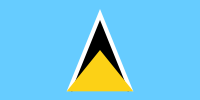
Flag of Saint Lucia Country Name:  
• Saint Lucia (English)
Sainte-Lucie (French)
Official Name: (same)
Capital: Castries

While Suriname remains a special guest member, Saint Lucia was officially inducted as a full member at the end of this July. Saint Lucia is a small island country in the Caribbean, which was both a British and a French colony at times in the past. The Saint Lucian government’s decision to join ALBA has garnered mixed responses from opposition parties, and becoming part of the anti-imperialist organization is seen by some as a break from the island’s history of close ties with the U.K. There is also debate over the role of the new SUCRE currency in a country that already uses the shared East Caribbean dollar.

Related Articles:
Venezuela Joins Mercosur, Paraguay Suspended
Croatia Joins European Union, Leaves CEFTA
Laos and Tajikistan Join WTO

Puerto Rico: 51st State of the U.S.?

[This article was written after Puerto Rico’s 2012 status referendum. In June 2017, Puerto Rico voted in another controversial referendum, again technically in favor of statehood. Most of this five-year-old article is still accurate after the 2017 vote. -Editor]

Earlier this month, papers reported that Puerto Rico had voted to become a state of the U.S. – but will it really happen? What does it take to become a state, anyway? Last time, we explained Puerto Rico’s current status – now for answers about the territory’s future….

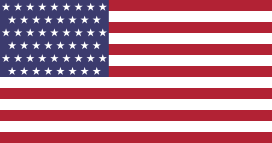
Flag of the United States with a new star added (total of 51 stars) for a hypothetical new state of Puerto Rico
A possible 51-star U.S. flag. Since each star on the flag represents one state, a new one would need to be added for Puerto Rico (public domain; source).

Why would Puerto Rico want to become a state?
Puerto Rico’s current situation leaves it disadvantaged compared to the states. It has its own constitution and government, but the laws establishing them are subject to approval by the U.S. Congress. And despite the fact that most federal taxes and other laws apply to Puerto Ricans, residents have no real representation in Congress and no say in the presidential election. (For more details, see What is Puerto Rico?)

Is statehood the only option?
No – in Puerto Rico’s November 6th referendum, voters had two other choices besides becoming a U.S. state:

1. Full Independence – This would mean cutting all territorial ties to the U.S. and becoming the world’s newest country. However, this option is unpopular in Puerto Rico, because locals are taught from a young age that independence wouldn’t be feasible (a questionable claim).

2. Sovereign Free Association – In fact, this option would also officially make Puerto Rico an independent country – but it would be allowed to keep U.S. military protection and some other government services on a voluntary basis. Micronesia, the Marshall Islands, and Palau currently have this status.

A fourth possible option – continuing as a U.S. territory but under modified terms – was controversially left off of the ballot.

What would a State of Puerto Rico look like?

In terms of population, Puerto Rico’s 3.7 million people would make it a medium-sized state, with two senators and about five representatives in the U.S. Congress (and therefore about seven electoral votes for the president). Economically it would be the weakest of the states (though still stronger than most countries). But what it would lack in economic power, it would make up for in cultural and historical uniqueness, as the only state with a Spanish-speaking majority and the only state ever visited by Christopher Columbus. Geographically, it would be the third smallest of the states by area, and would contain both the new easternmost and the new southernmost points in the 51 states.

Flag of Puerto Rico Territory Name:  
• Puerto Rico (English, Spanish)
Official Name:  
• Commonwealth of Puerto Rico (English)
• Estado Libre Asociado de Puerto Rico (Spanish)
Capital: San Juan

How can a territory like Puerto Rico become a state?
The U.S. Constitution only specifies that new states can’t take territory from existing states without their permission, so the procedure is based largely on the Northwest Ordinance of 1787. That law set up the first organized American territory, in what’s now the Midwest, and defined the process for admitting new states.

To qualify for statehood, an area must have a population of at least 60,000 (no problem for Puerto Rico – there are over six times that many people just in the capital city). Then the U.S. Congress needs to pass an “enabling act” to get the ball rolling by authorizing the territory to draft a state constitution. Once it’s ready, the state is admitted through a majority vote in Congress and the President’s signature, just like any other law. That’s all.

Then Puerto Rico will become a state now, right?
Not so fast – it’s actually not clear whether the people of Puerto Rico really do want to become the 51st state. Here’s the story: the recent referendum first asked whether Puerto Rico should remain a U.S. territory like it is now, and 54% voted “no” – so far, so good. Then it asked a separate question on what the best option for change would be – on this question, 61% of the votes went for statehood (compared to 33% for free association and 6% for full independence). Statehood it is then, right?

Not quite. The meaning of the results is controversial, because many people left the second question blank, and if you include them, statehood only had 45% support. And even if you don’t count the blank votes, 61% of the people who chose change on the first question would still add up to less than 50% of the total voters. On top of all this, the territory’s pro-statehood governor was voted out on the same day, in favor of a candidate who supports the status quo. And it’s been suggested that even a real 50% wouldn’t be enough to fairly count as a mandate, since joining the union is basically irreversible (the last time any state tried leaving, lots of people died).

So, will it happen or not?

Probably not. In principle, President Obama has said he would support Puerto Rican statehood if the people clearly wanted it, and the opposing Republican Party wrote in their 2012 platform that they would support it too. But since the will of the people is anything but clear in this case, Congress reportedly has no plans to act on the referendum.

A statehood law admitting Puerto Rico might not pass so easily anyway: since the new state might end up voting blue, the Republicans in Congress could be reluctant to admit it after all. And in any case, the process would likely be very slow: the legislators have their hands full with other issues already, and adding a new state could lead to a long process of haggling over how to rearrange the population-based seats in the House of Representatives (they would have to either be added to or redistributed to make room for Puerto Rico).

Nevertheless, Puerto Rico’s pro-statehood movement is still giving it all they’ve got. The territory’s non-voting delegate to Congress, as well as the recently defeated governor, both have pushed forward in asking President Obama to get the process moving. And though it may seem like a lost cause in the short term, sources tell Political Geography Now that many Puerto Ricans are hoping statehood can at least be considered more seriously from now on.

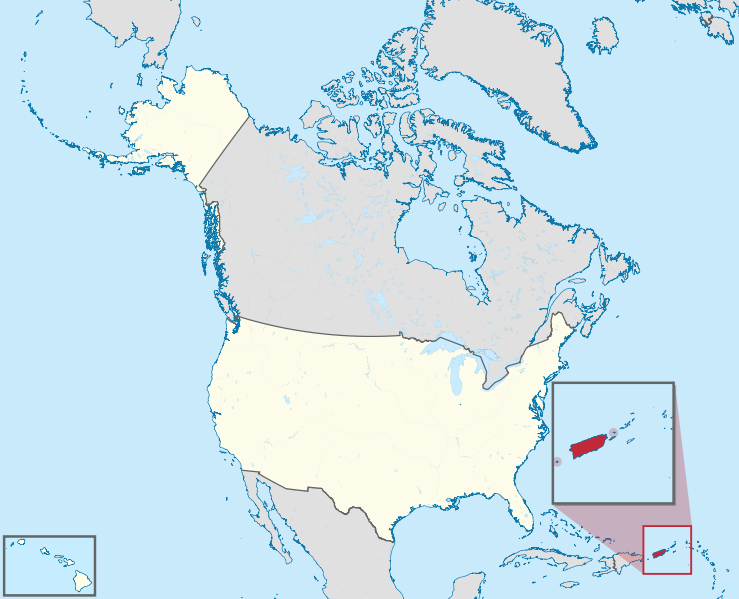
Map of the whole U.S. plus Puerto Rico (red). Puerto Rico would be the southernmost and the easternmost state, and the third smallest. Map by Vrysxy (source; CC BY-SA)

What is Puerto Rico? Is it part of the United States?

In 2012 and 2017, Puerto Rico voted on whether to become a state of the US. But what exactly is Puerto Rico now? Is Puerto Rico part of the United States, and can its people vote in U.S. elections? Find all your answers here!

If Puerto Rico’s not a state, then what is it?

map of Puerto Rico's location relative to the U.S.
Location of Puerto Rico relative to the U.S.
Map by TUBS/Wikimedia Commons (source; CC BY-SA)

Puerto Rico is Spanish-speaking region made up of one big island and a few smaller islands in the Caribbean Sea. Since being taken from Spain in the Spanish-American War of 1898, it’s been an overseas territory of the United States (known in U.S. technical jargon as an “insular area“). Internationally, the island is sometimes treated informally as a separate nation, even sending its own team of athletes to the Olympics (See also: Which Countries Are and Aren’t in the Olympics?). However, it’s not an independent country, but a subject of the U.S. federal government.

So is Puerto Rico part of the U.S.?

Technically, Puerto Rico isn’t considered to be a part of the U.S. (though certain laws treat it as if it were). Instead, it belongs to the U.S. as an “unincorporated” territory. Unincorporated territories of the U.S. are places where the country’s constitution doesn’t apply by default, except for in the case of certain “fundamental rights” owed to all Americans. It’s also possible for a territory to be “incorporated” as part of the country, but this status is rare today.

Are Puerto Ricans Americans?

Yes – anyone born in Puerto Rico is automatically a U.S. citizen. They’re also citizens of Puerto Rico – but since this second citizenship “is not the national citizenship of an independent country or state,” they have to use U.S. passports to travel internationally. People born in Puerto Rico are considered “natural-born” American citizens, which qualifies them to run for president – but only after living in the U.S. proper for at least 14 years. They’re also eligible to serve in the U.S. military, and quite a few of them have risen to high ranks within it.

Flag of Puerto Rico Territory Name:  
• Puerto Rico (English, Spanish)
Official Name:  
• Commonwealth of Puerto Rico (English)
• Estado Libre Asociado de Puerto Rico (Spanish)
Capital: San Juan

Can Puerto Ricans vote in U.S. elections?

It’s complicated. Since Puerto Rico has no senators or representatives in the U.S. congress, residents of Puerto Rico aren’t able to vote for legislators. Similarly, since the president of the United States isn’t elected through a popular vote, but by electors from the states and the District of Columbia (D.C.), Puerto Rico residents are not able to vote for president in November.

But that’s not the end of the story: since all American citizens have the right to live anywhere they want in the U.S., a Puerto Rican who moves to one of the states can vote there. And many do – some even serve in congress as representatives of their new states. And it goes both ways…if an American from one of the states lives in Puerto Rico, they can’t vote for congress or president unless they’re still a legal resident of one of the states or D.C. (or if they’re in the military). Former residents of the states who live overseas would qualify for federal absentee voting, but in the voting laws Puerto Rico doesn’t qualify as “overseas”.

All that said, residents of Puerto Rico actually do have a bit of influence over the choice of U.S. president – the presidential primaries don’t require membership in the electoral college, so the Puerto Rican government is allowed to hold its own primary elections for the two major U.S. political parties. In March 2012, Puerto Rico chose Mitt Romney over Rick Santorum and several other Republican candidates.

Does Puerto Rico pay U.S. taxes?

Yes, residents of Puerto Rico are required to pay most types of U.S. federal taxes, and the territory contributes billions of dollars to the U.S. Treasury every year. However, most Puerto Rico residents who make all their money within the territory are exempt from the federal income tax, unless they work for the federal government. All Puerto Ricans still have to pay Social Security and Medicare taxes on their income, though they actually get significantly fewer benefits than residents of the 50 states do. Puerto Rico’s territorial government also levies its own taxes on residents of the island.

What kind of government does Puerto Rico have?

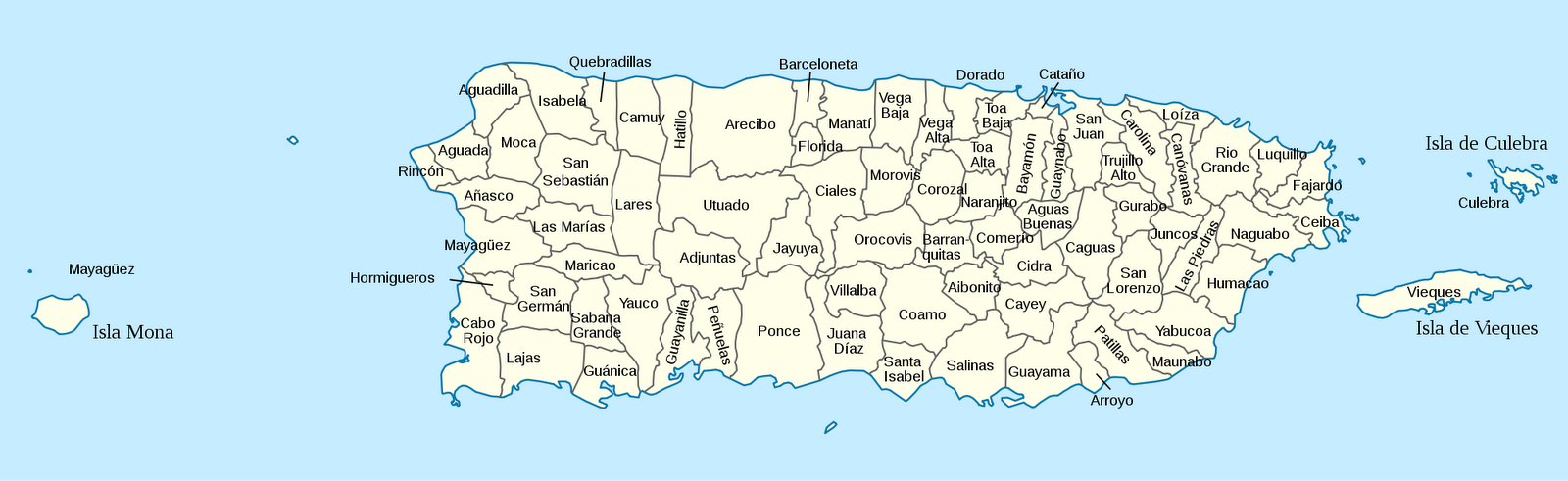
Map of the municipalities of Puerto Rico
Municipalities of Puerto Rico (click to enlarge).
Map by NordNordwest & Kmusser (source). License: CC BY-SA

Officially, Puerto Rico is a constitutional republic like each of the 50 states – however, as an “organized territory”, this government’s authority doesn’t come from the U.S. constitution. The U.S. Congress had to pass legislation specifically allowing Puerto Rico to write its own constitution (and to make Puerto Ricans U.S. citizens), and theoretically could take that privilege away again if it wanted. Because of this, there is still disagreement from the U.N. on whether Puerto Rico should be classified as a self-governing dependent territory or an old-fashioned colony.

Even though Puerto Rico is technically not a part of the U.S., it’s still treated for many purposes as if it were. Federal government offices have a major presence on the island, and its financial, postal, and telephone systems are integrated with the U.S. Although the territory has no voting representation in Congress, it does have a non-voting delegate to the House of Representatives, known as the Resident Commissioner of Puerto Rico.

Like the 50 states, Puerto Rico has its own elections, with a democratically chosen governor, senate, and house of representatives. Any American citizen can vote in Puerto Rico, as long as they’ve lived there for at least 30 days. Federal law also requires that former Puerto Rico residents living in other countries be allowed to vote by mail in Puerto Rican elections.

Part Two: Will Puerto Rico become the 51st State?